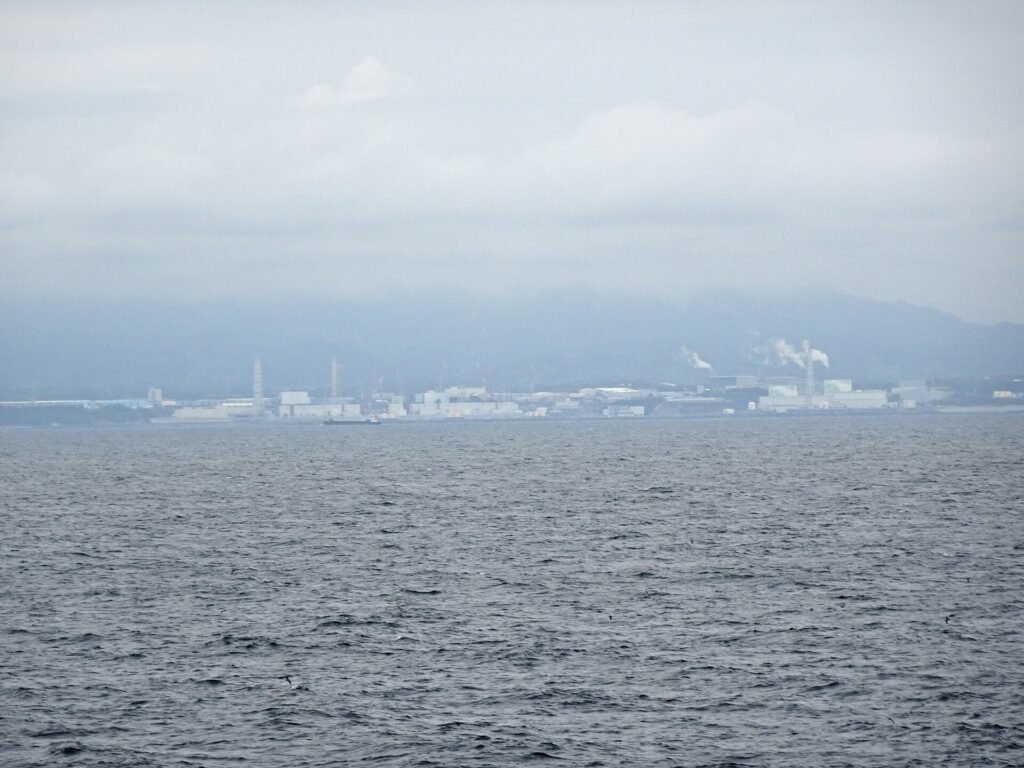
The Fukushima nuclear accident was a disaster at the Fukushima Daiichi nuclear power plant in Japan that began on 11 March 2011, when a huge earthquake and tsunami cut off power and cooling to three reactors. The cores of all three largely melted, radioactive material escaped, and more than 100,000 people were evacuated. It was rated level 7 on the International Nuclear and Radiological Event Scale, the highest level, and the United Nations has called it the largest civilian nuclear accident since Chernobyl in 1986.
Background to the Fukushima nuclear accident
The Fukushima Daiichi plant stands on the Pacific coast of Honshu and was operated by the Tokyo Electric Power Company, known as Tepco. Its reactors were boiling water reactors of an early 1960s American design with a type of containment called Mark I. Units 1 to 3 began commercial operation between 1971 and 1975. A nuclear reactor keeps producing decay heat after it shuts down, so it needs reliable cooling for days afterward.
The plant was built about 10 meters above sea level, based on an assumed tsunami height of 3.1 meters. The World Nuclear Association reports that Tepco raised this assumption to 5.7 meters in 2002 and to 6.1 meters in 2009. In 2008 Tepco calculated that a tsunami as high as 15.7 meters was possible at the site, but the calculation did not lead to major action by the company or the regulator.
Course of events
At 2:46 pm on 11 March 2011 a magnitude 9.0 earthquake struck about 130 kilometers off the coast of Sendai. The earthquake was followed by a large tsunami, and the shaking lasted about three minutes. Eleven reactors at four plants were operating and all shut down automatically. Inspections later found no significant earthquake damage to them.
At 3:42 pm a tsunami about 15 meters high flooded the Fukushima Daiichi site. It disabled 12 of the 13 emergency generators and the equipment that carried heat to the sea. Units 1, 2 and 3 lost the ability to cool their cores, and the World Nuclear Association states that all three cores largely melted in the first three days. At 3:36 pm on 12 March a hydrogen explosion blew off the roof and upper walls of the building above unit 1.
A nuclear emergency was declared on the evening of 11 March. Evacuation orders grew in steps from 2 kilometers to 3 kilometers that night, to 10 kilometers early on 12 March and to 20 kilometers later the same day. Hundreds of Tepco employees, contractors, firefighters and soldiers worked to add water to the reactors and spent fuel pools, often in difficult conditions.
Japan’s safety authority first rated the event level 5, then raised it to level 7 about a month later. The first estimate of the radioactive release was about 630 petabecquerels of iodine-131 equivalent, and a later figure given by the World Nuclear Association is about 940 petabecquerels. Official cold shutdown conditions were announced in mid-December 2011.
Health and environmental effects
The accident did not cause any known deaths from radiation. The World Nuclear Association states that there have been no deaths or cases of radiation sickness from the accident itself, while about 19,500 people were killed by the earthquake and tsunami. Official figures list 2,313 disaster-related deaths among evacuees from Fukushima Prefecture, which were linked to the stress and disruption of evacuation, not to radiation.
The United Nations Scientific Committee on the Effects of Atomic Radiation, or UNSCEAR, studied the accident for years. Its 2013 report and a 2020 and 2021 update found a theoretical increase in thyroid cancer risk among the most exposed children, no discernible rise in cancer rates among workers, no effect on birth defects or hereditary disease, and only temporary effects on wildlife. UNSCEAR also found that some public dose estimates in its first report were too high. This section describes scientific findings and is not medical advice.
Aftermath: investigations, regulation and cleanup
An independent commission set up by Japan’s parliament, the National Diet, reported in July 2012. After about 900 hours of hearings and interviews with more than 1,100 people, it called the accident a “manmade disaster” and said its root causes lay in organizational and regulatory systems, including weak independence of the regulator and poor emergency preparedness. Japan later replaced its old nuclear safety bodies with a new Nuclear Regulation Authority, which began work in September 2012, and it ordered safety reassessments before reactors could restart.
All four damaged reactors have been written off and are being decommissioned. Contaminated cooling water was treated and stored in more than 1,000 tanks holding 1.37 million cubic meters. Tepco began discharging the treated, diluted water into the ocean on 24 August 2023 through an undersea tunnel. By December 2025, 17 batches totaling about 133,000 cubic meters had been released, with tritium levels well below Japan’s operating limit and the World Health Organization drinking water guideline, according to the World Nuclear Association. The International Atomic Energy Agency opened an office at the plant in July 2023 to monitor the releases.
Removing the melted fuel is the hardest task. A trial retrieval in November 2024 recovered about 0.7 grams of fuel debris, and a second sample followed in April 2025. About 880 tonnes remain, and large-scale removal with robotic arms is targeted for the first half of the 2030s.
Significance and legacy of the Fukushima accident
Fukushima shifted attitudes to nuclear power in Japan and worldwide, and it led governments to review how plants are protected against rare natural events. The accident showed that a plant designed for earthquakes could still fail when a tsunami disabled every backup source of power at once.
It also showed that preparation and oversight matter as much as engineering. The Diet commission blamed the accident on a collusion between government, regulators and Tepco, though the World Nuclear Association stresses that the reactors withstood the earthquake itself. Debate continues over the treated-water releases, the pace of returns to evacuated areas and the future of nuclear energy in Japan.
Key facts
- A magnitude 9.0 earthquake struck at 2:46 pm on 11 March 2011, and a tsunami of about 15 meters flooded Fukushima Daiichi at 3:42 pm.1
- The cores of units 1, 2 and 3 largely melted within the first three days.1
- The accident was rated level 7 on the International Nuclear and Radiological Event Scale, and over 100,000 people were evacuated.1
- The World Nuclear Association reports no deaths or cases of radiation sickness from the accident itself, and 2,313 disaster-related deaths among evacuees.1
- UNSCEAR found no discernible increase in cancer rates among workers and a theoretical increase in thyroid cancer risk among the most exposed children.2
This entry explains a medical term. It is not medical advice. If you are concerned about your health, speak with a qualified health professional.
Related concepts
Quick checkDid anyone die from radiation in the Fukushima accident?Show answer
The World Nuclear Association reports no deaths or cases of radiation sickness from the accident itself. About 19,500 people died in the earthquake and tsunami, and 2,313 evacuees later died of disaster-related causes.
Sources
- World Nuclear Association, Fukushima Daiichi Accident (updated 23 September 2026), https://world-nuclear.org/information-library/safety-and-security/safety-of-plants/fukushima-daiichi-accident
- United Nations Scientific Committee on the Effects of Atomic Radiation, The Fukushima-Daiichi Nuclear Power Station Accident: An overview, https://www.unscear.org/unscear/en/areas-of-work/fukushima.html
Editorially reviewed by Specialty Digest Editorial TeamLast reviewed November 4, 2026Researched and drafted with AI assistanceReport an issue