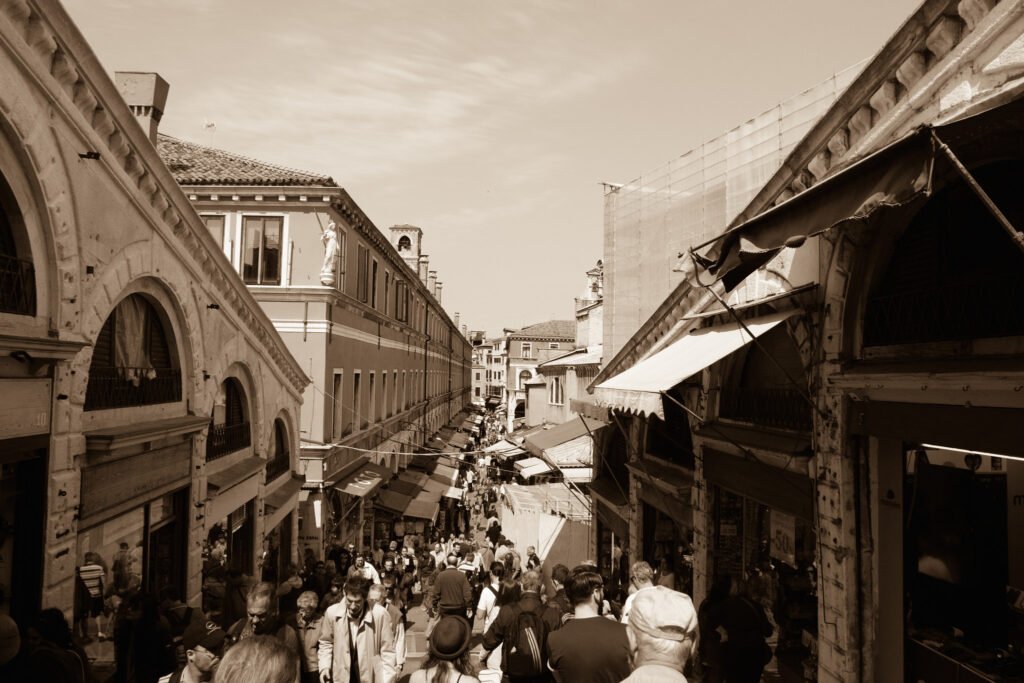
Overtourism is when tourism is judged to be harming residents’ quality of life, visitors’ experience, or both. It can describe a whole destination or just part of one. It is a recent buzzword, not a formal measure. The World Tourism Organization (UNWTO, now UN Tourism) puts the word in quotation marks in the title of its main report on the topic.
How it differs from carrying capacity
UNWTO has long used another idea: tourism carrying capacity. This is the most people who can visit a place at the same time. They must not damage its physical, economic or social and cultural setting. They must not cause an unacceptable drop in visitor satisfaction. Overtourism asks a related question through perception. Does the place feel overrun to the people who live there, and to the people visiting? That is harder to count than a headcount.
Why the pressure has grown
UNWTO’s 2018 report gives the numbers. International arrivals rose from 25 million in 1950 to more than 1.3 billion in 2017. Easier travel rules and a growing middle class in both rich and emerging economies helped. The report forecast 3.3% growth a year, reaching 1.8 billion arrivals in 2030. UN Tourism’s January 2026 barometer puts 2025 arrivals at about 1.52 billion. That is 4% more than in 2024.
Cities matter here. The report cites United Nations figures: 43% of the world’s people lived in urban areas in 1990. Today more than half do. Visitors and residents increasingly share the same infrastructure and transport.
What the report says about causes and fixes
The report was produced with Breda University of Applied Sciences and NHL Stenden University of Applied Sciences. It looks at how residents feel about tourism in eight European cities. They are Amsterdam, Barcelona, Berlin, Copenhagen, Lisbon, Munich, Salzburg and Tallinn. The authors argue that, in essence, the problem is poor management and uncontrolled development. They do not blame tourism itself. The report proposes 11 strategies and 68 measures.
In the foreword, UNWTO’s secretary-general says one issue has long mattered to the sector. It is how to manage tourism flows in cities so that visitors and residents both benefit. The executive summary names five ways to address overtourism. They are community engagement, congestion management, less seasonality, capacity limits and a wider range of tourism products. A follow-up volume has 18 case studies. They show cities putting the 11 strategies into practice.
What is still debated
This is interpretation, not settled fact. No agreed threshold defines overtourism. The same crowd can be a problem in one city and welcome income in another. The report’s subtitle, “beyond perceptions,” points to the gap between how residents feel and how tourism is actually managed. For related terms, see the entries on overtourism, sustainable tourism, tourism carrying capacity, tourism impact assessment and tourism policy and planning.
FAQs
What is overtourism in simple terms? It is when visitor numbers or behavior are judged to hurt a place’s residents or the visitor experience.
Which cities did UNWTO study? Amsterdam, Barcelona, Berlin, Copenhagen, Lisbon, Munich, Salzburg and Tallinn.
Is tourism bad for cities? Not by itself. UNWTO says international tourism adds a great deal to the socio-economic and cultural development of many cities. The challenge is to manage growth in a sustainable way.
What can cities do about it? The UNWTO executive summary names five ways: community engagement, congestion management, less seasonality, capacity limits and more varied tourism products.
More in Society
- UN Tourism (UNWTO), “‘Overtourism’? Understanding and Managing Urban Tourism Growth beyond Perceptions,” 2018. untourism.int
- UNWTO, “‘Overtourism’? Understanding and Managing Urban Tourism Growth beyond Perceptions,” Executive Summary. e-unwto.org
- UNWTO, webinar page on the report and its 18 case studies. untourism.int/global/event
- UN Tourism, “International tourist arrivals up 4% in 2025 reflecting strong travel demand around the world,” 20 January 2026. untourism.int/news