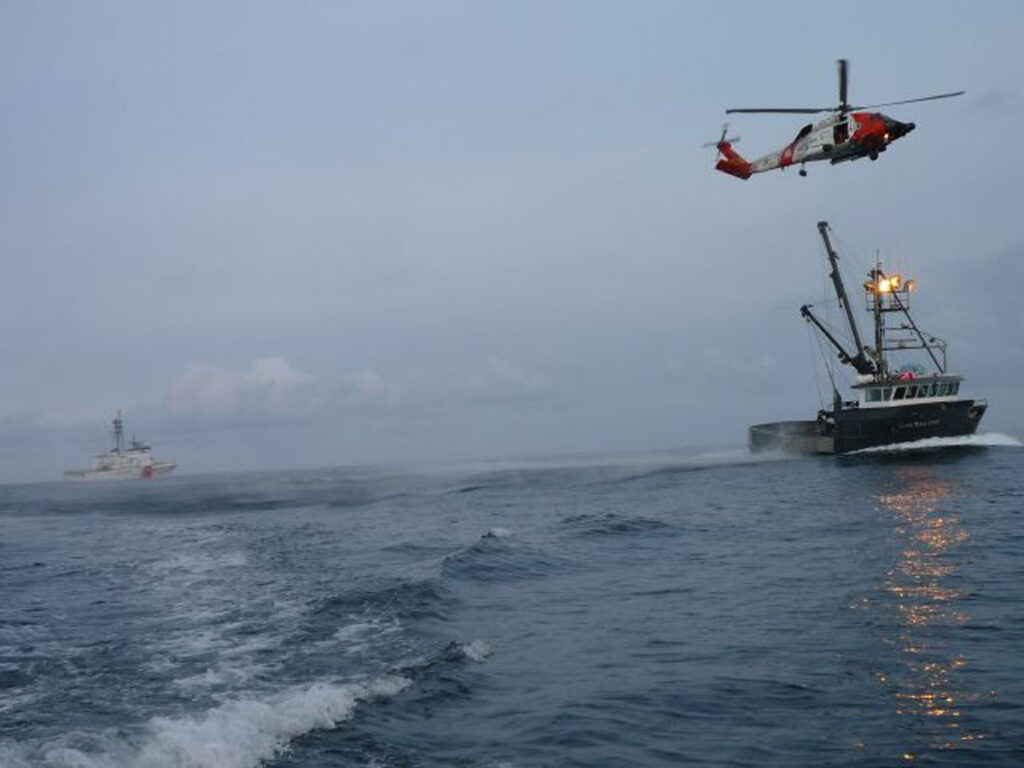
Commercial fishing in Alaska is one of the most productive wild fisheries in the world and a mainstay of the state economy. Alaska accounts for more than half of United States seafood landings, about 6 billion pounds worth $1.8 billion in 2017, and Alaska pollock is the nation’s largest commercial fishery. The port of Dutch Harbor in the Aleutian Islands led the nation for volume of seafood landed for 21 consecutive years through 2017 [1][2].
| Share of U.S. seafood (2017) | More than half |
|---|---|
| Landings (2017) | About 6 billion pounds, $1.8 billion |
| Alaska pollock (2017) | 3.4 billion pounds, $413 million |
| Top port by volume | Dutch Harbor (21 consecutive years through 2017) |
| Dutch Harbor landings (2017) | About 769 million pounds, $173 million |
| Catch in 2013 | 5.8 billion pounds, $1.9 billion |
Scale
According to a NOAA report cited by Alaska Public Media, Alaska accounted for more than half of U.S. seafood landings in 2017, about 6 billion pounds worth $1.8 billion, an increase in both volume and value from the prior year [1]. Seafood is Alaska’s main export after oil and gas, consisting mainly of salmon, cod, pollock and crab, and the 2013 catch was 5.8 billion pounds worth $1.9 billion [2].
Pollock
Alaska pollock is the nation’s largest commercial fishery, with near-record landings of 3.4 billion pounds in 2017, up about 1 percent from 2016, valued at $413 million [1].
Dutch Harbor
Dutch Harbor, in the town of Unalaska in the Aleutian Islands, led the nation for the 21st consecutive year, landing about 769 million pounds of seafood in 2017 worth about $173 million, down $25 million from 2016. Much of the haul was pollock [1].
Other Species
Other high-value species include salmon, crab, lobsters, shrimp and scallops [1]. Salmon, which are managed under a separate entry in this encyclopedia, produce harvests that vary from about 95 million to more than 280 million fish a year.
Fishing Communities
Many Alaska communities rely on fishing for jobs and food. Unalaska is among the top fishing ports in the country, especially for walleye pollock, and Sitka is the sixth-largest U.S. port by value of seafood harvest, with about 18 percent of its residents earning income from fishing or seafood [3][4].
Economic Role
Fishing contributes to employment in harvesting, processing and shipping, and seafood is the second leg of exports after oil and gas. In many coastal and island communities it is the leading private employer [2][4].
Management
Alaska’s fisheries are managed through state and federal agencies that set seasons, quotas and gear rules. The Alaska Department of Fish and Game manages salmon, crab and many in-state fisheries, while federal fisheries in the Bering Sea and Gulf of Alaska are managed under federal law. Management aims to keep stocks sustainable, and the state constitution requires that fish be managed on a sustained-yield basis.
From Boat to Table
Alaska’s fisheries involve fishing vessels of many sizes, from small salmon skiffs to large catcher-processors in the Bering Sea. Landings are delivered to shoreside processing plants in ports such as Dutch Harbor, Kodiak and Sitka, where the catch is cleaned, frozen, canned or filleted and shipped to markets in the United States and abroad. This chain provides jobs far beyond the boats themselves.
Pollock and the Bering Sea
The pollock fishery of the Bering Sea is the largest by volume in the United States. Its near-record landings of 3.4 billion pounds in 2017 were valued at 3 million, which shows how a lower-priced species can be economically important because of its quantity [1]. Pollock is used in products such as fish sticks, fillets and surimi.
Salmon and Other Fisheries
Salmon, crab, cod and shellfish round out the catch. Salmon harvests are covered in a separate entry and vary from roughly 95 million to more than 280 million fish, while crab fisheries have varied in recent years. Together these fisheries make seafood the state’s largest export after oil and gas [2].
Communities and Culture
For many communities, fishing is not only a source of income but a way of life tied to family, tradition and subsistence. Residents of port towns such as Unalaska and Sitka draw a significant share of their income from fishing or seafood, and Indigenous fishing traditions on rivers like the Yukon have supported people for thousands of years [3][4].
FAQs
How much of U.S. seafood comes from Alaska? More than half of U.S. seafood landings in 2017, about 6 billion pounds.
What is Alaska’s largest fishery? Alaska pollock, which is also the nation’s largest commercial fishery.
Which port lands the most seafood? Dutch Harbor in Unalaska led the nation by volume for 21 consecutive years through 2017.
What species are caught in Alaska? Pollock, salmon, cod, crab, halibut, shrimp, scallops and others.
Why is fishing important to Alaska? It is the state’s main export after oil and gas and a leading employer in coastal communities.
Sources
- Alaska Public Media: Dutch Harbor remains nation’s top port for 21st consecutive year
- Wikipedia: Economy of Alaska
- Encyclopædia Britannica: Aleutian Islands
- Wikipedia: Sitka, Alaska
More in Agriculture & Food
Key facts
Quick checkWhich species is the nation’s largest commercial fishery?Show answer
Alaska pollock
Sources
- Alaska Public Media. Dutch Harbor remains nation’s top port for 21st consecutive year. 2018 (accessed 2026-11-12)
- Wikipedia. Economy of Alaska. 2026 (accessed 2026-11-12)
- Encyclopædia Britannica. Aleutian Islands. 2026 (accessed 2026-11-12)
- Wikipedia. Sitka, Alaska. 2026 (accessed 2026-11-12)
Editorially reviewed by Specialty Digest Editorial TeamLast reviewed November 12, 2026Researched and drafted with AI assistanceReport an issue