The National Petroleum Reserve–Alaska (NPR-A) is a federal reserve of about 23.6 million acres on Alaska’s North Slope, west of the Arctic National Wildlife Refuge. It is administered by the Bureau of Land Management.[1]
| Area | 23,599,999 acres |
|---|---|
| Established | 1923 as Naval Petroleum Reserve No. 4 |
| Renamed | 1976 |
| Administered by | Bureau of Land Management |
| Largest community | Utqiaġvik |
| Special Areas | Teshekpuk Lake, Colville River, Utukok River Uplands, Kasegaluk Lagoon |
History
President Warren G. Harding set the land aside in 1923 as Naval Petroleum Reserve Number 4, when the Navy was converting from coal to oil. The Naval Petroleum Reserves Production Act of 1976 renamed it and transferred it to the Department of the Interior. The U.S. government drilled about 137 exploratory wells between 1944 and 1981, and the Bureau of Land Management manages the abandoned wells. In 1980 Congress directed the bureau to conduct oil and gas leasing.[1]
Special Areas
In 1977 the Secretary of the Interior designated three Special Areas: Teshekpuk Lake, for migratory waterfowl and shorebirds; the Colville River, for the arctic peregrine falcon; and the Utukok River Uplands, for the calving habitat of the Western Arctic caribou herd. The Kasegaluk Lagoon Special Area was added in 2004.[1]
Geography and wildlife
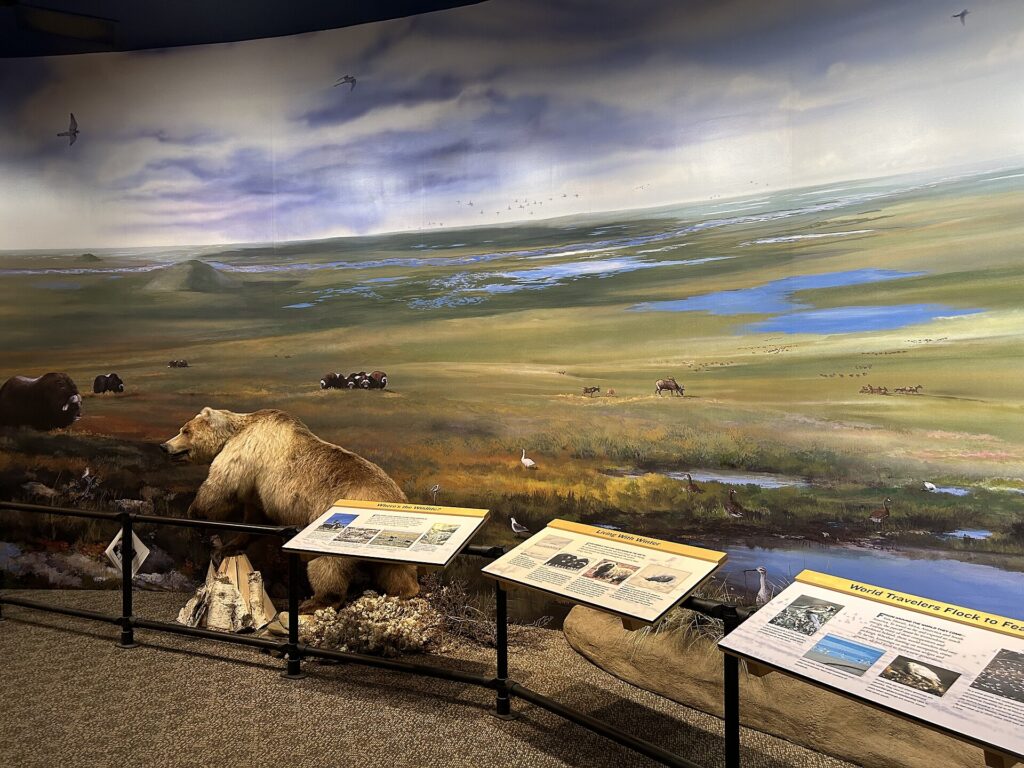
The reserve contains the headwaters and much of the Colville River, Alaska’s largest river north of the Arctic Circle, and most of it stayed free of glaciers in the last ice age. Teshekpuk Lake is a major nesting ground for waterfowl and shorebirds. More than half a million caribou belong to the Western Arctic and Teshekpuk herds, and polar bears den in the area in winter.[1]
People
Permanent settlements are small. Iñupiat communities around the perimeter, including Utqiaġvik, seat of the North Slope Borough, and Nuiqsut, follow largely subsistence lifestyles.[1]
Resource assessments
The U.S. Geological Survey estimated about 896 million barrels of undiscovered conventional oil in 2008 and 53 trillion cubic feet of undiscovered natural gas in 2010.[1]
FAQs
How large is the reserve? About 23.6 million acres.
Who manages it? The Bureau of Land Management.
When was it set aside? 1923.
What are its Special Areas? Teshekpuk Lake, Colville River, Utukok River Uplands and Kasegaluk Lagoon.
Sources
Key facts
- 23.6 million acres
- Created 1923
Quick checkWho administers the NPR-A?Show answer
The Bureau of Land Management
Sources
- Wikipedia. National Petroleum Reserve–Alaska. 2026 (accessed 2026-11-12)
Editorially reviewed by Specialty Digest Editorial TeamLast reviewed November 12, 2026Researched and drafted with AI assistanceReport an issue