The Iñupiat are the Inuit people of Alaska’s Arctic coast, the North Slope, the Seward Peninsula and Northwest Alaska. Their homeland, Iñupiat Nunaat, runs from Norton Sound on the Bering Sea to the Canadian border. Descended from the Thule culture, the Iñupiat are known for hunting the bowhead whale, for the language Iñupiaq, and for a culture built on sharing, respect for elders and knowledge of the Arctic environment [1][2].
| Homeland | North Slope, Northwest Arctic and Seward Peninsula |
|---|---|
| Population | About 20,700 (2015 estimate) |
| Language | Iñupiaq (Iñupiatun), four main dialects |
| Villages | About 34 in Iñupiat Nunaat |
| Regional corporations | Arctic Slope, NANA and Bering Straits |
| Key tradition | Bowhead whaling and the Nalukataq festival |
| Higher education | Iȷisaġvik College, Utqiaġvik |
Homeland and Communities
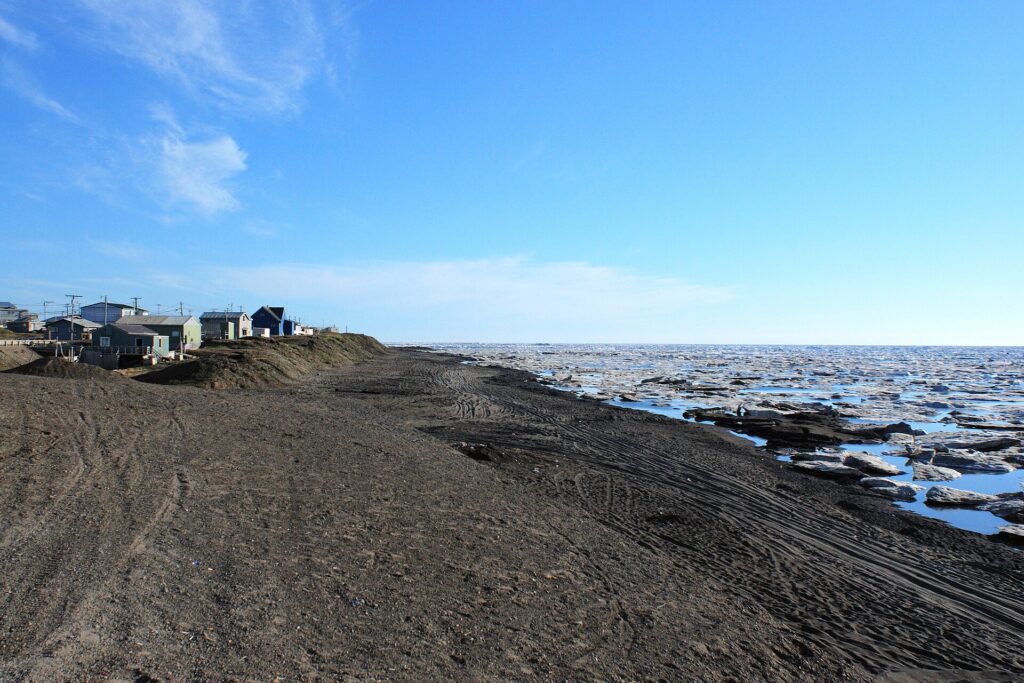
Iñupiat territory stretches from Norton Sound on the Bering Sea to the northernmost part of the Canada–United States border. About 34 villages lie in Iñupiat Nunaat, in the North Slope Borough, the Northwest Arctic Borough and the Bering Straits region. Major communities include Utqiaġvik on the North Slope, Kotzebue in the Northwest Arctic, and Nome on the Seward Peninsula [1].
Regional subgroups include the Sivunmiut of the Bering Strait, the Qawiaraq of the Seward Peninsula, the Malimiut of the Northwest Arctic, the Tikiġaġmiut of the North Alaska coast and the inland Nunamiut [1].
History and Ancestry
Like other Inuit groups, the Iñupiat descend from the Thule culture, which migrated from Bering Sea islands to Alaska around 300 B.C. Some villages have been occupied for more than 10,000 years. The Iditarod Trail has antecedents in Iñupiat trails. Between 1890 and 1910, famine and an influenza epidemic drove most Nunamiut to the coast, and some returned to the mountains in the 1930s, with most settling at Anaktuvuk Pass by 1950 [1].
Language
The language is Iñupiaq, also called Iñupiatun, with four main dialects: North Slope, Malimiut, Bering Straits and Qawiaraq. Only about 2,000 speakers remain, most of them elderly, although a figure of about 24,500 Iñupiat is also given for the people as a whole. Revitalization includes the Nikaitchuat Iȷisaġviat immersion school in Kotzebue, founded in 1998, language courses in the University of Alaska system, and the grassroots Iȷisaqativut summer intensive, begun in Utqiaġvik in 2017 [1].
In 2014 linguist Edna Ahgeak MacLean published an Iñupiaq-English dictionary with more than 19,000 entries after about 30 years of research. In the early twentieth century several Iñupiat also developed a pictographic writing system called Alaskan Picture Writing [1].
Subsistence and Whaling
Subsistence hunting and fishing remain central to Iñupiat life. Coastal communities hunt walrus, seals, belugas and bowhead whales, while inland Nunamiut hunt caribou, Dall sheep, moose and bears. Fish are an important food for both groups. Whale shares are distributed by a traditional formula, and relatives living far away still receive a portion of a whale taken by their ancestral village [1].
Muktuk, whale skin and blubber, is rich in vitamins A and C. Hides, furs and qiviut, the underwool of the muskox, are used for clothing, and walrus intestines make drums. The Iñupiat build skin boats called qayaq and umiaq, and they use ivory and baleen in art and tools, although federal law prohibits harvesting walrus solely for ivory. Akutaq, a dessert of berries mixed with tallow, is a traditional food [1].
Culture and Festivals
Nalukataq is a spring whaling festival that honors the whale’s spirit for giving its body to feed the village, with dance groups from across the North performing. The Iñupiat Ilitqusiat is a list of core values compiled by elders in Kotzebue that includes respect for elders, sharing, humility, spirituality and knowledge of family tree. Other cultural items include the Messenger Feast, baleen basketry and the qargi, the men’s community house [1].
Organizations and Economy
The Alaska Native Claims Settlement Act created 13 regional corporations, and three operate on Iñupiat lands: the Arctic Slope Regional Corporation, the NANA Corporation and the Bering Straits Regional Corporation. Regional nonprofits such as Maniilaq and Kawerak provide services, and federal recognition was extended to Alaska Native tribes in 1993 [1]. Oil and other resources have been a major source of revenue since the 1970s, and the Trans-Alaska Pipeline connects the Prudhoe Bay wells to Valdez [1][2].
Iȷisaġvik College in Utqiaġvik is the only higher education institution oriented toward Iñupiaq culture [1].
Climate Change and Health
Thinning sea ice makes hunting for whales, seals and walrus more difficult and has caused people to fall through ice. Warmer winters make travel more dangerous, and later sea ice increases coastal flooding and erosion that threaten villages. The Inuit Circumpolar Council, founded with the help of Eben Hopson, has argued that climate change threatens Inuit human rights [1].
Notable Iñupiat
Notable people include Willie Hensley (born 1941), a leader in the Alaska Native rights movement, linguist and educator Edna Ahgeak MacLean (born 1944), Howard Rock (1911 to 1976), founder of the Tundra Times, Ada Blackjack (1898 to 1983), who survived two years on Wrangel Island, and musher Ryan Redington, the 2023 Iditarod champion [1].
Tribal Governments and Village Corporations
Alongside the regional corporations, each Iñupiat village has a tribal government and a village corporation. Examples include the Ukpeagvik Corporation in Utqiaġvik and the Kikiktagruk Corporation in Kotzebue. Tribal governments, at both regional and village levels, provide services such as education, housing and family support, while regional nonprofits such as Maniilaq in the Northwest Arctic and Kawerak in the Bering Straits region run health, social service and cultural programs [1]. The North Slope Borough and the Northwest Arctic Borough, where Iñupiat make up more than 95 percent of residents according to 2010 census figures, are the local governments of the region [2].
Values, Sharing and Daily Life
Elders in Kotzebue compiled the Iñupiat Ilitqusiat, a statement of core values that includes respect for elders, sharing, humility, spirituality and knowledge of family tree. The same emphasis on sharing appears in the traditional distribution of whale shares, which reach even relatives living far from the village that took the whale [1]. Iñupiat arts and technologies, from skin boats and clothing made of hides and qiviut to baleen basketry and ivory carving, carry these values from generation to generation [1].
FAQs
Who are the Iñupiat? They are the Inuit people of northern and northwestern Alaska, living on the North Slope, in the Northwest Arctic and on the Seward Peninsula.
What language do the Iñupiat speak? Iñupiaq, also called Iñupiatun, with four main dialects. Only about 2,000 speakers remain.
What is Nalukataq? A spring festival that honors the whale after the whaling season, with feasting, dancing and the traditional blanket toss.
Which regional corporations serve the Iñupiat? The Arctic Slope Regional Corporation, the NANA Corporation and the Bering Straits Regional Corporation.
What do the Iñupiat hunt? Coastal communities hunt bowhead whales, seals, walrus and belugas, while inland Nunamiut hunt caribou, Dall sheep and moose.
Sources
More in Anthropology
Key facts
Quick checkWhat is the traditional Iñupiat spring whaling festival called?Show answer
Nalukataq
Sources
- Wikipedia. Iñupiat. 2026 (accessed 2026-11-11)
- Wikipedia. Alaska Natives. 2026 (accessed 2026-11-11)
Editorially reviewed by Specialty Digest Editorial TeamLast reviewed November 11, 2026Researched and drafted with AI assistanceReport an issue