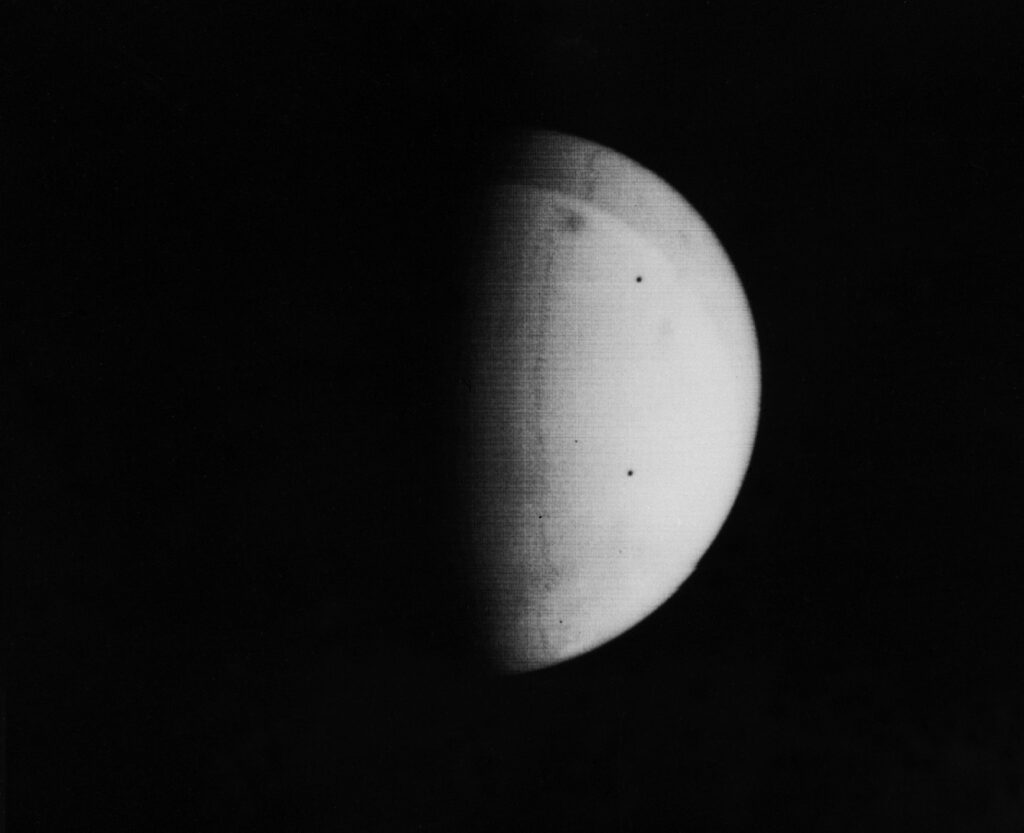
Mariner 9 Becomes First Spacecraft to Orbit Another Planet
A dust storm hid nearly the whole planet, but through the haze, the first spacecraft ever to circle another world still made out one thing: the summit of the solar system’s largest volcano.
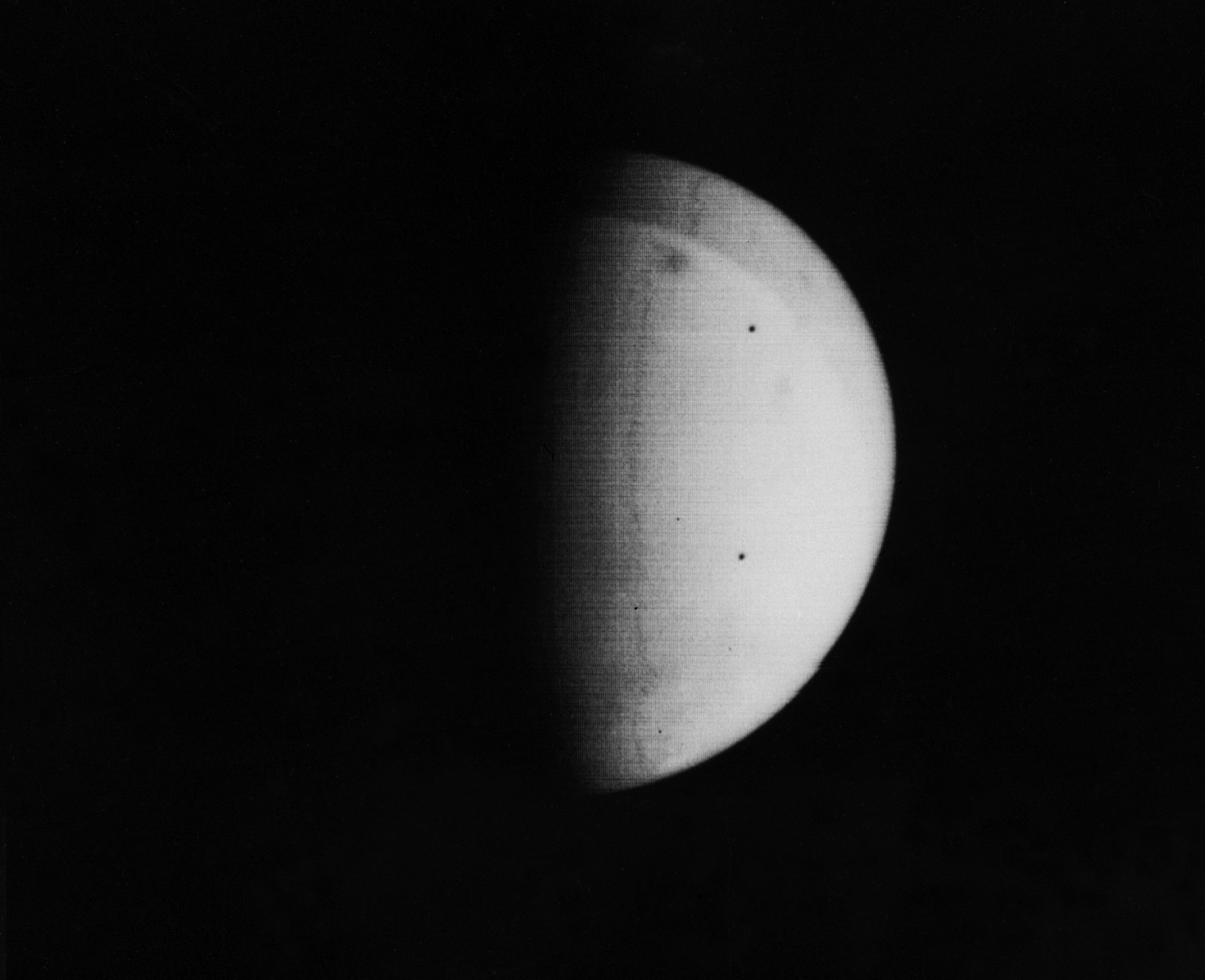
On the night of November 13, 1971, Mariner 9 fired its main engine for about 15 minutes and slipped into orbit around Mars, 00:18 Universal Time the next morning. After a five-month flight from Cape Canaveral, it became the first spacecraft from any nation to orbit a planet other than Earth.
A flyby lasts minutes; an orbit lasts a year. That endurance let Mariner 9 wait out a major Martian dust storm, then spend 1972 mapping the planet in close, repeated detail, a pattern every Mars orbiter since, through NASA’s current fleet, has followed.
The storm that should have ruined the mission delivered its first discovery. When the haze cleared over one spot before anywhere else, controllers realized they were looking at a mountain far taller than anything Earth had ever produced: Olympus Mons.
Key Moments
Mariner 9 launches from Cape Canaveral, three weeks after its twin craft, Mariner 8, was lost to a launch failure. The Space Age that Sputnik 1 had opened fourteen years earlier was now reaching for another planet.
Mariner 9 fires its engine and enters Mars orbit, the first spacecraft ever to circle another planet; a major dust storm hides nearly the entire surface from its cameras.
The Soviet Union’s Mars 2 arrives two weeks later. Its orbiter succeeds, but its lander crashes, becoming the first human-made object to reach the Martian surface, from the same program that had already sent Laika into orbit in 1957.
Mars 3 achieves the first survived landing on Mars, then falls silent about 20 seconds later, its transmission cut short by the same dust storm engulfing the planet.
The dust storm finally clears enough for Mariner 9 to begin the detailed survey that would chart Olympus Mons, the canyon system later named Valles Marineris, and the first close images of the Martian moon Phobos.
Mariner 9 shuts down after exhausting its attitude-control gas, having spent nearly a year in orbit and returned 7,329 images covering about 85 percent of Mars.
Did you know? Mariner 9’s long wait for a dust-choked Mars to clear has a modern echo: NASA’s Perseverance rover now measures Martian dust grains down to about 100 nanometers across, fine enough to work into spacesuit seals.
More in History