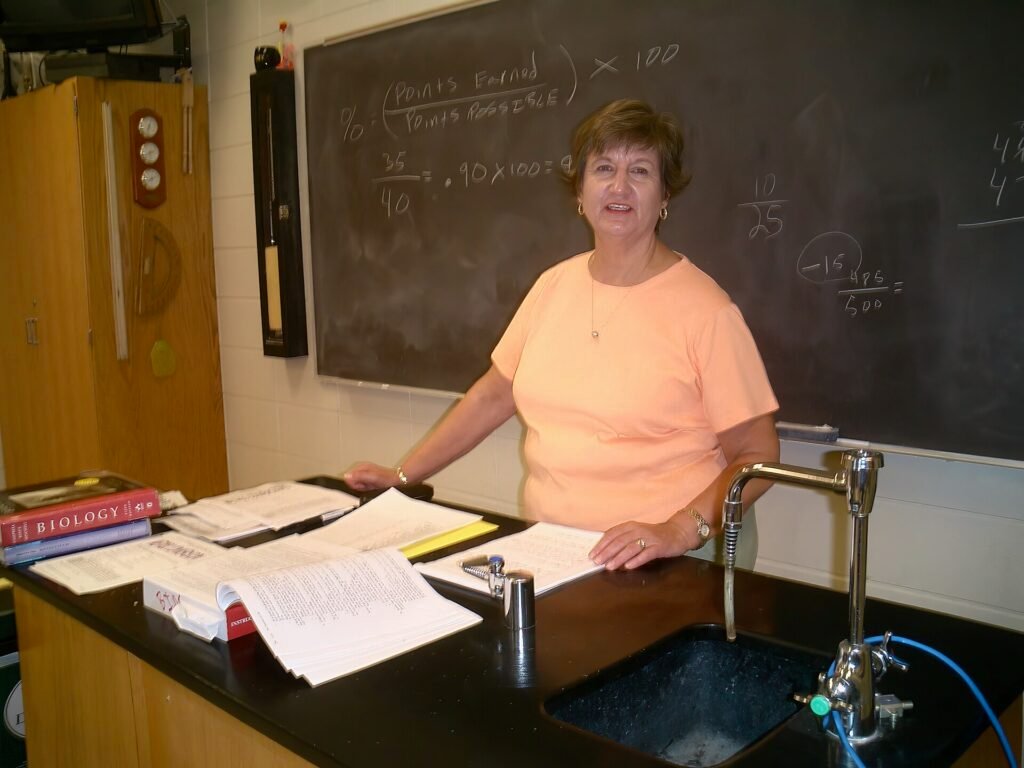
Education at a Glance 2026 is the latest edition of the OECD’s yearly report on education systems, launched on September 29, 2026 with teacher shortages as its theme. This article uses the OECD’s launch advisory and the summary published by Germany’s Standing Conference of the Ministers of Education and Cultural Affairs (KMK) to describe what the report shows for Germany. We did not obtain the OECD’s own teacher-shortage statistics, so this article does not report them.
What is Education at a Glance?
Education at a Glance is a yearly OECD publication that compares education indicators across member countries, including attainment, spending, enrollment and the labor market results of graduates. The 2026 edition focuses on teacher shortages. The OECD average used in the comparisons below is the average of its member countries, as reported by the KMK summary.
How educated is the adult population?
In Germany, 86 percent of adults aged 25 to 64 hold at least an upper secondary qualification, compared with an OECD average of 82 percent. Among 25 to 34 year olds, 41 percent hold a tertiary qualification, compared with 47 percent on average in the OECD. The German share is up 11 percentage points since 2015. By our own arithmetic, that puts the 2015 German share at about 30 percent.
What is happening to mid-level qualifications?
The share of 25 to 34 year olds in Germany whose highest qualification is at the middle level fell from 58 percent in 2015 to 45 percent in 2025. Within this group, vocational qualifications fell from 51 percent to 38 percent. The KMK summary presents these as shifts in the qualification mix. It does not explain the causes, and neither do we.
How do vocational graduates fare?
Among 25 to 34 year olds with a mid-level vocational qualification, 89 percent in Germany are employed and the unemployment rate is 3.4 percent. For tertiary graduates the figures are 88 percent employed and 3.4 percent unemployed. The international comparison for the mid-level group is 83 percent employed and 6.8 percent unemployed. These are figures from the summary, and they describe groups and not individual outcomes.
Which fields do German students choose?
Of tertiary graduates in Germany who hold a German entrance qualification, 34 percent studied science, technology, engineering or mathematics (STEM), the highest share in the OECD. Among international students in Germany the share is 51 percent, the second highest. Readers should note that this counts graduates and not all students.
What about early childhood education?
In 2024, 96 percent of German children aged 3 to 5 attended early childhood education, compared with an OECD average of 90 percent. Germany had 7.5 children per staff member, compared with 9.4 on average. Between 2015 and 2024 the number of children grew by 17 percent, while the number of staff grew by 31 percent. By our own arithmetic, staff grew about 1.8 times as fast as the number of children.
How much does Germany spend?
Spending per student in Germany is 16,430 U.S. dollars, compared with an OECD average of 14,861 dollars. Primary education spending is 13,163 dollars per student, compared with 13,639 dollars on average. As a share of gross domestic product, Germany spends 4.4 percent, against 4.7 percent for the OECD. Spending per student can be higher while the share of national income is lower, because the two measures use different bases.
What is the teacher shortage in Germany?
The KMK summary says the shortage in Germany shows mainly in teachers who do not yet meet all qualification requirements. Ministers call for better data on the shortage. Several states have opened dual-study and master’s routes for people changing careers. The summary does not give a count of vacancies or of teachers without full qualifications.
Who is outside work and training?
Among 18 to 24 year olds, 11 percent in Germany were neither employed nor in education or training (NEET) in 2025, compared with an OECD average of 13 percent. The German share is up 2 percentage points since 2015. About 14 percent of adults in Germany have a low qualification, compared with 12 percent on average.
Why use a ministers’ summary?
The KMK is the body of the German state education ministers, so its summary reflects how the officials responsible for schools present the report. It is a useful source for the German figures, but it is a secondary summary. Readers who need exact definitions, such as how the OECD counts qualification levels, should check the OECD tables when they are available.
How to read the numbers
All the figures above are for Germany unless a comparison is stated, and they come from the KMK summary of the OECD report, not from the OECD tables. The OECD average combines countries with very different systems. A figure that is above or below the average does not by itself show a better or worse system.
How does this connect to other coverage?
See also our reports on UNESCO’s global education monitoring, the Global Innovation Index, the digital divide and World Health Statistics.
What should readers watch for next?
Readers can watch for the OECD’s own teacher-shortage tables and for national data on vacancies.
Glossary
- Tertiary education: study after secondary school, such as university
- Upper secondary: the last stage of school before tertiary study
- NEET: not in employment, education or training
- STEM: science, technology, engineering and mathematics
- Percentage point: the difference between two percentages
These definitions are general explanations and are not quoted from the OECD.
What is not covered here?
We do not report the OECD’s figures for other countries or its teacher pay and age data, which we did not obtain.
Key facts at a glance
- Launched: September 29, 2026, theme teacher shortages
- German tertiary attainment, ages 25 to 34: 41 percent
- Early education attendance, ages 3 to 5: 96 percent
- Spending per student: 16,430 dollars
- NEET rate, ages 18 to 24: 11 percent
Frequently asked questions
What is Education at a Glance 2026 about?
It is the OECD’s yearly comparison of education systems, focused this year on teacher shortages.
How many Germans hold a tertiary degree?
41 percent of 25 to 34 year olds, against 47 percent for the OECD average.
Does this article give OECD teacher-shortage numbers?
No. We did not obtain them.
More in Education