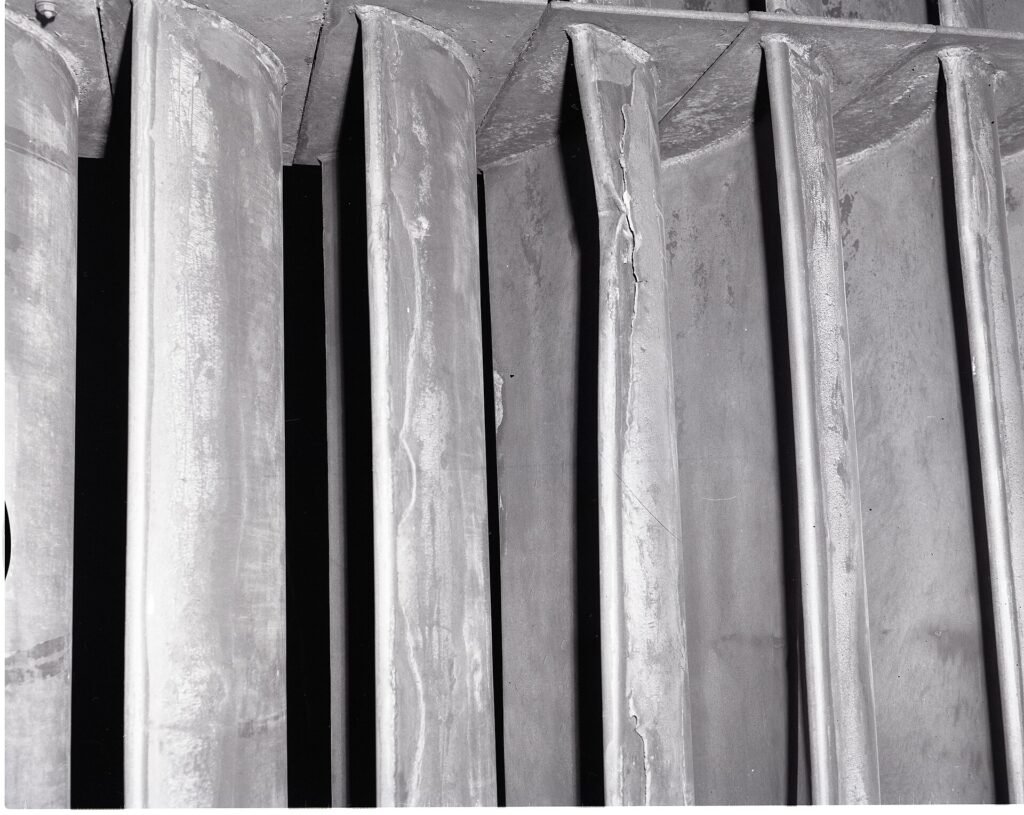
Supercooled large droplet icing is a hazard in which liquid drops far larger than usual freeze onto an aircraft. NASA published an image article on October 5, 2026, updated October 24, describing tests of new instruments for measuring those drops in the Icing Research Tunnel at the Glenn Research Center in Cleveland. This article summarizes the NASA article, explains the terms and notes that no results are reported yet.
What are supercooled large droplets?
Supercooled water is liquid water that stays liquid below the normal freezing point. When a supercooled drop hits an aircraft surface, it can freeze on contact. NASA says typical icing droplets measure roughly 2 to 100 microns across, while supercooled large drops can reach about 2,000 microns. A human hair is about 70 microns thick. By our own arithmetic, a 2,000 micron drop is about 29 times the width of a hair.
Why are large drops a problem?
In general terms, large drops can spread back along a wing and freeze beyond the areas where ice protection systems work, so they present a different challenge from ordinary icing. This general explanation is not quoted from NASA. The NASA article is about measuring such drops and not about the risks, and it gives no accident or incident data.
What is the Icing Research Tunnel?
The Icing Research Tunnel at Glenn is a facility where engineers can create clouds of tiny water drops in cold air and test how ice forms. The article says the tests are part of the Subsonic Flight Demonstrator project, which is testing instrumentation for supercooled large droplets. The article gives dates of June 8 to 11, 2026 for particle size testing in its photo captions.
What instruments were tested?
NASA says new probes can measure drops larger than 45 microns in real time. A separate probe covers smaller drops. Measuring in real time means the sizes appear as the cloud passes the probe, instead of being worked out later from photographs. The article does not name the probes or their makers, and it does not give their accuracy.
What is the aim of the testing?
The team aims to calibrate the clouds made in the tunnel, to compare the real-time measurements against manual image post-processing, and to combine the data. Calibration matters because tunnel results are only useful if the drop sizes in the tunnel are known. The article says analysis is ongoing and reports no results.
Why compare real-time and manual methods?
Counting and sizing drops by hand from images is slow but familiar. Real-time probes are fast but newer. Checking one against the other shows whether the faster method can be trusted. In general terms, this is a standard way to validate a new instrument. This explanation is general and is not quoted from NASA.
Who wrote the article?
The author is Sarah Mann of NASA Armstrong Public Affairs. The article is a NASA image article built around photographs of the tunnel tests. It is an agency description of ongoing work and has not been independently reviewed.
What does it mean for flight testing?
The article ties the work to the Subsonic Flight Demonstrator project but does not describe flight plans, aircraft or dates. Readers should not infer that any aircraft will fly in supercooled large droplet conditions on the basis of this article. Another NASA test aircraft, the quiet supersonic X-59, appears in our separate report.
Why measure drop size at all?
The size of a drop affects where it lands and whether it freezes on contact or runs back before freezing. In general terms, engineers need to know the sizes in a test cloud before they can say what a test result means for real flight conditions. This general explanation is not quoted from NASA. The NASA article frames its testing around that need for reliable measurement, and it reports no findings on how drop size changes ice shape.
What is a real-time probe versus an image method?
A probe sits in the cloud and reports sizes as drops pass. An image method records pictures of the drops and then analyzes them later, either by hand or by software. The article says the team will compare the two and combine the data. Combining them could cover a wider size range than either method alone, but the article does not state that as a result.
How large is a thousand microns?
A thousand microns is one millimeter. By our own arithmetic, the largest drops NASA mentions, about 2,000 microns, are about 2 millimeters across. The smallest typical icing drops, about 2 microns, are far too small to see without a microscope.
How to read the numbers
A micron is one millionth of a meter. The ranges of 2 to 100 microns and up to 2,000 microns are NASA’s approximate figures for typical and large drops. The 45 micron threshold is the size above which the new probes measure in real time. These are specifications of the test and not results.
How does this connect to other coverage?
Other NASA engineering reports include plume surface interaction tests, the Mars helicopter blade, the CASALS lidar project and the X-59 record flight week.
What should readers watch for next?
Readers can watch for NASA to publish the calibration and comparison results once the analysis is complete.
Glossary
- Supercooled: liquid water cooled below its normal freezing point
- Micron: one millionth of a meter
- Calibration: adjusting an instrument against a known standard
- Post-processing: analyzing recorded images after the test
- Probe: a sensor placed in the cloud to measure it
These definitions are general explanations and are not quoted from NASA.
What is not covered here?
The article gives no results, instrument names or accuracy figures, so we report none.
Key facts at a glance
- Facility: Icing Research Tunnel, Glenn Research Center
- Testing dates: June 8 to 11, 2026
- Typical drops: roughly 2 to 100 microns
- Large drops: up to about 2,000 microns
- Status: analysis ongoing
Frequently asked questions
What is supercooled large droplet icing?
Ice that forms when very large drops of supercooled water freeze on an aircraft.
What did NASA test?
New probes that measure drop sizes in real time inside the Icing Research Tunnel.
Are there results?
No. NASA says analysis is ongoing.
More in Technology