Equatorial Guinea is a small Central African nation made up of a mainland region and several islands, and it is the only country in Africa where Spanish is an official language, a legacy of nearly two centuries of Spanish colonial rule. Since the 1990s it has become one of Sub-Saharan Africa’s largest oil producers, transforming a once agrarian economy almost overnight.
Where Is Equatorial Guinea Located?
Equatorial Guinea consists of a mainland territory called Rio Muni, wedged between Cameroon to the north and Gabon to the south and east on the Gulf of Guinea coast, plus several islands, the largest of which is Bioko Island, home to the capital, Malabo. The smaller island of Annobon lies far to the southwest in the Gulf of Guinea, closer to Sao Tome and Principe than to the mainland.
Geography of Equatorial Guinea
The mainland is covered largely by dense equatorial rainforest and is part of the wider Congo Basin forest region, while Bioko Island is volcanic, dominated by the peak of Pico Basile. The country’s location on the Gulf of Guinea, combined with offshore oil and gas fields discovered in the 1990s, has made it one of the more economically distinctive nations in the region despite its small size and population.
A Brief History of Equatorial Guinea
Portuguese navigators reached the islands in the fifteenth century, and Portugal ceded the territory to Spain in 1778 under the Treaty of El Pardo, in exchange for territory in South America. Spain administered the colony, then known as Spanish Guinea, until independence in 1968, making Equatorial Guinea the first Spanish colony in Sub-Saharan Africa to become independent. The decades since have been marked by long periods under a small number of rulers and, since the 1990s, by the transformative discovery of offshore petroleum reserves that made the country one of the wealthiest in Africa by per-capita income, even as that wealth has been unevenly distributed.
Government and Economy
Equatorial Guinea is a presidential republic. According to the World Bank, its economy grew by an estimated 0.9 percent in 2024, growth the World Bank describes as insufficient to boost jobs and earnings enough to maintain living standards amid rising food prices. The economy remains heavily dependent on oil and gas exports, and the World Bank and regional partners have called for economic diversification to build more sustainable, broad-based growth as hydrocarbon output declines from its early-2000s peak.
Culture and People
Spanish, French, and Portuguese are all official languages, alongside Indigenous languages such as Fang on the mainland and Bubi on Bioko Island, reflecting the country’s Bantu ethnic heritage and its unusual position as a Spanish-speaking nation in Central Africa. Roman Catholicism, introduced under Spanish and Portuguese rule, remains the predominant religion.
What Is Equatorial Guinea Known For?
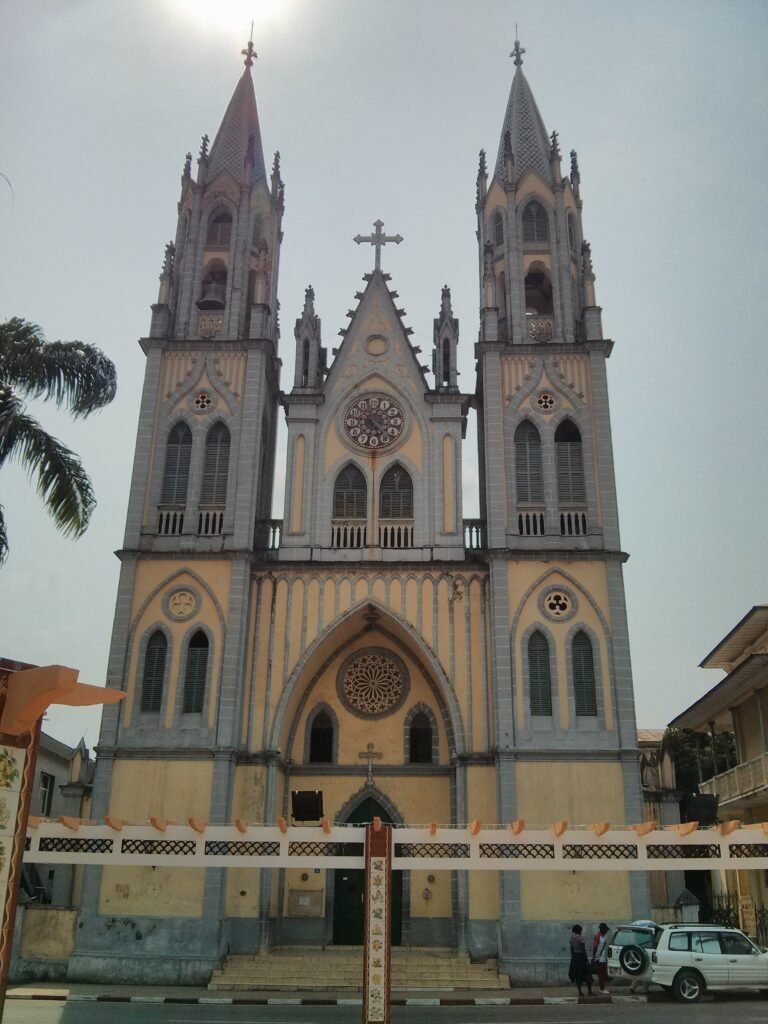
Equatorial Guinea is best known internationally for its oil wealth and for being Africa’s only Spanish-speaking nation. In Malabo, the Cathedral of Santa Isabel, a twin-spired Gothic Revival church built during the Spanish colonial era, is the city’s most recognizable landmark and a lasting symbol of that colonial history in the heart of the capital.
Why Equatorial Guinea Matters
As one of Africa’s largest oil producers relative to its small population, Equatorial Guinea illustrates both the opportunities and the governance challenges that resource wealth can bring to a small state, a theme the World Bank continues to track as the country works to diversify its economy beyond hydrocarbons.
Key Takeaways
- Equatorial Guinea is the only African country with Spanish as an official language.
- It comprises a mainland territory, Rio Muni, and islands including Bioko, home to the capital, Malabo.
- Spain ruled the territory from 1778 until independence in 1968.
- The Cathedral of Santa Isabel in Malabo is the country’s best-known landmark.
- The World Bank reports the economy grew about 0.9 percent in 2024, driven largely by oil and gas.
Sources
Key facts
- Only African country with Spanish as an official language1
- Comprises mainland Rio Muni plus Bioko and Annobon islands2
- Independence from Spain in 1968, the first Spanish colony in Sub-Saharan Africa to gain it2
- Economy grew an estimated 0.9% in 2024, driven largely by oil and gas1
- Capital: Malabo, on Bioko Island2
Quick checkWhy is Equatorial Guinea linguistically unusual among African nations?Show answer
It is the only African country with Spanish as an official language, a legacy of Spanish colonial rule from 1778 to 1968.
Sources
- World Bank. Equatorial Guinea Overview. 2025-2026 update (accessed 2026-09-23)
- Encyclopaedia Britannica. Equatorial Guinea. Undated (accessed 2026-09-23)
Editorially reviewed by Specialty Digest Editorial TeamLast reviewed September 23, 2026Researched and drafted with AI assistanceReport an issue