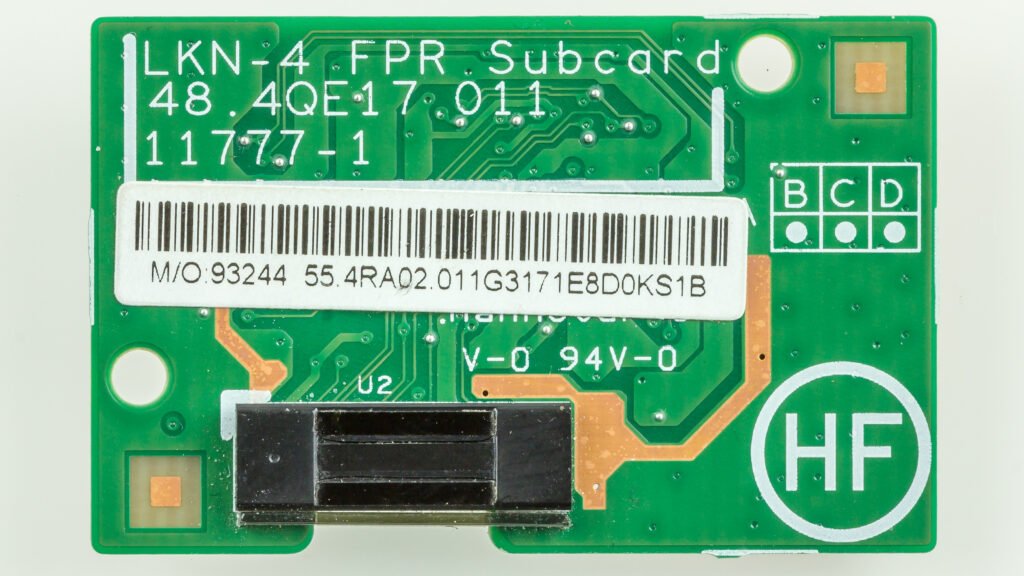
Biometrics is the measurement of physical or behavioral characteristics, such as fingerprints, iris patterns or facial features, to identify an individual. The U.S. National Institute of Standards and Technology (NIST) defines it as the measurement of physiological characteristics that can be used to identify a person. Biometric systems are used to unlock phones, control access to buildings, screen travelers at borders and support criminal investigations.
History of biometrics
The idea of identifying people by their bodies is much older than computers. In the 1890s Francis Galton published studies showing that fingerprints are distinctive and stable over a lifetime. Edward Henry’s system for classifying fingerprints was adopted by London’s Metropolitan Police in 1901, and police forces around the world soon followed with fingerprint files.
Automation came later. NIST reports that it has done biometrics research for more than 60 years, including fingerprint work for the Federal Bureau of Investigation (FBI) dating to the 1960s. That work supported the move from paper cards to digital images that computers could search.
In July 1999 the FBI’s Criminal Justice Information Services Division began operating the Integrated Automated Fingerprint Identification System, known as IAFIS, which provided automated searches of fingerprints. The FBI then built the Next Generation Identification (NGI) system to replace it, deploying the first increment in February 2011. The FBI notes that the term biometrics is no longer limited to fingerprints and now includes palm prints, irises and facial recognition.
How biometrics works
Every biometric system follows the same basic steps. In enrollment, a sensor captures a sample such as a fingerprint image, and software extracts distinctive features from it. The features are stored as a template, a compact mathematical record, rather than as a picture.
Later, when someone presents a new sample, the system compares it with stored templates and produces a similarity score. The operator sets a threshold: a score above it counts as a match. A strict threshold lowers the chance of accepting the wrong person but raises the chance of rejecting the right one, so every system trades one error against the other.
Systems work in two modes. Verification asks whether a person is who they claim to be, comparing one sample with one template, as when a phone unlocks. Identification asks who a person is, searching a whole database for a match, as in a criminal-records search.
Because systems from different makers must work together, standards matter. NIST says its standards allow biometric data to be exchanged between agencies and systems built by different companies, set out how systems should be tested, and define ways to judge the quality of the samples collected.
Types of biometrics
NIST lists its research modalities as fingerprint, face, iris, voice, DNA and multimodal systems. Each captures something different.
Fingerprint recognition reads the ridge patterns on a fingertip and is the oldest and most widely used method. Face recognition measures the geometry and texture of a face from a photo or video, usually with machine learning models. Iris recognition uses the patterned ring around the pupil, captured with near-infrared light. Voice recognition analyzes the sound of speech. DNA matching compares genetic profiles and is used mainly in forensic work because it cannot be done instantly.
Multimodal systems combine two or more of these methods, which can improve accuracy and make spoofing harder. Behavioral biometrics, such as typing rhythm or the way a person walks, are a further category that measures habits instead of anatomy.
Applications of biometrics
NIST says biometrics are used to secure facilities, protect access to computer networks, counter fraud, screen people at borders and fight crime. They also help manage identities for first responders at disaster scenes and for personnel in the field.
On consumer devices, fingerprint and face unlock let people open a phone without typing a code, and the biometric often acts as one step in a broader login that can include a device passcode. Many national passports now carry a chip that stores a facial image, and some airports use face matching at boarding gates. In law enforcement, large fingerprint databases such as the FBI’s NGI serve as a repository for identification and criminal history searches.
Biometrics also support two-factor authentication, where something a person is, such as a fingerprint, is paired with something they have, such as a phone or security key.
Advantages and disadvantages of biometrics
The main advantage is convenience tied to identity. A person always carries their fingerprint or face, so nothing needs to be remembered, and a trait is harder to hand over casually than a password. Biometrics can also speed up processes such as border checks.
The disadvantages are real. A biometric trait cannot be reset: if a template is stolen, the person cannot choose a new fingerprint as they would a new password. Well-designed systems protect stored templates with encryption, but no protection is complete. Biometric data is sensitive personal information, so how it is collected, stored and shared raises privacy and legal questions that differ by country. Systems can also make errors, and accuracy varies with the quality of the sensor, the sample and the software, which is why independent testing and evaluation are important.
Attackers may try to fool a sensor with a copy of a fingerprint or a photo. Many systems add liveness detection, which checks that a sample comes from a living person. Such features reduce the risk but do not remove it.
Biometrics vs. passwords
A password is something a person knows, can change at will and can share on purpose. A biometric is something a person is, which cannot be changed and is not secret in the same way, since faces and fingerprints can be seen or left on surfaces.
For this reason security practice generally treats biometrics as one factor alongside others, not as a total replacement for secrets. The information here is general background on a technology and not advice on any particular product or legal requirement.
More in Cybersecurity
Key facts
- NIST defines biometrics as the measurement of physiological characteristics, such as fingerprints, iris patterns or facial features, that can identify an individual.1
- NIST has researched biometrics for more than 60 years, with fingerprint work for the FBI dating to the 1960s.1
- NIST lists fingerprint, face, iris, voice, DNA and multimodal systems among its research modalities.1
- The FBI began operating the IAFIS fingerprint system in July 1999 and deployed the first increment of its Next Generation Identification system in February 2011.2
- The FBI says biometrics now also include palm prints, irises and facial recognition.2
Related concepts
Quick checkWhat are biometrics used for?Show answer
NIST says they secure facilities and computer networks, counter fraud, screen people at borders and help fight crime. Consumer devices also use them to unlock phones.
Sources
- 1. National Institute of Standards and Technology, Biometrics program page, https://www.nist.gov/programs-projects/biometrics
- 2. Federal Bureau of Investigation, Next Generation Identification (NGI), https://www.fbi.gov/services/cjis/fingerprints-and-other-biometrics/ngi
Editorially reviewed by Specialty Digest Editorial TeamLast reviewed November 4, 2026Researched and drafted with AI assistanceReport an issue