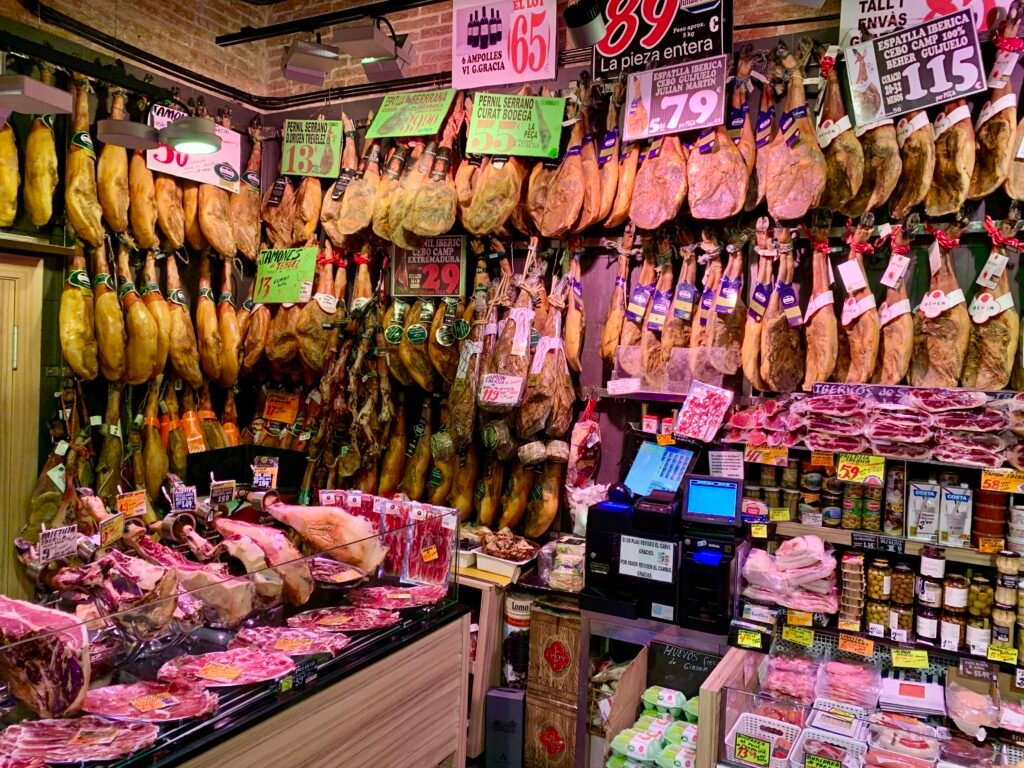
Charcuterie is the branch of culinary practice devoted to preparing and preserving meat, most often pork, through techniques such as curing, smoking, and sausage-making. The word comes from French, combining chair, meaning flesh, and cuit, meaning cooked, and originally described the shops that specialized in prepared pork products before refrigeration existed.
Core Preservation Methods
Curing draws moisture out of meat using salt, often combined with sugar and sodium nitrite, creating an environment hostile to spoilage bacteria while developing characteristic flavor and color. Smoking exposes cured meat to wood smoke, adding flavor compounds and a protective surface layer, and can be done hot, which cooks the meat, or cold, which preserves without fully cooking it. Sausage-making grinds meat and fat together with seasoning, then stuffs the mixture into casings, producing products ranging from fresh sausages meant for immediate cooking to dry-cured sausages aged for months. Confit, a separate charcuterie technique, slowly cooks meat submerged in its own fat, then stores it under that same fat as a preservative barrier against air.
Common Products
Prosciutto is a whole-muscle dry-cured ham, air-dried for months to over a year, most famously from the Parma region of Italy. Pate and terrine are both built from ground or pureed meat and fat baked in a mold, pate traditionally wrapped in pastry while terrine is baked directly in its dish and served from it. Bacon and pancetta both cure pork belly but diverge afterward, bacon typically smoked and pancetta usually air-dried and rolled. Rillettes shred slow-cooked pork and preserve it in its own rendered fat, producing a spreadable, confit-like product distinct from pate’s smoother texture.
Modern Practice and Safety
Commercial charcuterie production is tightly regulated because improperly cured meat can harbor dangerous bacteria, including Clostridium botulinum, making precise salt and nitrite ratios a food safety matter rather than only a flavor choice. Despite industrialization, artisanal charcuterie has seen a strong revival among chefs and small producers who emphasize traditional, slow methods and whole-animal butchery. Charcuterie boards, assortments of cured meats served with cheese, bread, and condiments, have also become a popular restaurant and home-entertaining format, bringing the term into much wider everyday use than its technical origins would suggest.
Regulation and Labeling
Because improperly cured meat poses serious health risks, food safety authorities in most countries regulate commercial charcuterie production closely, setting specific limits on nitrite and nitrate concentrations and requiring controlled temperature and humidity during curing and drying. Products labeled dry-cured, smoked, or cooked must meet defined standards for each term, preventing a manufacturer from, for instance, calling a product prosciutto if it was not produced through genuine whole-muscle dry curing. These regulations exist because historical charcuterie production, before refrigeration and modern food science, carried real risk of foodborne illness, and the techniques used today were refined over centuries partly through trial and considerable error.
Charcuterie Around the World
While the term and much of its codified technique are French, nearly every culture with a pork, beef, or poultry tradition has developed its own cured meat practices. Spanish jamon iberico and jamon serrano parallel Italian prosciutto in method but differ in breed, diet, and regional curing conditions. German and Central European traditions produced an enormous variety of sausages, from fresh bratwurst to long-aged, air-dried varieties, reflecting a cold climate well suited to extended curing. Chinese lap cheong and Southeast Asian cured meats use different spicing and often incorporate sugar and soy more heavily than European traditions, showing that the underlying preservation logic, salt, smoke, drying, and fat, recurs globally even as flavor profiles diverge sharply by region.
Charcuterie as a Culinary Career Path
Charcuterie has become its own specialized career track within professional kitchens and butcher shops, with dedicated charcutiers responsible for curing programs that can take months to produce a finished product, a timeline unlike almost any other kitchen station. Some restaurants build their reputation substantially around in-house charcuterie programs, aging their own salumi or sausages on-site rather than purchasing from outside producers, treating the slow, patient nature of the craft as a point of culinary pride distinct from the fast-paced immediacy of a typical dinner service.
Sensory Evaluation of Cured Products
Professional charcutiers and quality graders evaluate cured meats through standardized sensory criteria, examining color consistency, fat marbling, aroma, and texture on cutting, since variation in any of these can signal either desirable aging character or a production flaw. Prosciutto graders, for instance, insert a horse-bone needle into the ham at several points and smell it immediately, a traditional technique still used to detect spoilage or uneven curing deep inside a whole leg that visual inspection alone cannot reveal. This sensory expertise, developed over years of hands-on experience, remains central to quality control even in highly mechanized modern facilities.
Charcuterie and Whole-Animal Butchery
Charcuterie is closely tied to the broader practice of whole-animal butchery, since curing and sausage-making were historically the methods by which butchers used cuts, trim, and organs that would otherwise go to waste, extending the value and shelf life of an entire animal rather than only its premium cuts. This nose-to-tail philosophy has seen a deliberate revival among chefs emphasizing sustainability and reduced food waste, framing charcuterie not just as a flavor tradition but as a practical answer to using every part of an animal responsibly.
This nose-to-tail revival has also renewed interest in regional heritage breeds of pig specifically raised for charcuterie quality, reflecting a wider movement in professional kitchens to trace meat back to specific farms and practices rather than treating it as an undifferentiated commodity ingredient.
More in Culinary Arts
Key facts
- The word combines French for flesh and cooked, originally naming pork specialty shops.nCuring, smoking, sausage-making, and confit are core preservation techniques.nProsciutto, pate, bacon, and rillettes are common charcuterie products.nImproper curing can allow dangerous bacteria like Clostridium botulinum to grow.
Related concepts
Quick checkWhat does the word charcuterie originally refer to?Show answer
Charcuterie originally referred to French shops specializing in prepared pork products, combining the words for flesh and cooked.
Sources
- Culinary Institute of America, Michael Ruhlman's Charcuterie
Editorially reviewed by Specialty Digest Editorial TeamLast reviewed November 3, 2026Researched and drafted with AI assistanceReport an issue