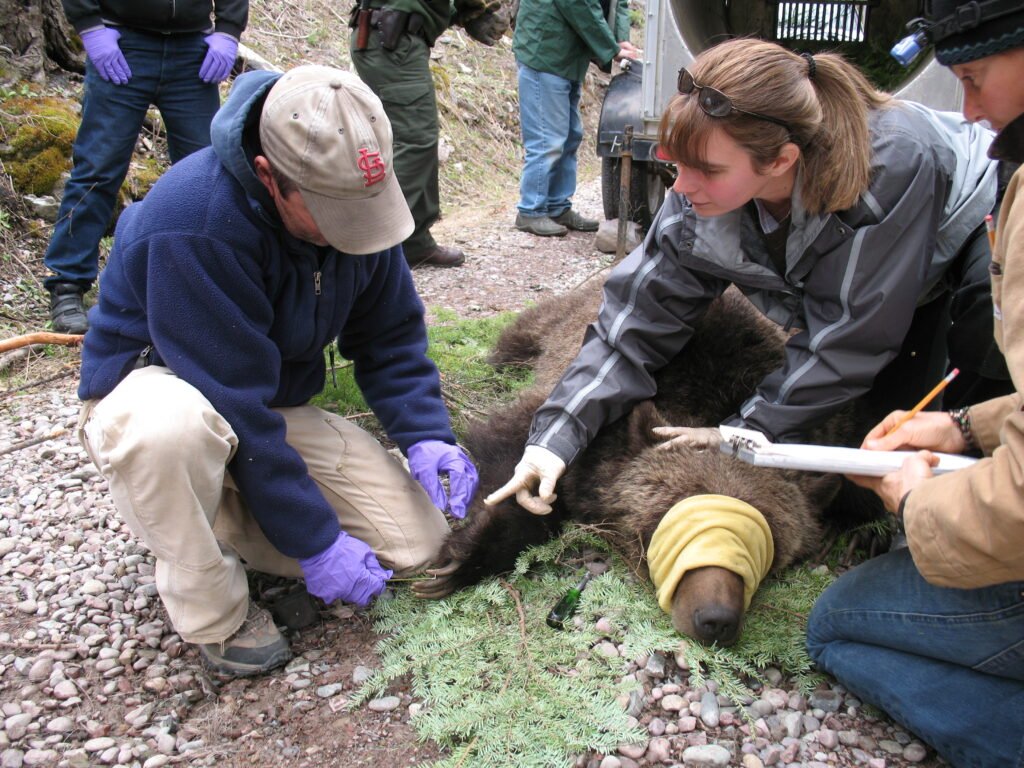
Origins of the Discipline
Conservation biology crystallized as a distinct academic discipline in the 1980s, emerging from the recognition that existing fields such as wildlife management and ecology lacked an integrated framework explicitly oriented toward preventing biodiversity loss. Founding figures in the field argued that the accelerating extinction crisis required a crisis-discipline approach, analogous to emergency medicine, where scientists must act on imperfect information rather than waiting for complete data before recommending intervention. This urgency-driven orientation continues to distinguish conservation biology from more purely descriptive ecological research.
Population Viability Analysis
A central analytical tool in conservation biology, population viability analysis uses demographic data, including birth rates, death rates, and genetic diversity measures, to model a population’s probability of persistence over a given timeframe. These models help conservation managers estimate minimum viable population sizes, identify key demographic bottlenecks such as low juvenile survival, and evaluate how different management interventions might alter extinction risk. Uncertainty in input data remains a persistent challenge, since small populations are inherently difficult to study with high precision.
Genetic Considerations in Small Populations
Conservation biology pays particular attention to genetic diversity within small, isolated populations, where inbreeding depression and loss of genetic variation can reduce fitness and adaptive capacity over successive generations. The concept of effective population size, which accounts for breeding structure rather than simple headcount, helps conservation geneticists assess genetic risk more accurately than raw population numbers alone. Genetic rescue, introducing individuals from other populations to restore lost diversity, has been used successfully in several documented cases of severely inbred wildlife populations.
Ecosystem-Level Approaches
While early conservation biology often focused on single species, the field has increasingly incorporated ecosystem-level thinking, recognizing that species interactions, including predation, competition, and mutualism, shape conservation outcomes in ways that single-species models can miss. Keystone species, whose influence on ecosystem structure is disproportionate to their abundance, receive particular attention, since their decline can trigger cascading effects throughout an entire ecological community far beyond the directly affected species.
Integrating Science and Policy
Conservation biology explicitly bridges scientific research and policy application, with practitioners often engaging directly in advising protected area design, endangered species listing decisions, and habitat restoration priorities. This applied orientation requires conservation biologists to communicate scientific uncertainty honestly to policymakers while still providing actionable guidance, a balance that distinguishes the discipline’s professional culture from more purely theoretical scientific fields.
Extinction Vortex and Compounding Threats
Conservation biologists use the concept of an extinction vortex to describe how multiple threats can compound and accelerate a population’s decline toward extinction, where reduced population size itself intensifies vulnerability to further genetic, demographic, and environmental pressures in a self-reinforcing downward spiral. Breaking this cycle often requires addressing multiple threat factors simultaneously rather than targeting a single cause, since intervention on just one front may prove insufficient if other compounding pressures remain unaddressed.
Climate Change and Shifting Conservation Priorities
Climate change has introduced substantial new complexity into conservation biology, as shifting temperature and precipitation patterns alter habitat suitability faster than many species can naturally migrate or adapt. This has prompted conservation biologists to reconsider traditional reliance on static protected area boundaries, increasingly incorporating climate adaptation planning, assisted migration consideration for severely threatened species, and dynamic conservation targets that account for anticipated future rather than solely historical habitat conditions.
Edge Effects and Habitat Fragmentation
Habitat fragmentation creates edge effects, altered environmental conditions near the boundary between habitat types, that can significantly affect species composition and ecological function within fragmented landscapes. Species particularly sensitive to edge effects, often those requiring large unbroken habitat interiors, tend to decline disproportionately in fragmented landscapes even when total remaining habitat area appears substantial, making fragmentation pattern, not just total habitat area, a critical consideration in conservation biology research and planning.
Citizen Science Contributions
Citizen science initiatives, in which members of the public contribute observational data through structured platforms, have substantially expanded the geographic and temporal scope of data available to conservation biologists, particularly for widely distributed or common species that would be impractical for professional researchers to monitor comprehensively alone. While data quality considerations require careful statistical handling, citizen science has become an increasingly valuable complement to traditional professional research methods within the discipline.
Balancing Intervention and Natural Processes
Conservation biologists continue to debate the appropriate degree of active human intervention versus allowing natural ecological processes to proceed with minimal interference, a tension particularly evident in decisions about predator reintroduction, fire management, and disturbance regime restoration. These debates reflect deeper philosophical questions within the field about the proper human role in managing ecosystems that have, in nearly all cases, already been substantially shaped by historical human activity.
As the field continues to mature, conservation biology increasingly integrates insights from social science and economics alongside its ecological core, reflecting growing recognition that human behavior and institutions are as central to conservation outcomes as the biological systems being studied.
The discipline’s crisis orientation continues to demand rapid, evidence-informed action even amid the inherent uncertainty that accompanies studying complex, often rapidly declining biological systems under real-world time pressure.
Training the next generation of conservation biologists to work fluently across ecological, genetic, and social dimensions remains a priority for academic programs preparing students for this demanding, interdisciplinary field.
Those graduates, in turn, carry the discipline’s mission-driven urgency into agencies, universities, and conservation organizations around the world for decades to come.
That pipeline of trained specialists sustains the field’s capacity to respond to new and emerging conservation challenges as they arise.
That resilience matters most of all.
Key facts
- Array
Quick checkHow does conservation biology differ from traditional ecology in its approach to scientific research?Show answer
Conservation biology is explicitly a mission-driven, crisis discipline that combines rigorous scientific analysis with normative goals such as preventing species extinction, whereas traditional ecology more often studies natural systems without an inherent advocacy or intervention mandate built into the research agenda itself.
Sources
- Array
Editorially reviewed by Specialty Digest Editorial TeamLast reviewed November 4, 2026Researched and drafted with AI assistanceReport an issue