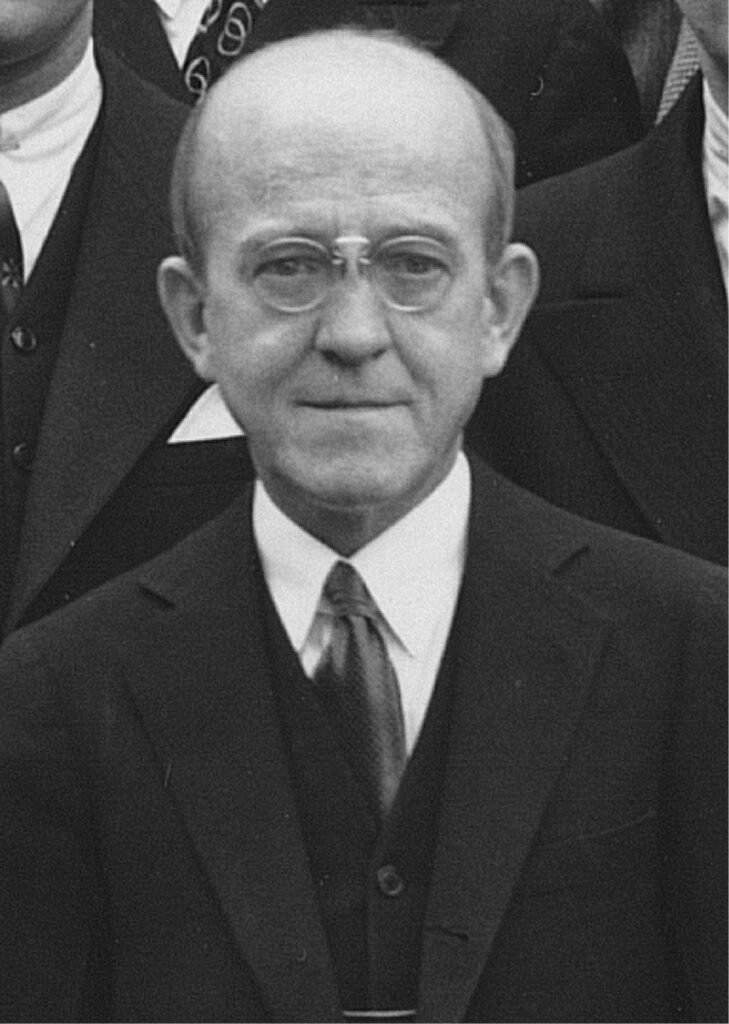
The discovery of DNA as genetic material was a series of experiments between 1928 and 1952 that showed that deoxyribonucleic acid, and not protein, carries hereditary information. Frederick Griffith’s 1928 bacterial transformation experiment set the stage, Oswald Avery, Colin MacLeod and Maclyn McCarty identified DNA as the active substance in 1944, and Alfred Hershey and Martha Chase confirmed the result in viruses in 1952.
Background
Gregor Mendel had shown in the 19th century that traits are inherited in predictable patterns, and later biologists linked those patterns to chromosomes. What the hereditary material was made of remained unknown. During the first half of the 20th century, many scientists hypothesized that proteins carried genetic information,.
The path to the answer began with bacteria. Pneumococci, the bacteria that cause one form of pneumonia, come in a smooth, disease-causing form and a rough form that does not cause disease. Their instability was the starting point for the first experiment.
The discovery
Griffith’s transformation experiment
In 1928 Griffith, a British bacteriologist, found that mice injected with harmless pneumococci together with heat-killed disease-causing pneumococci died of the infection. The bacteria recovered from the dead mice were the disease-causing type. Something in the dead cells had converted the harmless bacteria into a virulent form, a process known as transformation. He did not know what the substance was.
Between 1928 and 1931, Martin Dawson and Richard Sia showed that transformation could also be carried out in a test tube, without passing the bacteria through a mouse. This made it possible to purify the active substance.
Avery, MacLeod and McCarty
The team at the Rockefeller Institute in New York set out to identify the chemical responsible for the change. Avery led the laboratory, MacLeod introduced alcohol precipitation to separate fractions, and in September 1941 McCarty began to test whether a small amount of polysaccharide in the extract was the key.
The group purified the transforming substance and analyzed it chemically. It contained the carbon, hydrogen, phosphorus and nitrogen expected of DNA. Enzymes that destroy DNA removed its activity, which showed that DNA was the transforming agent. The work was completed by 1943 and published in 1944 in the Journal of Experimental Medicine.
In their paper, the team reported that DNA purified from a virulent type III strain of Streptococcus pneumoniae could convert an avirulent type II strain into the virulent type III form. The result placed the question of what genes are made of on a new footing, because the active substance was now a purified chemical.
How it was confirmed
Not everyone accepted the result at once. Some scientists suspected that traces of protein in the preparations were responsible. McCarty and Avery responded in 1946 with a refined purification method, and they showed that purified DNase, an enzyme that breaks down DNA, inactivated the transforming activity.
The decisive evidence for viruses came in 1952. Bacteriophages attach to bacteria and empty their genetic material into them, which leads to the rapid production of new phages inside the cell. Hershey and Chase grew bacteriophages, viruses that infect bacteria, in a medium containing radioactive isotopes. Phosphorus-32 labeled the DNA, and sulfur-35 labeled the protein coat.
They let the labeled viruses infect unlabeled bacteria and then ran the mixture in a kitchen-style Waring blender for a few minutes. The blender shook the empty viral shells off the bacterial surface without destroying the bacterial cells. A low-speed centrifuge separated the bacteria from the shells.
The bacteria in the sediment carried the radioactive phosphorus, so the viral DNA had entered them. The shells in the liquid above carried the sulfur label. The experiment showed that DNA is the only substance that enters the bacterial cell during infection. The Nobel Foundation says that it confirmed DNA as the bearer of genetic information.
Impact and legacy
A 2021 review in the Journal of Experimental Medicine calls the Avery, MacLeod and McCarty experiment the birth of molecular biology. It placed DNA at the center of research. The Hershey and Chase result convinced most remaining doubters, and within a year, James Watson and Francis Crick proposed their model of the DNA double helix.
In the less than eighty years since 1944, the review notes, scientists have learned to read DNA and to edit its sequence precisely. All of that work rests on the idea that DNA is the molecule holding the genetic information.
The discovery explained what a gene is made of and opened the way to reading and changing the genetic code. The techniques that followed include gene sequencing and gene editing, covered in the entry on CRISPR. The 2021 review links the Avery study to the later discovery of CRISPR-Cas systems for precise editing of DNA.
Hershey shared the 1969 Nobel Prize in Physiology or Medicine with Max Delbrück and Salvador Luria for discoveries concerning the replication mechanism and genetic structure of viruses.
FAQs
Who discovered that DNA is genetic material? Oswald Avery, Colin MacLeod and Maclyn McCarty showed in 1944 that DNA carries the transforming activity in bacteria. Alfred Hershey and Martha Chase confirmed in 1952 that DNA is the genetic material of a virus.
What was Griffith’s experiment? In 1928 Frederick Griffith showed that harmless pneumococci could be converted into a disease-causing form by an unknown substance from dead bacteria.
What did the Hershey-Chase experiment show? It showed that viral DNA, and not the viral protein, enters bacteria during infection.
Where did Avery’s team work? Avery, MacLeod and McCarty worked at the Rockefeller Institute in New York.
Was DNA the first suspect? No. Many scientists in the early 20th century believed that proteins carried genetic information.
More in Genetics
Key facts
- Frederick Griffith introduced bacterial transformation in 1928 while studying pneumococci.1
- Avery, MacLeod and McCarty published in 1944 that DNA is the transforming substance.13
- In 1946 McCarty and Avery showed that purified DNase inactivates the transforming activity.3
- In 1952 Hershey and Chase showed that DNA from bacteriophage is the only substance entering bacteria on infection.23
- Hershey shared the 1969 Nobel Prize in Physiology or Medicine with Delbrück and Luria.2
- The Avery experiment is considered the birth of molecular biology.3
Related concepts
Quick checkWho discovered that DNA is genetic material?Show answer
Oswald Avery, Colin MacLeod and Maclyn McCarty showed in 1944 that DNA carries the transforming activity in bacteria, and Hershey and Chase confirmed in 1952 that it is the genetic material of a virus.
Sources
- Bioengineering (2025), The Transformation Experiment of Frederick Griffith I: Its Narrowing and Potential for the Creation of Novel Microorganisms, https://pmc.ncbi.nlm.nih.gov/articles/PMC11939280/
- Nobel Prize, Alfred D. Hershey, Facts, https://www.nobelprize.org/prizes/medicine/1969/hershey/facts/
- Journal of Experimental Medicine (2021), From the discovery of DNA to current tools for DNA editing, https://pmc.ncbi.nlm.nih.gov/articles/PMC7961593/
- Nobel Prize, The Nobel Prize in Physiology or Medicine 1969, https://www.nobelprize.org/prizes/medicine/1969/summary/
Editorially reviewed by Specialty Digest Editorial TeamLast reviewed November 5, 2026Researched and drafted with AI assistanceReport an issue