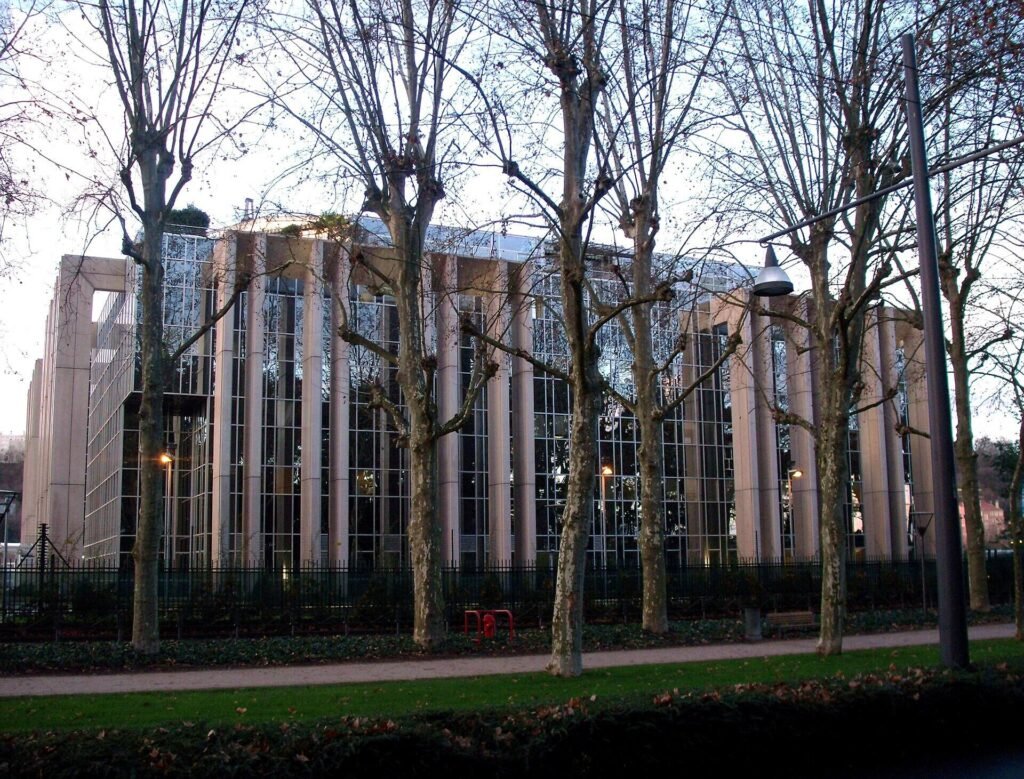
INTERPOL, formally the International Criminal Police Organization, is an intergovernmental organization that helps the police of its 196 member countries work together. Its headquarters are in Lyon, France, and it provides secure communications, shared police databases and operational support. It does not run its own arrests: each member country decides how to act on its requests.
History of INTERPOL
The idea began at the first International Criminal Police Congress, held in Monaco in April 1914 at the invitation of Prince Albert I. Lawyers and police officials from 24 countries discussed cooperation on solving crimes, identification techniques and extradition. Plans were put on hold when the First World War broke out.
Johannes Schober, president of the Vienna police, revived the idea and convened a second congress in Vienna in 1923. Representatives of 20 countries agreed to provide each other with mutual police assistance. In 1927 members were required to set up a central point of contact within their police structure, the forerunner of today’s National Central Bureaus. New statutes in 1932 created the post of Secretary General, and an exclusive radio network for criminal police opened in 1935.
In 1938 Germany’s Nazi authorities took control of the commission after deposing its president, Michael Skubl. The headquarters moved to Berlin in 1941, and the organization stayed under Nazi control until the end of the Second World War. A new president and Executive Committee were elected in 1946 and the headquarters moved to Paris. The name INTERPOL was chosen that year as the telegraphic address.
The first Red Notice was published in 1947. In 1956 the body became the International Criminal Police Organization after adopting a modernized constitution. The United Nations recognized its status as an international organization in the 1970s, and a headquarters agreement with France followed in 1972. In May 1986 the extremist group Action Directe attacked the General Secretariat building in Saint-Cloud, injuring a police officer and badly damaging the premises. The General Secretariat moved to purpose-built premises in Lyon in 1989.
Structure and membership of INTERPOL
The General Assembly is the supreme governing body. It brings all member countries together once a year for about four days, with each country casting one vote. Decisions take the form of resolutions and need a simple or two-thirds majority, depending on the subject. The Assembly approves the program of activities and financial policy, votes on applications to join and elects the Executive Committee, which gives guidance between sessions.
The General Secretariat coordinates daily work under the Secretary General and is staffed by both police and civilians. It has its headquarters in Lyon, a global complex for innovation in Singapore and several regional satellite offices.
In each member country a National Central Bureau is the point of contact for the General Secretariat and for other countries’ bureaus. It is run by national police officials and usually sits in the government ministry responsible for policing. The four official languages are Arabic, English, French and Spanish.
What does INTERPOL do?
Member countries are linked through a secure communications system called I-24/7, launched in 2002. Through it they can query databases in real time, including names, fingerprints and stolen passports. A fingerprint identification system came in 2000, followed by a DNA profile database in 2002. A Command and Coordination Centre, open around the clock, was created in 2003 for countries facing a crisis or seeking urgent information.
The General Secretariat also provides forensics, analysis, help locating fugitives and training. It focuses on four crime areas it considers most pressing: terrorism, cybercrime, organized crime, and financial crime and anti-corruption. Officials in each area run investigative support, field operations, training and networking activities with member countries.
Its best-known tool is the color-coded notice, an international request for cooperation or an alert. The General Secretariat publishes a notice at the request of a National Central Bureau and makes it available to all members. A Red Notice asks police worldwide to locate and provisionally arrest a person pending extradition, surrender or similar legal action. A Yellow Notice helps locate missing persons. Special notices alert police to individuals and entities under sanctions imposed by the UN Security Council.
A Red Notice is not an international arrest warrant. It rests on a warrant or court order issued by a national judicial authority, and each member country decides what legal value to give it. INTERPOL cannot compel the authorities of any country to arrest someone.
Funding and governance of INTERPOL
INTERPOL’s total revenue in 2025 was 224 million euros. Statutory contributions from members totaled 105 million euros. Each country pays an amount agreed by the General Assembly, based on an adapted version of the UN scale that reflects economic weight. These funds pay mainly for the General Secretariat’s running costs and some core policing and training work.
Voluntary funding, in cash and in kind, totaled 113 million euros. Of this, 94 percent came from partnerships with government agencies. Main cash donors in recent years include the European Commission, the German Federal Ministry for Foreign Affairs, the U.S. Department of State and Global Affairs Canada, while Singapore and France are the largest in-kind donors. About 23 percent of staff are police officials seconded by member countries.
Neutrality rules and review of notices
Article 3 of the constitution strictly forbids the organization from undertaking activities of a political, military, religious or racial character. Article 2 requires it to act in the spirit of the Universal Declaration of Human Rights. Member countries are primarily responsible for making sure their requests comply with these rules.
Since 2016 a dedicated Notices and Diffusions Task Force of lawyers, police officers and operations specialists has reviewed requests before they are authorized. Since 2018 it has also continually reviewed existing Red Notices, including those issued before 2016. Reviewers consider, for example, whether the person is a political activist or refugee and whether a request arises from domestic political unrest.
More in Law Enforcement and Policing
Key facts
- INTERPOL has 196 member countries and its General Secretariat is headquartered in Lyon, France.1
- The first International Criminal Police Congress met in Monaco in April 1914 with participants from 24 countries.2
- The first Red Notice was published in 1947, and the modern constitution was adopted in 1956.2
- A Red Notice is not an arrest warrant, and INTERPOL cannot compel any country to arrest a person.5
- INTERPOL's total revenue in 2025 was 224 million euros, including 105 million euros in statutory contributions.4
Related concepts
Quick checkIs an INTERPOL Red Notice the same as an arrest warrant?Show answer
No. A Red Notice asks police worldwide to locate and provisionally arrest a wanted person, and each member country decides what legal value to give it. [5]
Sources
- 1. INTERPOL, What is INTERPOL?, https://www.interpol.int/Who-we-are/What-is-INTERPOL
- 2. INTERPOL, Our history, https://www.interpol.int/Who-we-are/Our-history
- 3. INTERPOL, General Assembly, https://www.interpol.int/Who-we-are/Governance/General-Assembly
- 4. INTERPOL, Our funding, https://www.interpol.int/Who-we-are/Our-funding
- 5. INTERPOL, Red Notices, https://www.interpol.int/How-we-work/Notices/Red-Notices
- 6. INTERPOL, Compliance and review of Notices, https://www.interpol.int/How-we-work/Notices/Compliance-and-review
Editorially reviewed by Specialty Digest Editorial TeamLast reviewed November 4, 2026Researched and drafted with AI assistanceReport an issue