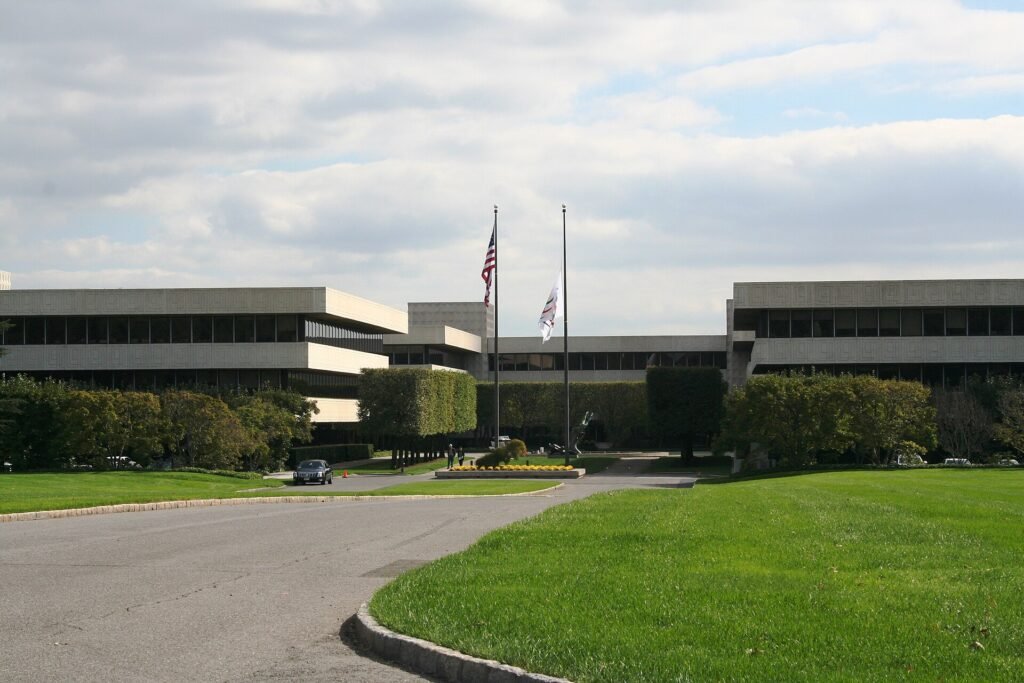
PepsiCo is an American food and beverage company headquartered in Purchase, New York, whose brands include Pepsi-Cola, Lay’s, Doritos, Gatorade, Mountain Dew and Quaker. Its annual report says it serves customers and consumers in more than 200 countries and territories.
History of PepsiCo
The company’s best-known drink began in New Bern, North Carolina, where the pharmacist Caleb Bradham created a soda in the 1890s and later named it Pepsi-Cola. The Pepsi-Cola Company went through several ownership changes and a bankruptcy in the early twentieth century before becoming a major rival to Coca-Cola.
PepsiCo in its current form dates to 1965, when Pepsi-Cola merged with Frito-Lay, a snack company, to form PepsiCo, Inc. The deal joined a beverage business with a salty snack business and set the pattern of selling drinks and food together. In 2001 the company added Quaker Oats, which brought Quaker cereals and the Gatorade sports drink into the portfolio.
PepsiCo has continued to reshape its range through acquisitions. Frito-Lay was itself formed in 1961 by the merger of the Frito Company and H.W. Lay and Company. Its recent annual reports list SodaStream, a home carbonation brand, among PepsiCo’s top brands.
Products and services
The company makes snacks, packaged foods and drinks. Its annual report names Lay’s, Doritos, Cheetos, Gatorade, Pepsi-Cola, Mountain Dew, Quaker and SodaStream among its top brands. The company’s brand pages also list Tostitos, Aquafina, Brisk, Bubly, Cracker Jack, Fritos, Siete and poppi.
Many of these products are sold through retail stores, restaurants and vending channels. The company says it makes, markets, distributes and sells its products through its own operations, authorized bottlers, contract manufacturers and other third parties. This mix means that, as with other large beverage firms, some of its drinks are bottled by independent partners while others are produced by company-owned operations.
Corporate structure and operations
PepsiCo is a publicly traded corporation with its principal executive offices at 700 Anderson Hill Road in Purchase, New York. The company’s annual report for 2025 says it is organized into six reportable segments:
- PepsiCo Foods North America, covering convenient foods in the United States and Canada.
- PepsiCo Beverages North America, covering beverage businesses in the United States and Canada.
- International Beverages Franchise, covering international franchise beverage businesses and SodaStream.
- Europe, Middle East and Africa, covering convenient foods and company-owned bottlers in those regions.
- Latin America Foods, covering convenient foods in Latin America.
- Asia Pacific Foods, covering convenient foods in Asia.
The same filing says PepsiCo employed approximately 306,000 people worldwide as of December 27, 2025. Its net revenue for the 2025 fiscal year was $93.925 billion, compared with $91.854 billion in fiscal 2024, according to SEC data. The fiscal year ended on December 27, 2025.
Ramon Laguarta has served as chief executive officer since 2018 and as chairman of the board since 2019, according to the filing. Revenue grew modestly across recent years: from $91.471 billion in fiscal 2023 to $91.854 billion in fiscal 2024 and $93.925 billion in fiscal 2025, based on figures the company reported to the SEC.
The company’s fiscal year runs close to the calendar year but ends on the last Saturday in December, which is why period dates in its reports vary slightly from year to year.
PepsiCo describes its objective in terms of food and drinks that give consumers a reason to smile, and its brand pages organize its range into food and drinks. Many of its products are bought on impulse, so shelf position, price and advertising are important to its sales.
Impact of PepsiCo
PepsiCo is one of the largest food and beverage companies in the world, and the rivalry between Pepsi and Coca-Cola is among the most studied in business teaching on marketing and branding. The company sells in two very different categories, snacks and beverages, which gives it a broad presence in grocery stores and restaurants, and its business model depends on supply chain management that reaches farmers of potatoes, corn, oats and citrus as well as packaging and distribution networks.
The company describes a program it calls PepsiCo Positive, which it presents as a vision for a more sustainable, people-centered future. Its annual report says it continues to integrate recyclability into product development and to support the increased use of recycled content, including recycled PET, in packaging.
Its snack products and beverages are part of the wider category of ultra-processed food in some nutrition research, and the company’s reports acknowledge that public health concerns can affect demand.
Because the company sells through bottlers, contract manufacturers and its own plants, how it organizes production varies by country. In some regions, such as Europe, the Middle East and Africa, it owns bottlers, while in other markets it operates mainly as a franchisor of its drinks brands. This flexibility lets it adjust to local costs and regulation, but it also means that its financial results combine very different kinds of operations.
Criticism and controversies
Like other makers of sugary drinks and salty snacks, PepsiCo faces criticism from public health researchers and policymakers over the nutritional content of some products. Governments in many countries have introduced taxes on sweetened beverages and rules on labeling and marketing, and the company’s annual report names such measures, and damage to brand reputation, among the risks to its business.
The company has said it is working to reduce added sugar, sodium and saturated fat across parts of its portfolio and to offer lower-calorie options such as zero-sugar versions of its colas. Researchers and advocacy groups disagree about how quickly these changes are taking place.
Packaging is another concern, as plastic bottles and snack wrappers contribute to waste. PepsiCo has published recycled-content and packaging goals, and independent groups continue to evaluate progress. The information here is general background about the company and not nutrition or investment advice.
More in Management
Key facts
- PepsiCo has its principal executive offices in Purchase, New York.2
- The company serves customers and consumers in more than 200 countries and territories.2
- PepsiCo is organized into six reportable segments.2
- It employed approximately 306,000 people worldwide as of December 27, 2025.2
- Net revenue was $93.925 billion in fiscal 2025.2
Related concepts
Quick checkHow did PepsiCo get its current form?Show answer
PepsiCo was formed in 1965 when Pepsi-Cola merged with the snack company Frito-Lay. It later added Quaker Oats in 2001, which brought Gatorade and Quaker foods into the portfolio.
Sources
- PepsiCo, Inc., Our Brands, https://www.pepsico.com/brands
- PepsiCo, Inc., Annual Report on Form 10-K for fiscal year 2025, U.S. Securities and Exchange Commission, https://www.sec.gov/Archives/edgar/data/77476/000007747626000007/pep-20251227.htm
Editorially reviewed by Specialty Digest Editorial TeamLast reviewed November 4, 2026Researched and drafted with AI assistanceReport an issue