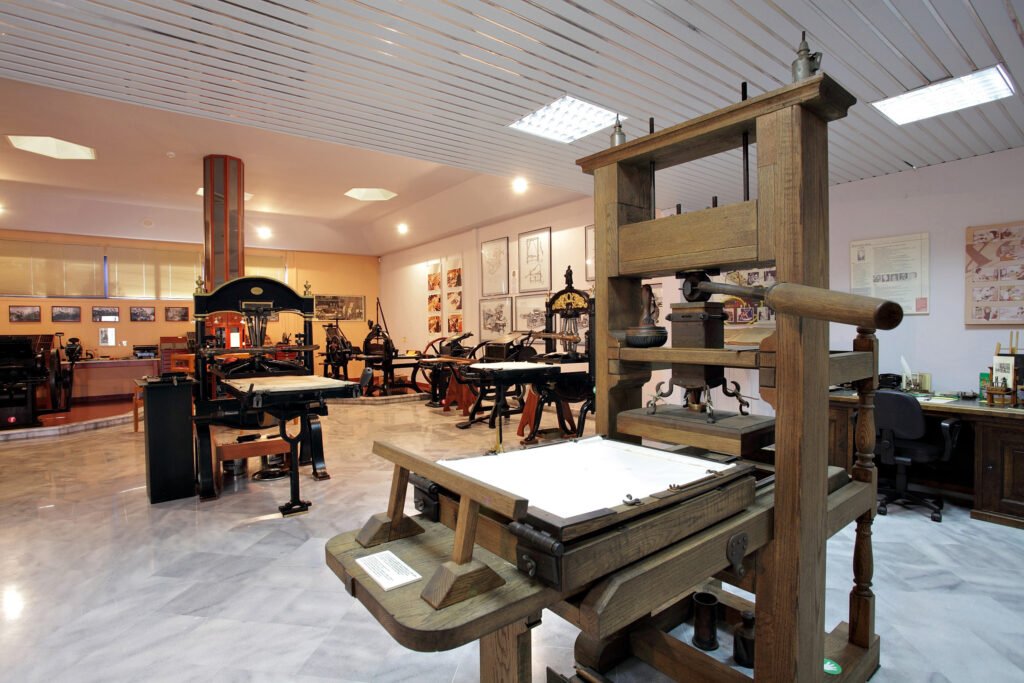
Printmaking is the artistic process of creating images by transferring ink from a prepared matrix, such as a carved block, etched plate, or stencil, onto paper or another surface, typically allowing multiple nearly identical impressions to be produced from a single matrix. It occupies a distinctive position among the visual arts because it was historically tied to reproduction and wide distribution rather than the creation of a single unique object.
Historical Development
Woodblock printing developed in East Asia centuries before appearing in Europe, where it became widespread in the fifteenth century alongside the growth of paper production and eventually the printing press. Albrecht Durer elevated woodcut and engraving to a major independent art form in the early sixteenth century, while later centuries saw etching embraced by painters including Rembrandt, who used the medium for highly expressive, tonally rich compositions. The Japanese ukiyo-e tradition of color woodblock printing, associated with artists such as Hokusai and Hiroshige, later had a significant documented influence on European Impressionist and Post-Impressionist painters.
Major Printmaking Techniques
Relief techniques such as woodcut and linocut involve carving away the areas that will not print, leaving a raised surface that receives ink. Intaglio techniques, including engraving, etching, and drypoint, instead cut or bite lines into a metal plate that holds ink below the surface, producing characteristically fine detail and rich tonal range. Planographic techniques such as lithography draw directly on a flat stone or plate surface using a greasy medium that selectively accepts or repels ink, while stencil-based screen printing forces ink through a mesh in areas left open by a blocking material.
Materials and Tools
Printmakers work with specialized tools suited to each technique, including carving gouges and knives for relief work, etching needles and acid baths for intaglio plates, and specially formulated greasy crayons or ink for lithography. Papers are chosen for their weight, surface texture, and ability to hold fine detail or absorb ink evenly, and many printmaking papers are produced specifically for this purpose with particular attention to dimensional stability when wet.
Artistic and Commercial Applications
Beyond fine art editions produced in limited, numbered runs, printmaking techniques historically served essential commercial functions including book illustration, newspaper imagery before photographic reproduction became practical, currency design, and textile pattern production. Contemporary artists continue to use printmaking both for its distinctive visual qualities, which differ meaningfully from painting or drawing, and for its capacity to make original artwork more widely accessible at a lower price point than a unique painting.
Contemporary Practice
Many contemporary printmakers combine traditional hand techniques with digital tools, using computer-generated imagery to prepare plates or screens before completing the printing process by hand. University and community print studios remain important centers for teaching traditional techniques, and the distinctive textures and marks produced by physical printmaking processes continue to appeal to artists even as fully digital reproduction has become ubiquitous elsewhere in visual culture.
Printmaking Studios and Education
Dedicated print workshops, often called ateliers, have historically served as essential technical partners for artists, since processes such as lithography and intaglio etching require specialized presses, chemicals, and skilled technicians that most individual artists cannot maintain independently. Master printers collaborate closely with artists to translate a drawn or painted concept into a specific technique, frequently proofing a plate or stone multiple times and adjusting inking, wiping, or exposure before a final edition is approved and printed. Art schools and universities commonly maintain printmaking departments equipped with presses for multiple techniques, treating the medium as a core discipline alongside painting, sculpture, and drawing rather than a purely technical trade.
Preservation of historical printmaking techniques has become an active area of craft revival, with some contemporary artists specifically seeking out nearly obsolete processes such as hand papermaking or traditional woodblock carving to produce work that deliberately foregrounds the physical labor and material history embedded in the printmaking process.
Economic and Social Role
Because a single matrix can generate numerous impressions, printmaking historically allowed images and information to circulate far more widely and cheaply than unique paintings or drawings, making the medium central to the spread of visual and political information before photographic reproduction became widespread. This reproducibility also shaped the economics of printmaking as an art form, since editions could be priced well below unique works while still providing meaningful income to an artist across many sold impressions.
Collaborative and Studio Roles
A traditional printmaking workshop divides labor between the artist, who conceives the image and typically draws or carves the initial matrix, and the master printer, whose technical judgment about inking density, paper selection, and press pressure substantially shapes the final visual quality of an edition. This collaborative structure distinguishes printmaking from most painting and drawing practice, where a single individual typically controls every stage of production from conception through completion.
FAQ
What makes a print an original work of art rather than a copy?
A print is generally considered original when the artist created the matrix specifically for that image and personally oversaw or approved the printing of the edition, as opposed to a photographic reproduction of an existing painting.
What is the difference between relief and intaglio printing?
Relief printing transfers ink from raised surfaces after carving away the background, while intaglio printing transfers ink held in lines or textures cut below the surface of a plate.
Why are prints often numbered?
Numbering indicates the position of an impression within a limited edition and helps establish the total number of authorized prints made from a given matrix.
More in Visual Arts
Editorially reviewed by Specialty Digest Editorial TeamLast reviewed November 4, 2026Researched and drafted with AI assistanceReport an issue