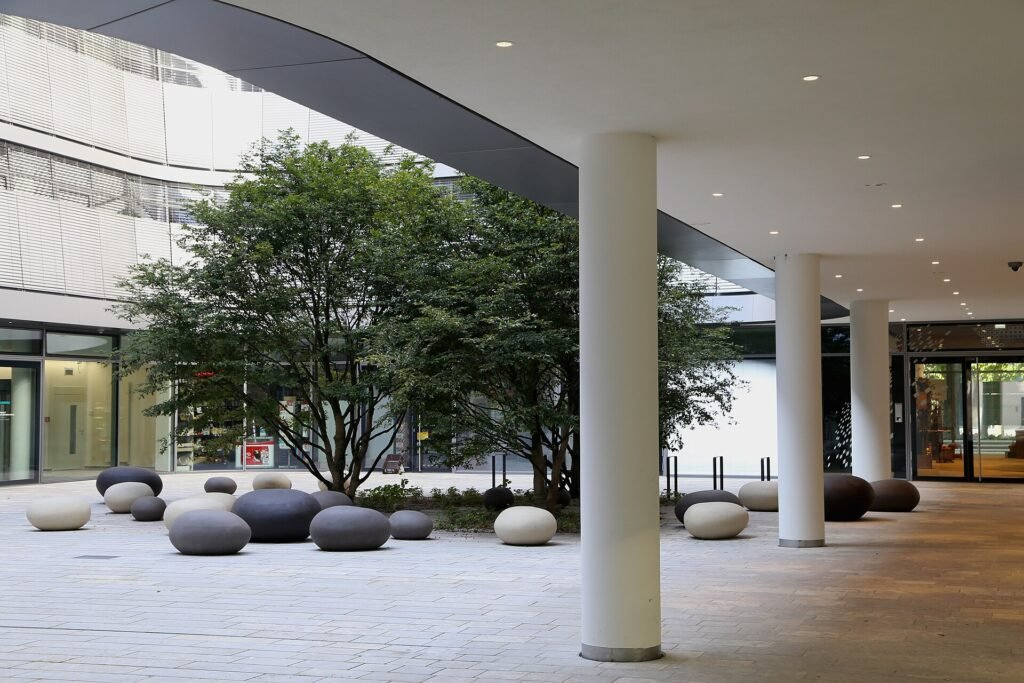
Siemens AG is a German technology company, headquartered in Munich, that makes industrial technology, infrastructure, transport systems and medical equipment. It was founded in Berlin in 1847, and for its fiscal year ended September 30, 2025, it reported revenue of 78.9 billion euros and 318,000 employees.
History of Siemens
Werner von Siemens and Johann Georg Halske founded Siemens and Halske in Berlin in 1847 to build telegraph installations and other electrical equipment. It began as a ten-man business at Schoeneberger Strasse 19, and the pointer telegraph was among its early communication products.
The firm opened a branch in St. Petersburg in 1855 to build Russian telegraph lines and a London branch in 1858 under William Siemens. Halske withdrew in 1867, which left control with the Siemens brothers and their descendants. The firm became a limited partnership in 1890. Between 1866 and 1896 the company became internationally known for its dynamo, an early electric generator, and for large technical projects.
Siemens and Halske became a limited-liability company in 1897, the year the Siemensstadt industrial campus on the edge of Berlin began to grow. In 1903 its power engineering moved into a separate company, Siemens-Schuckertwerke, and in 1932 the medical firm Siemens-Reiniger-Werke formed, focusing on equipment such as X-ray machines.
The Second World War cost Siemens about four-fifths of its assets, and the company rebuilt and returned to international markets by the mid-1950s. In 1919 the two main companies began to share a chairman who was always a Siemens family member, and in 1943 and 1944 the company dispersed plants across Germany to avoid air strikes. Hermann von Siemens, the head of the group, was briefly interned from 1946 to 1948. In the 1950s the company grew its share of the European and overseas electrical market from West Germany. In 1966 all the constituent companies merged into Siemens AG, and its structure was reorganized again in 1969 to reflect globalization and technological change.
Products and services of Siemens
Siemens reports five segments: Digital Industries, Smart Infrastructure, Mobility, Siemens Healthineers and Siemens Financial Services. Britannica describes its products as ranging from diagnostic imaging and mobile phones to mass transit systems and power generation equipment, a list that dates from the early 2000s.
The first three segments make up what the company calls its industrial business. In fiscal 2025 Digital Industries had revenue of 17.8 billion euros and profit of 2.6 billion euros. Smart Infrastructure had revenue of 23.0 billion euros and profit of 4.5 billion euros, and Mobility had revenue of 12.4 billion euros and profit of 1.1 billion euros. By simple division of group revenue, Smart Infrastructure accounted for about 29 percent, Digital Industries for about 23 percent and Mobility for about 16 percent.
Siemens Healthineers is a separately listed company that makes medical technology, including imaging such as magnetic resonance imaging. In fiscal 2025 Siemens sold a 4 percent stake for 1.9 billion euros and held 69 percent on September 30, 2025, and it plans to deconsolidate Healthineers, which means it would stop including it in group accounts.
During fiscal 2025 Siemens bought the simulation software company Altair and the life-science software company Dotmatics. These acquisitions expanded the company’s software and artificial intelligence business, and the Dotmatics purchase accounted for 4.2 billion euros of cash outflows in the fourth quarter. Acquisition-related effects reduced earnings per share by 0.21 euros in that quarter, before purchase price allocation accounting.
Corporate structure and operations
Siemens’ fiscal year runs from October to September. Its fiscal 2025 revenue was 78.9 billion euros, up 4 percent from the year before, and orders were 88.4 billion euros, up 5 percent. On a comparable basis, which adjusts for currency and portfolio changes, revenue grew 5 percent and orders grew 6 percent. The ratio of orders to revenue, called the book-to-bill ratio, was 1.12, which means orders exceeded sales.
Net income was 10.4 billion euros, up 16 percent and a record for the company. The profit of the three industrial segments combined reached a record 11.8 billion euros.
Siemens’ headquarters is in Munich, with major operations in Berlin. It has about 318,000 employees worldwide. Siemens Financial Services is the company’s fifth reporting segment alongside the four technology businesses.
Impact of Siemens
Siemens built telegraph lines in Russia and operated in Britain by the 1850s, and its dynamo work made it internationally known in the late 1800s. Britannica says it regained its place among the world’s largest electrical companies in the 1960s, and its products now extend to power grid equipment and mass transit systems.
The plan to deconsolidate Siemens Healthineers, and the 2025 purchases of Altair and Dotmatics, show a company moving toward industrial software while reducing its medical holding. Those choices will change how its segments compare in later years.
Criticism and controversies
Siemens’ own history page says that from 1933 to 1945 its business was dominated by rearmament and the war economy, and that the company used forced labor. Britannica adds that after the war, Siemens officials were charged with employing slave labor and with involvement in the Auschwitz and Buchenwald camps.
On December 15, 2008, the U.S. Securities and Exchange Commission charged Siemens with a systematic practice of paying bribes to foreign government officials between March 2001 and September 2007. It cited at least 4,283 payments totaling about 1.4 billion dollars to government officials, and it said Siemens earned more than 1.1 billion dollars on the affected transactions. Management began internal control reforms in November 2006, and all but 27.5 million dollars of the improper payments came before November 15, 2006.
Siemens settled without admitting or denying the allegations. It paid 350 million dollars in disgorgement to the SEC, a 450 million dollar fine to the U.S. Department of Justice and about 569 million dollars to the Munich prosecutor, and it accepted an independent monitor for four years. The SEC counted combined U.S. and German sanctions of 1.6 billion dollars, including an earlier payment of about 285 million dollars in Munich.
More in Electrical Engineering
Key facts
- Siemens was founded in Berlin in 1847 as Siemens and Halske to build telegraph installations and electrical equipment.34
- All of the constituent Siemens companies merged into Siemens AG in 1966.4
- Siemens reported fiscal 2025 revenue of 78.9 billion euros, net income of 10.4 billion euros and 318,000 employees on September 30, 2025.1
- Siemens reports Digital Industries, Smart Infrastructure, Mobility, Siemens Healthineers and Siemens Financial Services segments.1
- In December 2008 the SEC charged Siemens with bribery, and combined U.S. and German sanctions came to 1.6 billion dollars.5
Related concepts
Quick checkIn what year did the Siemens companies merge into Siemens AG?Show answer
All the constituent Siemens companies merged into Siemens AG in 1966.
Sources
- 1. Siemens AG, Earnings release and financial results Q4 and fiscal 2025, November 13, 2025, https://assets.new.siemens.com/siemens/assets/api/uuid:3948cdd4-35e0-4c1d-8412-9aed4097b3d0/HQCOPR202511117277EN.pdf
- 2. Siemens AG, Earnings release and financial results Q4 FY 2025 (press page), https://press.siemens.com/global/en/pressrelease/earnings-release-and-financial-results-q4-fy-2025
- 3. Siemens AG, History (siemens.com), https://www.siemens.com/history
- 4. Encyclopaedia Britannica, Siemens AG, https://www.britannica.com:443/topic/Siemens-AG
- 5. U.S. Securities and Exchange Commission, SEC Charges Siemens AG for Engaging in Worldwide Bribery, December 15, 2008, https://www.sec.gov/news/press/2008/2008-294.htm
Editorially reviewed by Specialty Digest Editorial TeamLast reviewed November 4, 2026Researched and drafted with AI assistanceReport an issue