The Sitka spruce (Picea sitchensis) is the largest species of spruce, growing to just over 100 meters (330 feet) in height, and is the state tree of Alaska, designated in 1962. It grows along the western coast of Canada and the United States, from the Kenai Peninsula in Alaska to near Fort Bragg, California, and is a main species of the Tongass and Chugach national forests [1][2].
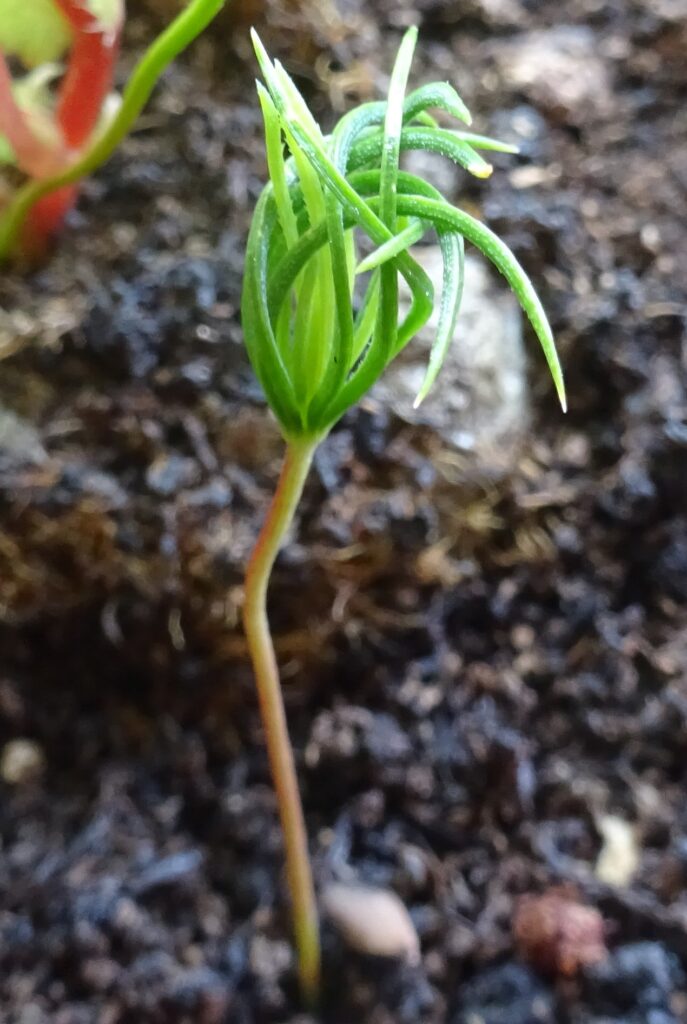
| Scientific name | Picea sitchensis |
|---|---|
| State tree since | 1962 |
| Maximum height | Just over 100 m (330 ft) |
| Trunk diameter | Can exceed 5 m (16 ft) |
| Range | Kenai Peninsula, Alaska to northern California |
| Oldest known tree | Just under 600 years |
| Rank | Largest spruce; third-tallest tree species |
Description
The Sitka spruce is the largest spruce species and the third-tallest tree species, reaching just over 100 meters, with trunk diameter at breast height that can exceed 5 meters [1].
Range and Habitat
It grows along the Pacific coast of Canada and the United States, from the Kenai Peninsula, Alaska, to near Fort Bragg, California. It is usually found within about 80 kilometers (50 miles) of the ocean, farther inland along river floodplains in the north, and in Alaska it grows up to about 2,500 meters (8,200 feet) in elevation. It tolerates salty coastal spray [1].
Ecology
The tree provides cover, nesting and roosting sites for many animals. Sitka deer rely on old-growth stands in winter, and bald eagles and peregrine falcons nest in it. Blue grouse in Alaska and British Columbia may eat up to 90 percent of their winter diet as needles. Sitka spruce is a pioneer species on landslides, dunes and deglaciated land and a climax species in coastal forests. Shallow roots make it prone to windthrow, and thin bark makes it highly sensitive to fire [1].
Age and Size
The oldest known individual is just under 600 years old. Because growth is rapid, size does not indicate age: the Queets Spruce in Olympic National Park, the largest by trunk volume at 346 cubic meters, is only estimated at 350 to 450 years [1].
Uses
It is a major forestry timber, valued for fast growth on poor soils and exposed sites. Its resonant wood is used in pianos, harps, violins and guitars. It was used for aircraft wing spars, including the Wright brothers’ Flyer, and during World War II it substituted for aluminum in aircraft such as the British Mosquito. Indigenous and traditional uses include root bark for basket weaving, pitch for caulking and shakes for construction, and branch tips flavor spruce beer and make syrup [1].
State Tree
Alaska designated the Sitka spruce as its state tree in 1962 [2]. See also the entries on the Alaska state symbols and Tongass National Forest.
FAQs
What is the Alaska state tree? The Sitka spruce, designated in 1962.
How tall do Sitka spruces grow? Just over 100 meters (330 feet).
Where does it grow? Along the Pacific coast from the Kenai Peninsula, Alaska, to northern California.
What is Sitka spruce wood used for? Lumber, paper, musical instruments, aircraft and boat spars.
How old can a Sitka spruce get? The oldest known tree is just under 600 years old.
Sources
More in Biology
Key facts
Quick checkIn what year did Alaska designate the Sitka spruce as its state tree?Show answer
1962
Sources
- Wikipedia. Sitka spruce. 2026 (accessed 2026-11-12)
- Wikipedia. List of Alaska state symbols. 2026 (accessed 2026-11-12)
Editorially reviewed by Specialty Digest Editorial TeamLast reviewed November 12, 2026Researched and drafted with AI assistanceReport an issue