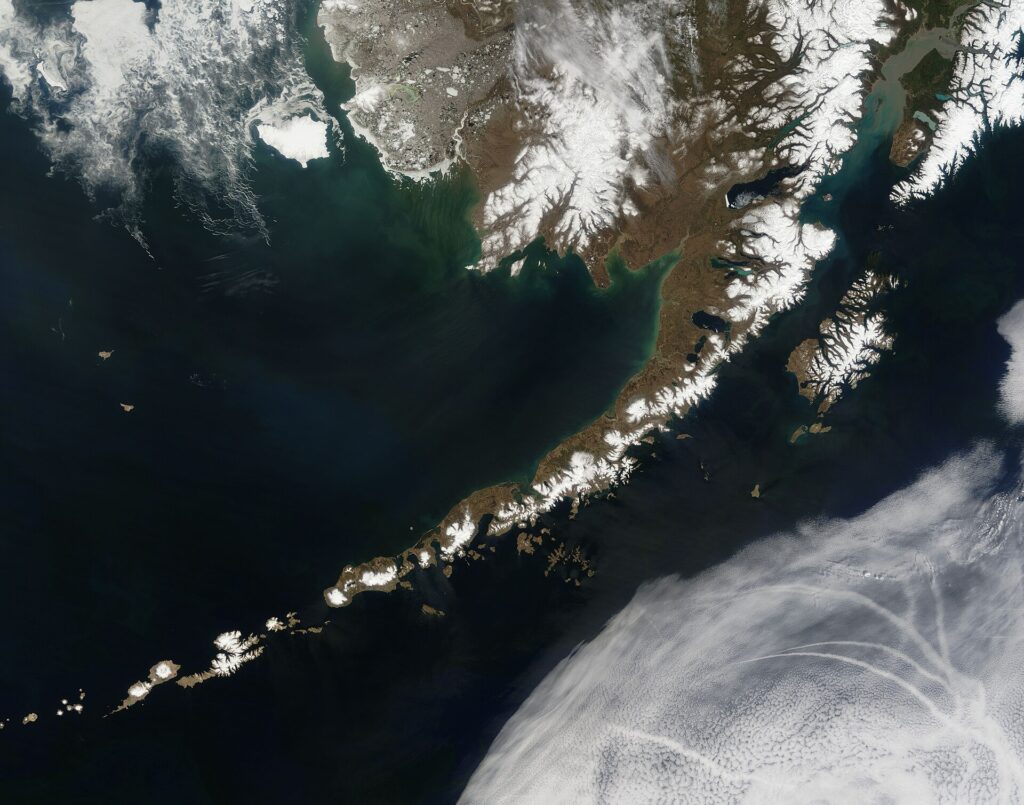
Unangam Tunuu is the language of the Unangax (Aleut) people of the Aleutian Islands and Alaska Peninsula. It belongs to the Inuit-Unangan (Eskimo-Aleut) language family, and a state language directory estimates 40 to 80 highly proficient speakers.[1]
| Language family | Inuit-Unangan (Eskimo-Aleut) |
|---|---|
| People | Unangax (Aleut) |
| Highly proficient speakers | 40–80 (estimate) |
| Alaska Native languages | About 23 |
Language family
The state Alaska Native Language Archive lists some 23 distinct Alaska Native languages, mostly in two families, Inuit-Unangan (also called Eskimo-Aleut) and Na-Dene (Athabaskan-Eyak-Tlingit). Unangam Tunuu sits in the first family alongside Inupiatun, Central Yup’ik, St. Lawrence Island Yupik and Sugpiaq or Alutiiq.[1]
Speakers
The directory estimates 40 to 80 highly proficient speakers of Unangam Tunuu. It notes that counts under 100 come from community lists of known strong speakers and that a simple yes or no speaker survey is not very informative.[1]
Documentation
The Alaska Native Language Center, created by the Alaska Legislature in 1972, has researched and documented Alaska’s Native languages.[1]
FAQs
Who speaks Unangam Tunuu? The Unangax (Aleut) people.
Which family is it in? Inuit-Unangan (Eskimo-Aleut).
How many speakers are there? An estimated 40 to 80 highly proficient speakers.
Sources
Key facts
- 40–80 highly proficient speakers
- Part of 23 Alaska Native languages
Quick checkWhich language family contains Unangam Tunuu?Show answer
Inuit-Unangan (Eskimo-Aleut)
Sources
- State of Alaska. Alaska Native Languages directory. 2026 (accessed 2026-11-14)
Editorially reviewed by Specialty Digest Editorial TeamLast reviewed November 14, 2026Researched and drafted with AI assistanceReport an issue