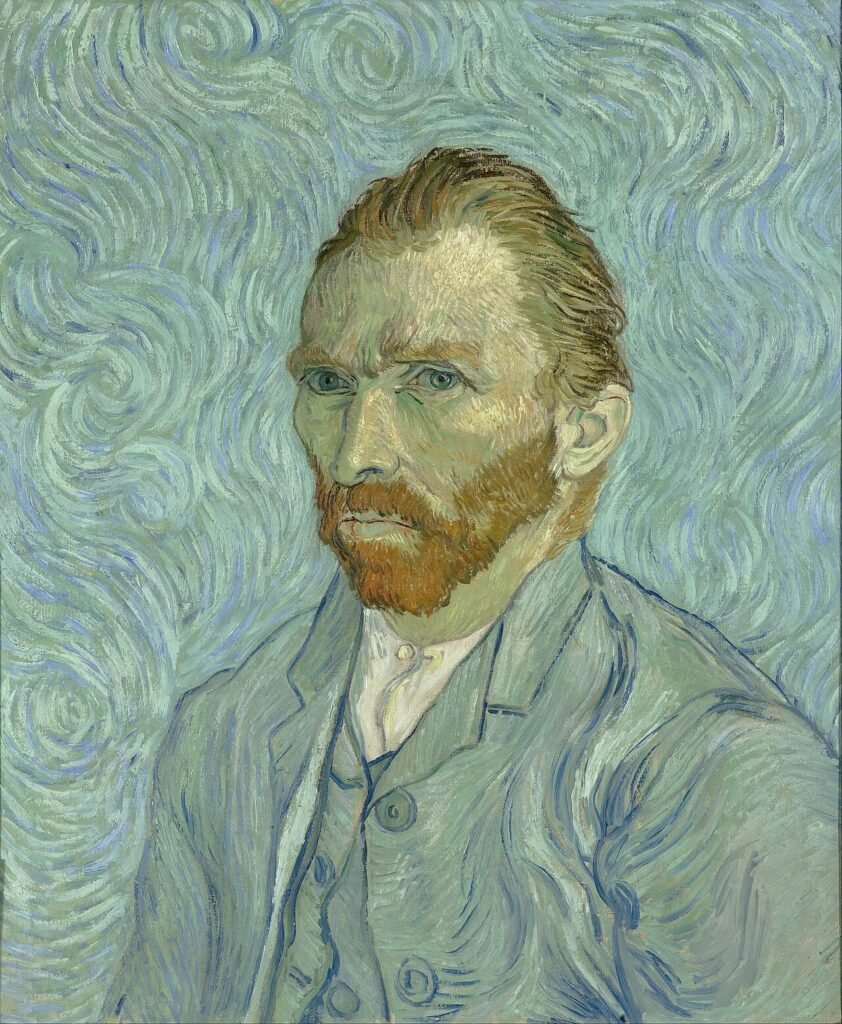
Vincent van Gogh (1853 to 1890) was a Dutch painter whose expressive use of color and energetic brushwork made him one of the most influential artists of the Post-Impressionist period. He decided to become an artist at 27, and in about ten years he produced more than 850 paintings and almost 1,300 works on paper. He was not widely appreciated during his lifetime, and he died in France in July 1890 at the age of 37.
Early life of Van Gogh
Van Gogh was born on 30 March 1853 in the Netherlands, the son of a pastor. At 16 he left home to work for an art dealer in The Hague, which began a lifelong correspondence with his younger brother Theo. His letters to Theo, now a famous source for his life, record his thoughts about art, work and money.
The Van Gogh Museum in Amsterdam notes that he tried several different careers before he found his direction. He worked as an art dealer in Paris, as a schoolmaster in England and as a lay preacher in the Borinage coal-mining district of Belgium. The National Gallery in London adds that he traveled to London in 1873 and first visited Paris in 1874. At 27 he discovered that he wanted to be an artist.
From 1881 to 1883 he lived in various places in the Netherlands and took painting and drawing lessons in The Hague from his cousin by marriage, the artist Anton Mauve. In 1883 he moved back in with his parents in Nuenen, where he painted and sketched farmers, weavers and workers.
Career and major works
At Nuenen he began work on The Potato Eaters, his first major painting, completed in 1885. In 1885 and 1886 he studied at the academy in Antwerp, where he was impressed by Japanese prints and by the work of Rubens. In 1886 he moved to Paris, where he met artists such as Degas, Gauguin and Seurat and lightened his palette. The Van Gogh Museum describes these two years as the time when he developed his own bright, well-known style.
City life soon became too much for him, and in 1888 he settled in Arles in the south of France. He rented the Yellow House on the Place Lamartine, hoping to found a community of artists. Paul Gauguin arrived in late October 1888, and the two men worked together and argued often. During this period Van Gogh painted his famous series of Sunflowers to decorate the house, and he became ill and cut off part of his own ear.
In 1889 he entered the psychiatric hospital at Saint-Rémy-de-Provence. Despite his unstable mental health, he was extremely productive there, making about 150 paintings in a year, including Almond Blossom. His many versions of A Wheatfield, with Cypresses date from the summer of 1889, and the National Gallery notes that he painted them while he was a patient at Saint-Paul de Mausole.
In May 1890 he left Saint-Rémy for Auvers-sur-Oise, an artists’ village near Paris where the physician Paul Gachet, himself an amateur painter, could keep an eye on him. He painted gardens and wheat fields at a feverish pace, finishing almost a work a day. After a visit to Theo and his family in early July, he returned worried about his brother’s financial future and his own. On 27 July 1890 he shot himself in the chest, and he died of the injury on 29 July at the Auberge Ravoux, with Theo at his side. He was buried at Auvers on 30 July.
Ideas and contributions
Van Gogh worked from direct observation but used color and line to carry feeling. The National Gallery describes his work as characterized by the expressive and emotive use of brilliant color and the energetic application of impasto, which is thick paint that keeps the marks of the brush. He learned from the bright palette of Impressionism, then pushed beyond it toward a more personal style.
He also absorbed Japanese prints, which had impressed him in Antwerp and Paris, and he used still lifes such as the sunflowers and a simple chair as subjects with deep personal meaning. His paintings of wheat fields, olive trees and starry skies turned ordinary landscapes into highly charged scenes.
Death and posthumous recognition
Six weeks after Vincent’s death, Theo organized a memorial exhibition of his brother’s work, but Theo’s own health was failing, and he died in January 1891. The paintings then passed into the care of Theo’s widow, Jo van Gogh-Bonger, who worked for years to bring them to the public through loans to museums. In 1914 she published the first edition of Vincent’s letters to Theo.
Legacy of Van Gogh
His reputation grew steadily after 1890, and he is now among the best-known artists in the world. The Van Gogh Museum first opened its doors to the public in Amsterdam in 1973. His paintings hang in major museums elsewhere too, including the National Gallery in London, which owns Sunflowers, Van Gogh’s Chair and A Wheatfield, with Cypresses.
His influence reached later artists who treated color and brushwork as direct carriers of emotion, and his story, drawn from his letters, has become one of the most widely told in art history.
Controversies and criticism
The National Gallery cautions that the traumas of Van Gogh’s life, documented in his letters, have tended to dominate and distort modern perceptions of his art. The popular image of the tormented genius can overshadow the careful way he planned his pictures and studied other painters.
The nature of his illness is also debated. The National Gallery refers to a severe epileptic attack during his stay at Saint-Rémy, and later writers have proposed several diagnoses for his illness, but no single explanation has won agreement among specialists.
More in Visual Arts
Key facts
- Van Gogh was born on 30 March 1853 and decided to become an artist at the age of 27.1
- He made about 150 paintings in the year he spent at the hospital in Saint-Rémy-de-Provence.1
- He shot himself on 27 July 1890 and died on 29 July at Auvers-sur-Oise, leaving over 850 paintings and almost 1,300 works on paper.1
- The Van Gogh Museum in Amsterdam opened in 1973.1
- Gauguin joined him in Arles in late October 1888.1
Related concepts
Quick checkWhen did Vincent van Gogh become an artist?Show answer
He decided to become an artist at 27, after working as an art dealer, a teacher and a lay preacher. He began painting seriously around 1881 to 1883 and died in 1890.
Sources
- Van Gogh Museum, Amsterdam, The Life of Vincent van Gogh, 1853-1890 (biography pages), https://www.vangoghmuseum.nl/en/art-and-stories/vincents-life-1853-1890
- National Gallery, London, Vincent van Gogh (1853 - 1890), artist biography, https://www.nationalgallery.org.uk/artists/vincent-van-gogh
Editorially reviewed by Specialty Digest Editorial TeamLast reviewed November 4, 2026Researched and drafted with AI assistanceReport an issue