Nonprofit management is the set of administrative and leadership practices used to run an organization whose mission, rather than profit distribution to owners, is its primary purpose. While many management principles overlap with for-profit business administration, nonprofit management carries distinct challenges tied to mission focus, diversified funding, and volunteer board governance. Governance Structure A nonprofit
Nonprofit Management Read More »
The administrative and leadership practices used to run a mission-driven organization that does not distribute profit to owners.
In simple terms Every survey misses people. Nonresponse bias is what happens when the people it misses differ from the people it reaches. If the difference has nothing to do with the question being asked, the estimate can still be sound. If it does, the number is wrong, and a larger sample will not rescue
Nonresponse bias Read More »
Nonresponse bias is the error that appears when the people who answer a survey differ from those who do not in ways that matter.
A norm-referenced test is an assessment designed to compare an individual test-taker’s performance against the performance of a representative sample of peers, called the norming group, rather than against a fixed, predetermined standard of mastery. How norm-referenced scores work Norm-referenced tests typically report a student’s results as a percentile rank or standard score indicating how
Norm-referenced test Read More »
An assessment designed to compare a test-taker’s performance against a representative sample of peers rather than a fixed standard.
A novel is an extended work of prose fiction, typically long enough to allow sustained development of character, plot, and setting in a way shorter forms, such as the short story, cannot easily achieve. While there is no strict word count that separates a novel from other prose fiction, the term generally applies to book-length
Novel Read More »
An extended work of prose fiction allowing sustained development of character, plot, and setting.
Overview Nuclear deterrence is a strategic concept in which the possession of nuclear weapons is used not primarily to fight wars but to prevent them, by threatening an adversary with retaliation so severe that any attack becomes irrational. The strategy depends less on the weapons themselves than on an adversarys belief that they would actually
Nuclear Deterrence Read More »
Nuclear deterrence is a strategy in which a state maintains nuclear weapons capable of inflicting unacceptable damage on an adversary, with the goal of discouraging that adversary from launching an attack.
Nuclear power is electricity generated from the heat released by nuclear fission, the splitting of heavy atomic nuclei, typically uranium-235, inside a reactor. That heat boils water into steam, which drives a turbine connected to a generator, the same basic mechanical principle used in a coal or gas plant, except the heat source is a
Nuclear power Read More »
Electricity generated from the heat of controlled nuclear fission, supplying about 9% of global electricity.
A nuclear reactor is a device that initiates and controls a sustained nuclear fission chain reaction to produce heat, which is then used to generate electricity or, in some designs, to power ships and submarines. Inside a reactor, atoms of a heavy element, most commonly a form of uranium, split apart when struck by neutrons,
Nuclear reactor Read More »
A device that controls a sustained nuclear fission chain reaction to produce heat for generating electricity or powering ships.
Nutrient density describes the amount of beneficial nutrients, vitamins, minerals, protein, and fiber, an ingredient provides relative to its calorie content, distinguishing foods that deliver substantial nutritional value per calorie from those that provide calories with comparatively little nutritional benefit. The concept underlies much modern dietary guidance, which increasingly emphasizes nutrient-dense choices over simple calorie
Nutrient Density Read More »
A measure of the beneficial nutrients a food provides relative to its calorie content.
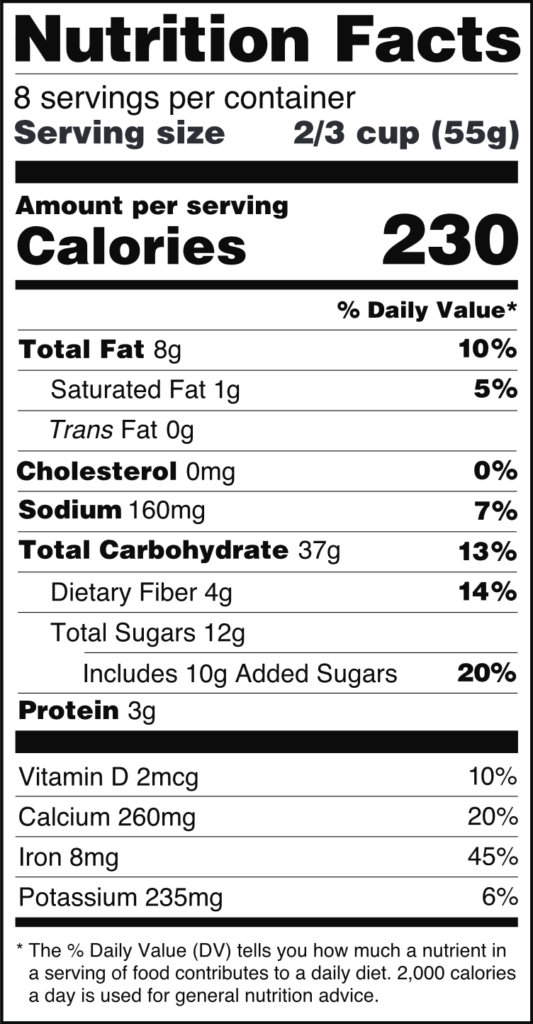
Nutrition labeling is the regulated practice of printing standardized nutritional information on packaged food, allowing consumers to compare products and make informed dietary decisions. Most countries require some form of nutrition label by law, though the exact format, required nutrients, and serving size rules vary considerably by jurisdiction. The Nutrition Facts Label In the United
Nutrition Labeling Read More »
The regulated practice of printing standardized nutritional information on packaged food to support informed consumer choice.
OAI-PMH, short for the Open Archives Initiative Protocol for Metadata Harvesting, is a technical standard that allows digital repositories to expose their metadata records in a consistent, machine-readable format so that other systems can automatically collect, or harvest, those records. Before OAI-PMH, aggregating content across many repositories required custom integration work for each source, since
OAI-PMH Read More »
OAI-PMH, the Open Archives Initiative Protocol for Metadata Harvesting, is a technical standard that lets repositories share metadata records so other systems can collect and aggregate them automatically.