Howard Carter Finds the Steps to Tutankhamun’s Tomb
In Egypt’s Valley of the Kings, a single buried step leads a British archaeologist to the only pharaoh’s tomb found nearly untouched by looters in three thousand years.

Howard Carter, Lord Carnarvon, and Lady Evelyn Herbert at the steps leading to Tutankhamun’s newly discovered tomb, November 1922. Photo: Harry Burton / The Griffith Institute Archive. Public domain.
On November 4, 1922, workmen under British archaeologist Howard Carter, digging near the tomb of Ramesses VI in the Valley of the Kings, uncovered a stone step cut into the bedrock. Clearing twelve steps revealed a plastered doorway stamped with the seal of the royal necropolis, the first sign in three thousand years that a pharaoh’s tomb nearby had gone unnoticed.
Nearly every pharaoh’s tomb in the valley had already been emptied by ancient robbers or modern treasure hunters. An intact royal burial gave archaeologists a direct, physical record of how a New Kingdom pharaoh was actually buried, evidence no written source could fully supply.
Carter’s breakthrough followed years of fruitless digging in a valley most experts considered exhausted, in a season his patron had set as the last one he would fund. Persisting where others have already given up sometimes still turns up what everyone assumed was gone.
People Behind the Story
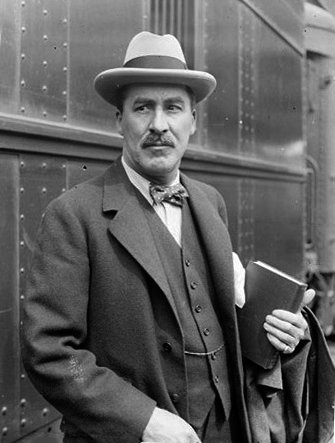
Carter had already spent three decades excavating in Egypt when a final, patron-funded season turned up the tomb he had long suspected still lay hidden in the valley.

Carnarvon funded Carter’s excavations from 1907 and reached Luxor three weeks after the first step was found. He died the following April of an infected mosquito bite, a death later mythologized as a pharaoh’s curse.
Key Moments Timeline
Carter’s Egyptian workmen uncover a stone step hidden beneath debris near the tomb of Ramesses VI, the first clue to a burial no one had plundered.
A seal bearing Tutankhamun’s cartouche turns up in the stairway’s rubble, confirming whose tomb lies behind the sealed doorway.
Carter cuts a small hole in a second sealed door and, holding up a candle, becomes the first person in three thousand years to see the tomb’s antechamber, crowded with chariots, gilded couches, and treasure.
Carter opens the innermost sealed wall, revealing the sarcophagus and, inside three nested coffins, Tutankhamun’s mummified body in solid gold.
Did You Know
Tutankhamun became king around age eight or nine and died at about eighteen, after a brief reign most ancient writers thought unremarkable. That obscurity likely kept grave robbers from ever bothering to look for him.
More in History