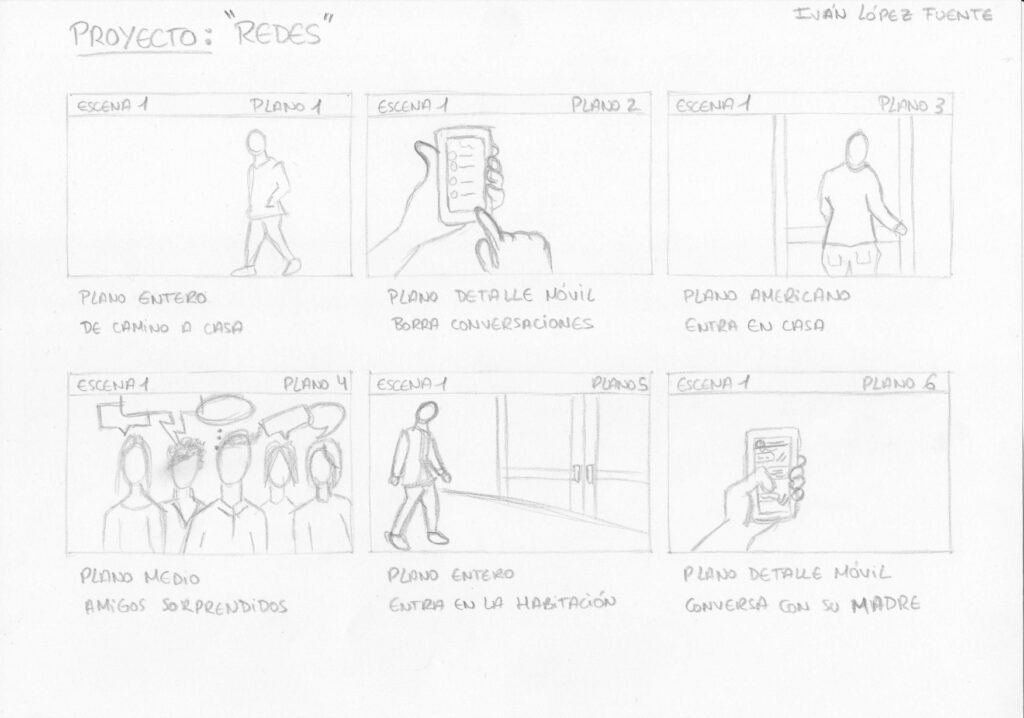
A storyboard is a sequence of sketches, arranged in order, that maps out a story’s key scenes and visual flow before a film, television show, or animated production is actually shot or animated. Filmmakers use storyboards to plan camera angles and shot composition, check whether a story reads clearly, and catch plot holes or continuity
Storyboard Read More »
A sequence of sketches mapping out a story's scenes and visual flow before filming or animation begins.
Strategic messaging gives every spokesperson, document, and advertisement a shared foundation so an audience receives a consistent impression rather than a scattered one. Building a Message Framework Teams typically start by identifying the audience, the single most important thing that audience should take away, and the supporting facts that make that central claim credible, distilling
Strategic Messaging Read More »
Strategic messaging is the disciplined process of defining the core ideas an organization wants an audience to understand and remember across every communication channel.
Stratigraphy is the study and interpretation of the layered sequence of deposits, or strata, that accumulate at an archaeological site over time. By carefully recording which layers lie above, below, and beside one another, archaeologists establish a relative chronology for a site, determining which deposits and the objects within them are older or younger than
Stratigraphy Read More »
The study of layered archaeological deposits used to establish the relative order in which they were formed.
Overview Strength and conditioning is a specialized field within sports science focused on developing the physical qualities that underpin athletic performance, including maximal strength, explosive power, speed, agility, and various forms of endurance. Strength and conditioning coaches design and supervise training programs tailored to the specific demands of an athlete sport and competitive calendar, working
Strength and Conditioning Read More »
A field of athletic training focused on developing an athlete physical capacities, including strength, power, speed, and endurance, to improve performance and reduce injury risk.
Theoretical Foundations Strengths-based practice developed partly as a reaction against traditional social work assessment models that historically focused heavily on cataloging client deficits, pathologies, and problems, an approach that critics argued could inadvertently reinforce a sense of helplessness or dependency in clients already facing difficult circumstances. The strengths perspective instead starts from the premise that
Strengths-Based Practice Read More »
Strengths-based practice is a social work approach that focuses on identifying and building upon a client existing capabilities, resources, and resilience rather than concentrating primarily on problems and deficits.
Structural engineering is the branch of civil engineering focused on designing the skeleton of buildings, bridges, towers, and other structures so that they safely carry their own weight, the people and objects inside them, and forces such as wind, snow, and earthquakes. A structural engineer’s central task is translating an architect’s or planner’s vision into
Structural engineering Read More »
The branch of civil engineering that designs the load-bearing systems of buildings, bridges, and towers.
Structural steel is steel fabricated into specific shapes, such as beams, columns, and trusses, and used as the primary load-bearing frame of a building or other structure. Valued for its high strength relative to weight, consistency as a manufactured material, and suitability for prefabrication, structural steel has been a dominant framing material for mid- and
Structural Steel Read More »
Steel fabricated into beams, columns, and other shapes used as the primary load-bearing frame of a building.
Subject headings are standardized terms assigned to library materials to describe their topical content, drawn from a controlled vocabulary rather than chosen freely by individual catalogers, so that items on the same subject are consistently described and can be reliably found together through catalog search. Without controlled subject headings, one cataloger might describe a book
Subject Headings Read More »
Subject headings are standardized terms assigned to library materials to describe their topical content and allow consistent searching and browsing by subject.
Subscription news models refer to business approaches in which readers pay recurring fees to access a publication content, often through a digital paywall that restricts some or all articles to paying subscribers. This model has grown significantly as advertising revenue alone has become less reliable for sustaining quality journalism in many markets, pushing publishers to
Subscription News Models Read More »
A business model in which readers pay recurring fees to access news content through a paywall.
Overview Sufism refers to the mystical dimension of Islam, in which practitioners emphasize direct, experiential closeness to God alongside the outward practice of Islamic law and ritual. Rather than forming a separate religion, Sufism developed within Islam as a spiritual path pursued by individuals and organized communities seeking a deeper inward relationship with the divine.
Sufism Read More »
The mystical dimension of Islam, emphasizing direct personal experience of the divine through spiritual practice, often guided by a teacher within an established order.