Dimensions of Cohesion Team cohesion describes the degree to which members of a sports team feel bonded together and committed to shared objectives, and sport psychologists typically separate it into two related but distinct dimensions. Task cohesion refers to how effectively team members coordinate and work together toward shared competitive goals, such as executing a
Team Cohesion in Sport Read More »
Team cohesion in sport is the degree to which members of an athletic team are bonded together and unified in pursuit of shared goals and mutual satisfaction.
Telemedicine is the delivery of healthcare services remotely using telecommunications technology, allowing patients and clinicians to connect for consultations, diagnosis, and ongoing care management without requiring a physical, in-person office visit. What began decades ago, using early tools like telephone consultations and later basic video links, as a way to extend specialist care to remote
Telemedicine Read More »
The delivery of healthcare services remotely using telecommunications technology.
Overview Temporary Assistance for Needy Families, commonly known as TANF, is a federal block grant program established by the 1996 welfare reform law to provide states with funding to assist low-income families with children. The program replaced Aid to Families with Dependent Children, converting what had been an open-ended entitlement into a fixed grant amount
Temporary Assistance for Needy Families Read More »
A U.S. federal block grant program that provides states with funding to assist low-income families with children, typically requiring work activities and imposing time limits.
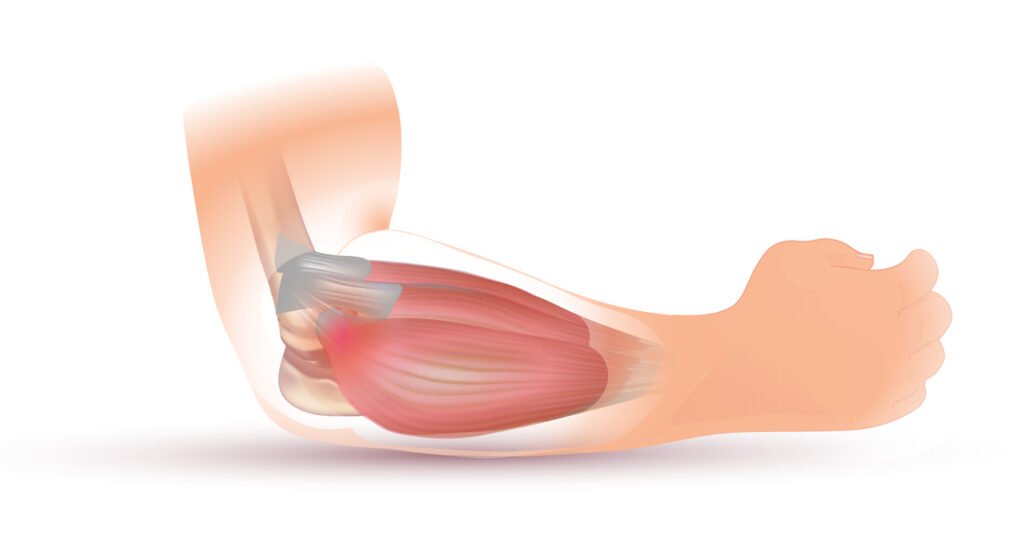
Overview Tendinopathy is a chronic condition characterized by pain and structural degeneration within a tendon, typically developing gradually through repetitive loading over weeks or months rather than resulting from a single acute traumatic event, and commonly affecting sites such as the Achilles tendon, patellar tendon, or rotator cuff. Understanding the Underlying Process Research has shown
Tendinopathy Read More »
A chronic condition involving pain, degeneration, and impaired function of a tendon, typically resulting from repetitive loading over time.
Terroir is the French concept describing how a specific place’s combination of soil, climate, topography, and farming tradition shapes the character of an agricultural product, most famously wine. Components of Terroir The idea encompasses soil composition and drainage, mesoclimate and sun exposure, elevation and slope angle, and the accumulated viticultural practices of generations of growers
Terroir Read More »
The French concept that a location's soil, climate, and farming tradition shape the distinctive character of foods and beverages grown there.
Terrorism generally refers to the deliberate use of violence or the threat of violence against civilians or other non-combatants to create fear and advance a political, religious, or ideological goal. Scholars broadly agree that no single definition of terrorism commands universal acceptance, partly because the term carries intrinsically negative connotations and is overwhelmingly applied to
Terrorism Read More »
The deliberate use of violence against civilians to create fear and advance a political or ideological goal.
Overview Theodicy refers to theological and philosophical attempts to reconcile the existence of evil and suffering in the world with belief in a God who is both entirely good and all-powerful. The term was coined by the philosopher Gottfried Wilhelm Leibniz in the early eighteenth century, combining Greek words for God and justice. The Core
Theodicy Read More »
The theological and philosophical attempt to reconcile the existence of evil and suffering with belief in a good and all-powerful God.
Overview Theology is the systematic study of the nature of the divine, religious belief, and the relationship between humanity and the sacred, typically carried out from within the framework of a particular religious tradition. The term derives from Greek roots meaning the study of God, though theological inquiry today spans a wide range of traditions
Theology Read More »
The systematic study of the nature of the divine and of religious belief, often undertaken from within a particular faith tradition.
Overview Theravada Buddhism, meaning the Doctrine of the Elders, is one of the two major branches of Buddhism and is generally regarded as preserving teachings closest to the earliest recorded discourses of the historical Buddha. It is the dominant tradition across much of Southeast Asia, including Sri Lanka, Thailand, Myanmar, Cambodia, and Laos. Core Teachings
Theravada Buddhism Read More »
A major branch of Buddhism, dominant in Southeast Asia, that emphasizes the earliest recorded teachings of the Buddha and individual liberation through monastic discipline.
Thermodynamics is the branch of physics and mechanical engineering that studies heat, energy, and how they convert into mechanical work. Engineers rely on thermodynamics to design and analyze engines, power plants, refrigeration systems, and countless other devices that depend on moving or converting energy, making it one of the foundational subjects underlying nearly all of
Thermodynamics Read More »
The branch of physics and engineering that studies heat, energy, and how they convert into mechanical work.