Daylighting is the practice of designing a building to use natural light from the sun and sky as the primary source of interior illumination during occupied hours, reducing reliance on electric lighting while shaping the quality and character of interior space. Rather than treating windows as simple openings for view and ventilation, daylighting treats light
Daylighting Read More »
Designing buildings to use natural sunlight as the primary source of interior illumination.
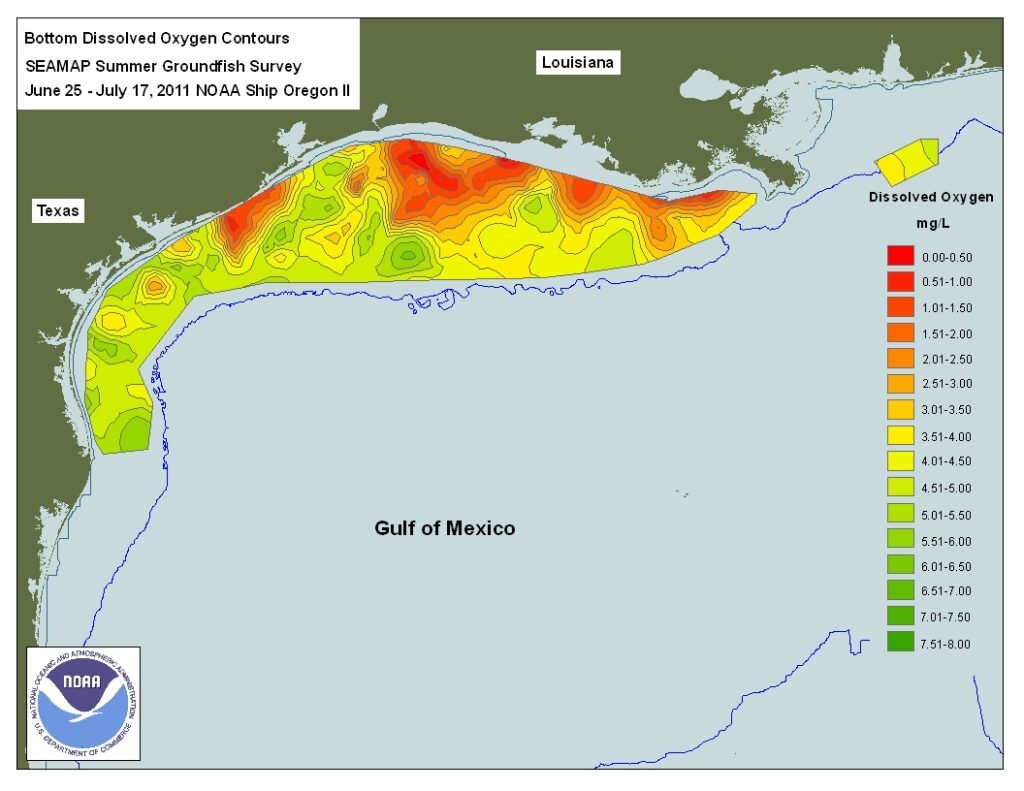
In simple terms A dead zone is a stretch of water where oxygen has dropped so low that fish and other animals cannot live in it. The scientific name is hypoxia, which means low or depleted oxygen in a water body. [1] Dead zones form in the ocean and in fresh water alike. Nothing is
Dead zone (water) Read More »
A dead zone is an area of water where oxygen has fallen so low that fish and other animals cannot survive there.
A deciduous forest is a forest ecosystem dominated by tree species that shed their leaves seasonally, typically in autumn in temperate climates, as an adaptation to conserve water and energy during cold winters or dry seasons. Seasonal Leaf Drop Adaptation Deciduous trees shed their leaves to avoid the metabolic cost of maintaining foliage during periods
Deciduous Forest Read More »
A forest ecosystem dominated by tree species that shed their leaves seasonally, typically as an adaptation to cold winters or dry seasons.
A decomposer is an organism that breaks down dead organic material, including dead plants, animals, and waste products, converting complex organic compounds back into simpler substances that can be reused by other living organisms. Decomposers, which include bacteria, fungi, and various invertebrates such as earthworms and certain insects, perform an essential ecological function often described
Decomposer Read More »
A decomposer is an organism, mainly bacteria and fungi, that breaks down dead organic material and recycles its nutrients back into the ecosystem.
Image: Guggenheim Museum Bilbao, a deconstructivist landmark, by Grand Parc – Bordeaux, France, CC BY 2.0, via Wikimedia Commons
Deconstructivism Read More »
An architectural movement characterized by fragmented forms, visual disorder, and a rejection of traditional harmony and symmetry in building design.
Defamation law sits at the center of the tension between a free press and an individual right to a good name. What Counts as Defamation A defamatory statement is a false assertion of fact, published to a third party, that damages the subject reputation. Opinion, satire, and statements that are substantially true generally fall outside
Defamation Law Read More »
Defamation law governs false statements that harm a reputation, balancing protection of individuals against the press freedom journalists rely on to report.
Deforestation is the large-scale clearing or removal of forest, most often to convert the land to farming, grazing, logging, mining, or urban development. It differs from forest degradation, in which a forest remains standing but is thinned or damaged, because deforestation removes the tree cover itself and, with it, most of the forest’s original ecological
Deforestation Read More »
Deforestation is the large-scale clearing of forest for farming, logging, mining, or development, removing tree cover and its ecological functions.
Delayed onset muscle soreness, commonly abbreviated as DOMS, is the pain and stiffness felt in muscles typically beginning twelve to twenty-four hours after unaccustomed or unusually intense physical activity, peaking around twenty-four to seventy-two hours afterward before gradually resolving. It is especially common after exercises involving eccentric muscle contractions, in which a muscle lengthens while
Delayed onset muscle soreness Read More »
Muscle pain and stiffness that develops in the day or two following unaccustomed or intense exercise.
Overview Deliberate practice refers to a highly structured form of training involving specific, effortful activities designed to improve performance in a particular skill or domain. Unlike casual repetition, deliberate practice requires a performer to work at the edge of their current ability, receive immediate feedback, and pursue clearly defined, often narrowly focused improvement goals. The
Deliberate Practice Read More »
A highly structured form of training that involves specific, effortful activities designed to improve performance, typically with expert feedback and clear goals.
Purpose of Demand Forecasting Demand forecasting predicts how much of a product or service customers will want in a future period. Logistics and supply chain teams use these forecasts to plan inventory levels, production schedules, warehouse staffing, and transportation capacity well in advance of actual orders arriving. Forecasting Methods Quantitative methods range from simple moving
Demand Forecasting Read More »
Demand forecasting is the process of predicting future customer demand for a product using historical data, market trends, and statistical or judgmental methods.