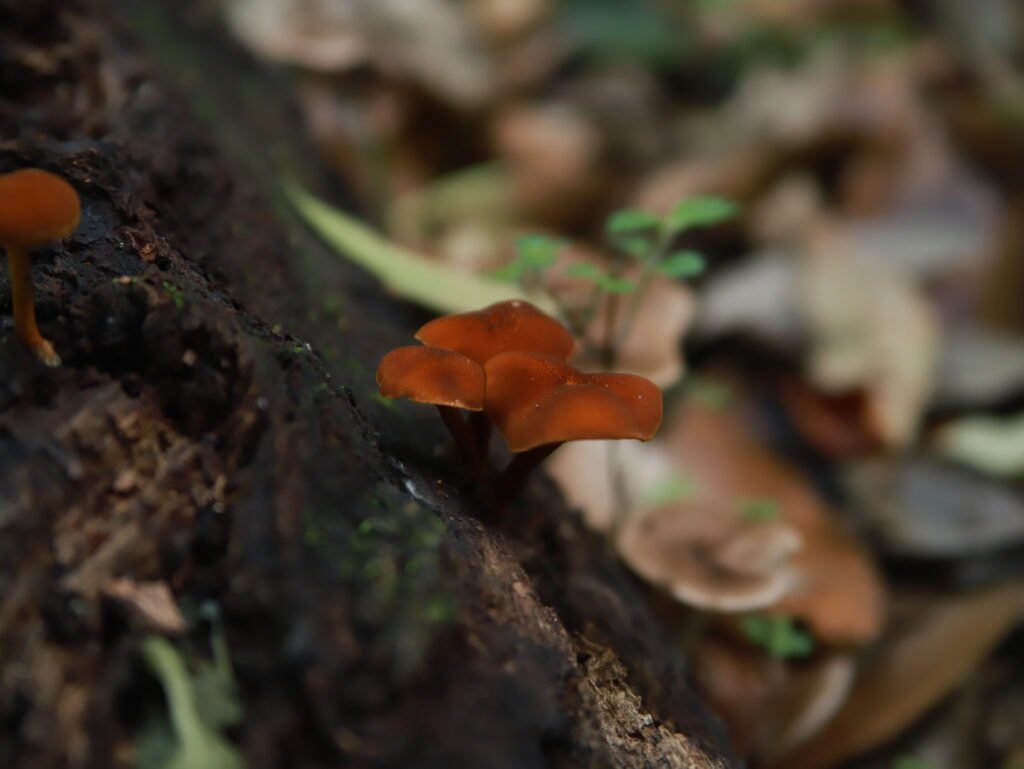
A decomposer is an organism that breaks down dead organic material, including dead plants, animals, and waste products, converting complex organic compounds back into simpler substances that can be reused by other living organisms. Decomposers, which include bacteria, fungi, and various invertebrates such as earthworms and certain insects, perform an essential ecological function often described as nutrient cycling, without which dead material would simply accumulate indefinitely and the nutrients locked within it would become permanently unavailable to the rest of the ecosystem.
While decomposers are sometimes grouped together with detritivores, organisms that consume dead organic matter directly by ingestion such as earthworms and many insects, ecologists more precisely reserve the term decomposer for organisms, primarily bacteria and fungi, that break down organic material chemically through the release of digestive enzymes, absorbing the resulting simpler nutrients directly rather than ingesting solid particles of dead material.
Fungi as Decomposers
Fungi are among the most important decomposers in terrestrial ecosystems, particularly for breaking down tough, complex plant material such as wood and leaf litter that few other organisms can digest efficiently. Certain fungi produce specialized enzymes capable of breaking down lignin, the structural compound that gives wood its rigidity, a capability that makes fungi uniquely important for decomposing fallen trees and other woody debris that would otherwise persist in an ecosystem for a very long time.
The visible mushrooms many people associate with fungi represent only the reproductive structures of a much larger underground network of thread-like filaments called mycelium, which does the actual work of breaking down organic material and can extend for considerable distances through soil or decaying wood, sometimes forming some of the largest known living organisms on Earth by total area covered.
Bacteria as Decomposers
Bacterial decomposers are found in enormous numbers in soil, water, and virtually every environment on Earth, breaking down organic material at a microscopic scale that complements the larger-scale decomposition carried out by fungi and detritivores. Different bacterial species specialize in breaking down different types of organic compounds, and the overall community of decomposer bacteria present in a given soil or aquatic environment can shift considerably depending on what type of organic material is most available to decompose.
Some bacterial decomposition processes occur without oxygen, called anaerobic decomposition, which is common in waterlogged soils, sediments, and the digestive systems of certain animals, and which produces different byproducts, including methane, compared to the oxygen-dependent aerobic decomposition that occurs in well-aerated soils and compost.
The Nutrient Cycling Role
Decomposers play an irreplaceable role in nutrient cycling by converting nutrients locked within dead organic matter, including nitrogen, phosphorus, and carbon, into simpler inorganic forms that growing plants can absorb and use, effectively closing the loop between the death of one organism and the growth of new life. Without this decomposition process, nutrients would remain trapped in accumulating dead material, and ecosystems would eventually run short of the usable nutrients needed to support ongoing plant growth.
This nutrient cycling function also plays a significant role in the global carbon cycle, since the rate at which decomposers break down organic material and release carbon dioxide back into the atmosphere, compared to the rate at which new plant growth captures carbon through photosynthesis, helps determine whether a given ecosystem functions as a net carbon source or a net carbon sink over time.
Decomposers in Human Systems
Composting, the deliberate management of organic waste decomposition, harnesses the same bacterial and fungal processes found in natural ecosystems to convert food scraps, yard waste, and other organic material into nutrient-rich compost that can be used to improve soil for gardening and agriculture, diverting substantial amounts of material away from landfills where decomposition under low-oxygen conditions would otherwise generate significant methane emissions.
Wastewater treatment systems also rely heavily on decomposer bacteria to break down organic pollutants and waste before treated water is released back into the environment, making decomposer organisms an essential, if often overlooked, component of modern sanitation and environmental management infrastructure.
Threats to Decomposer Communities
Soil decomposer communities can be significantly disrupted by certain agricultural practices, including heavy pesticide and fungicide use, excessive tillage, and the conversion of diverse natural ecosystems to simplified monoculture cropland, all of which can reduce the diversity and activity of soil fungi and bacteria responsible for maintaining healthy nutrient cycling.
Because healthy decomposer communities are closely tied to overall soil health and fertility, a growing body of agricultural research has focused on management practices, such as reduced tillage, cover cropping, and reduced pesticide use, specifically aimed at preserving or restoring diverse decomposer populations as part of broader efforts to maintain long-term soil productivity.
Researchers studying soil health increasingly treat decomposer diversity itself as a key indicator of long-term land management success, not merely a background process to be taken for granted.
FAQ
What is the difference between a decomposer and a detritivore?
Decomposers, mainly bacteria and fungi, break down organic material chemically using digestive enzymes and absorb the resulting nutrients, while detritivores, such as earthworms, consume dead organic matter directly by ingesting solid particles of it.
Why are fungi especially important decomposers?
Fungi can produce enzymes capable of breaking down lignin, the tough structural compound in wood, making them uniquely effective at decomposing fallen trees and woody debris that few other organisms can digest.
How does composting relate to natural decomposition?
Composting deliberately manages the same bacterial and fungal decomposition processes found in nature to convert organic waste into nutrient-rich material for soil, while reducing methane-generating landfill waste.
More in Ecology
Editorially reviewed by Specialty Digest Editorial TeamLast reviewed November 4, 2026Researched and drafted with AI assistanceReport an issue