Dementia care encompasses specialized care approaches designed to meet the unique needs of people living with dementia, a category of conditions involving progressive decline in memory, thinking, and daily functioning, with Alzheimers disease standing as the most common underlying cause. Effective dementia care differs substantially from standard elder care due to the cognitive and behavioral
Dementia Care Read More »
Specialized care approaches designed to meet the unique needs of people living with dementia, including Alzheimers disease and related conditions.
Dendrochronology is the scientific method of dating events, environmental conditions, and wooden artifacts by analyzing the pattern of annual growth rings in trees. Because most trees in temperate climates add one visible ring of new wood each year, and because the width of that ring varies with the growing conditions of that particular year, a
Dendrochronology Read More »
The scientific method of dating wood and past events by analyzing patterns in annual tree growth rings.
Depreciation is the accounting method of allocating the cost of a tangible asset, such as machinery, vehicles, or buildings, over its useful life rather than expensing the full purchase cost in the year it was bought. This matching of cost to the periods an asset actually helps generate revenue is a core principle of accrual
Depreciation Read More »
The accounting method of allocating the cost of a tangible asset over its useful life rather than expensing the full cost immediately.
Clinical depression, formally known as major depressive disorder, is a mental health condition characterized by persistent low mood, loss of interest or pleasure in activities a person previously enjoyed, and a range of accompanying physical and cognitive symptoms that together significantly impair daily functioning for a sustained period, typically at least two weeks. It is
Depression (clinical) Read More »
A mental health condition involving persistent low mood and loss of interest that significantly impairs daily functioning.
Descriptive cataloging is the process of recording the identifying and physical details of a library item, such as its title, author, publisher, publication date, edition, and physical format, into a standardized bibliographic catalog record. This work forms the core factual description of an item that appears in a library catalog, distinct from subject cataloging, which
Descriptive Cataloging Read More »
Descriptive cataloging is the process of recording the physical and bibliographic details of a library item, such as its title, author, publisher, and edition, in a standardized catalog record.
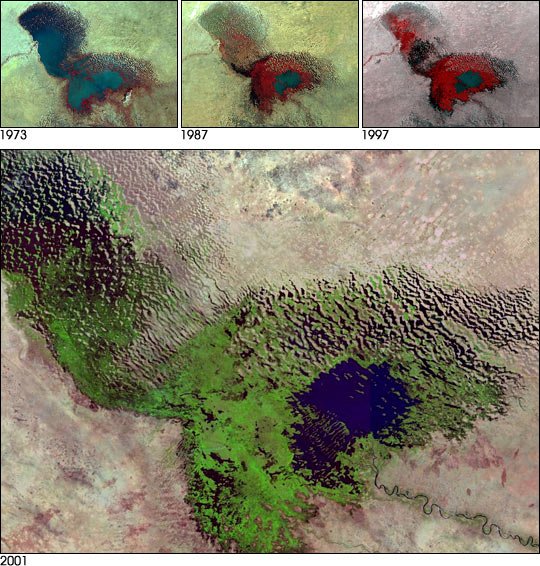
Desertification is the process by which fertile land in dry, semi-dry, or seasonally dry regions becomes progressively degraded, losing the vegetation, soil quality, and water retention it needs to support agriculture and natural ecosystems, until it comes to resemble a desert. Despite the name, desertification does not mean existing deserts physically expanding their boundaries outward
Desertification Read More »
Desertification is the progressive degradation of fertile dryland until it loses the vegetation and soil quality needed to support agriculture.
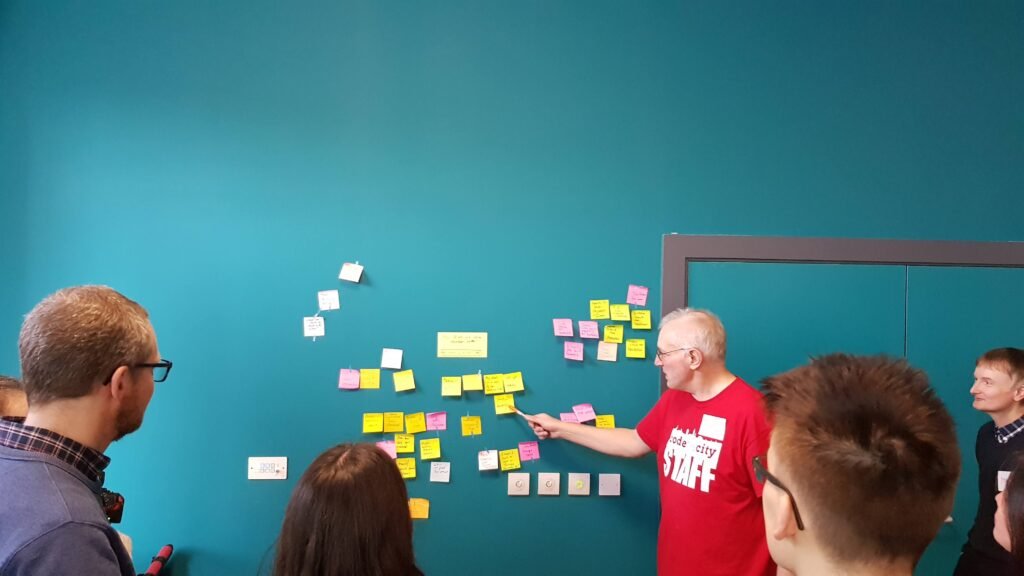
Image: brainstorming at a Code The City hack event, by Watty62, licensed CC BY-SA 4.0 via Wikimedia Commons.
Design Thinking Read More »
A problem-solving methodology applying empathy, iterative experimentation, and human-centered research to challenges across business, social, and design fields.
Design-build is a project delivery method in which a single entity holds contractual responsibility for both the design and construction of a project, contrasting with the traditional design-bid-build approach, in which an owner contracts separately with a designer and then a contractor, who bids on the completed design. Under design-build, the owner signs a single
Design-Build Read More »
A project delivery method in which a single entity holds contractual responsibility for both design and construction.
Overview A destination management company provides local, on-the-ground expertise and logistics support for groups traveling to a specific destination, often for corporate events or incentive travel. Role in the Supply Chain DMCs typically work as subcontractors, receiving business from tour operators, event planners, or corporate travel managers who need reliable local execution without their own
Destination Management Company Read More »
A destination management company is a local business that provides on-the-ground logistics, expertise, and services for groups and events within a specific destination.