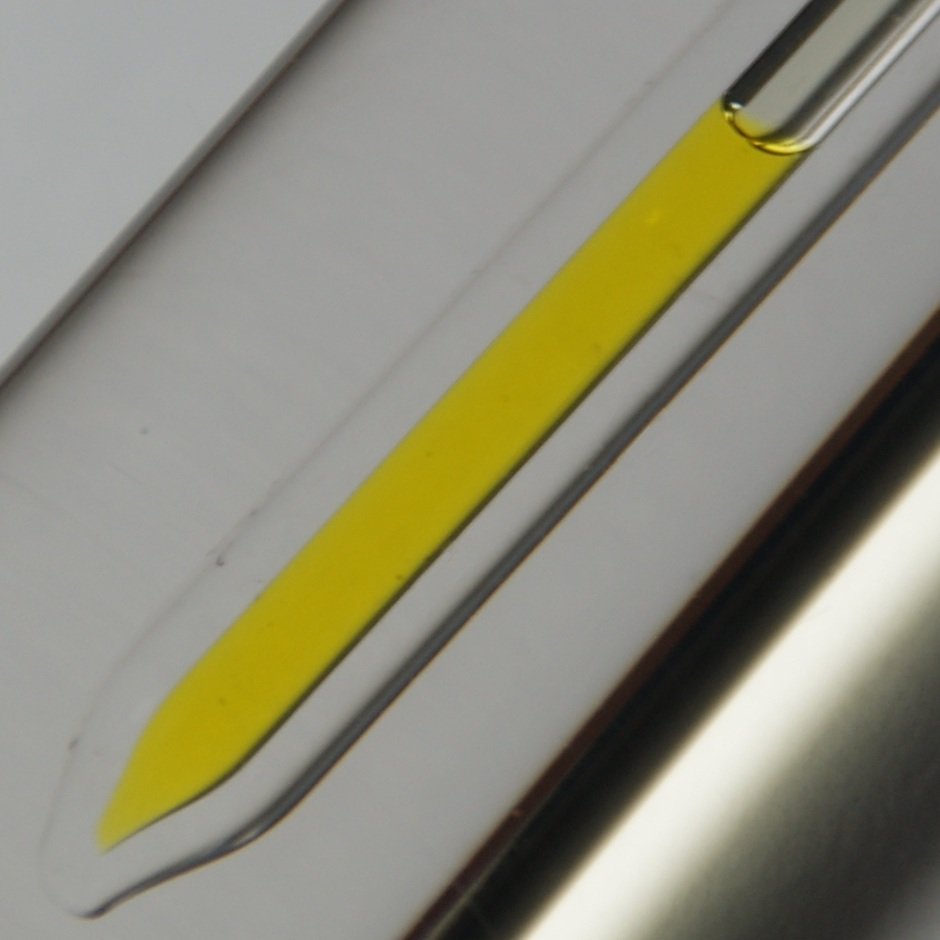
Chlorine is the chemical element with atomic number 17 and the symbol Cl. It is a yellow-green gas with a sharp, choking smell, and it belongs to the halogens in group 17 of the periodic table. Chlorine is toxic as a gas, yet its compounds are everywhere, from table salt to drinking water treatment and plastics.
History of chlorine
Hydrochloric acid was known to the alchemists, but the element behind it was not isolated until 1774. The Swedish chemist Carl Wilhelm Scheele, working at Uppsala, heated hydrochloric acid with the mineral pyrolusite, which is natural manganese dioxide. A dense, greenish-yellow gas with a choking smell came off. Scheele noted that it dissolved in water to give an acidic solution and that it bleached litmus paper and the color of leaves and flowers.
Scheele believed the gas was a compound. Humphry Davy studied it in 1807 and concluded that it was a simple substance, a true element. He announced this in 1810, and it took roughly another ten years before most chemists accepted the idea.
The name comes from the Greek chloros, meaning greenish yellow. Chlorine had a dark chapter in the First World War, when it was used as a chemical weapon. It is one of the elements that international treaties now control closely when used for that purpose.
Properties of chlorine
Chlorine has a standard atomic weight of about 35.45, which IUPAC gives as an interval because the proportions of its isotopes vary slightly between natural samples. Its electron configuration is [Ne] 3s2 3p5, so an atom needs just one more electron to fill its outer shell. Chlorine is therefore very reactive and combines with almost every other element.
PubChem lists an electronegativity of 3.16 and an electron affinity of about 3.6 electronvolts, among the highest of any element. The most common oxidation state is minus 1, as in the chloride ion, but chlorine can also take states of +1, +5 and +7 in compounds such as bleach and perchlorates.
At room temperature chlorine is a gas made of two-atom molecules, written Cl2. It is about two and a half times as dense as air, so it settles in low places. It condenses to a liquid at about minus 34 degrees Celsius and freezes at about minus 101.5 degrees Celsius. A molecule of Cl2 is held together by one shared pair of electrons.
Occurrence and production of chlorine
Chlorine is never found uncombined in nature. Its main source is halite, the mineral form of sodium chloride, or common salt. Over the lifetime of the Earth, the highly soluble salt has been washed into the oceans, and where ancient seas have evaporated, thick salt beds remain that can be mined. Chlorine also appears in the minerals carnallite and sylvite.
About 40 million tonnes of chlorine gas are produced every year by the electrolysis of brine, which is a solution of sodium chloride in water. Electrolysis uses an electric current to drive a chemical change. The process, known as the chlor-alkali industry, also makes sodium hydroxide and hydrogen at the same time, so each product helps to pay for the others.
Uses of chlorine
Chlorine kills bacteria, which makes it a disinfectant. It is used to treat drinking water and swimming pool water, and chlorination of public water supplies has been a major factor in reducing waterborne disease. Chlorine is also used in bleaching and in making hundreds of consumer goods, from paper and paints to textiles and insecticides.
About 20 percent of the chlorine produced is used to make polyvinyl chloride, or PVC. This versatile plastic is found in window frames, car interiors, electrical wire insulation, water pipes, blood bags and vinyl flooring. A further major use is in organic chemistry, where chlorine serves as an oxidizing agent and in substitution reactions. The Royal Society of Chemistry states that 85 percent of pharmaceuticals use chlorine or its compounds at some stage of their manufacture.
In the past, chlorine was used to make chloroform, once an anesthetic, and carbon tetrachloride, a dry-cleaning solvent. Both are now strictly controlled because they can damage the liver. Chlorine also appears in refrigerants and aerosol propellants known as chlorofluorocarbons, which were largely phased out under the Montreal Protocol after they were found to damage the ozone layer.
Isotopes of chlorine
Chlorine has two stable isotopes: chlorine-35, at about 76 percent of natural chlorine, and chlorine-37, at about 24 percent. The mix of these two is the reason why the atomic weight is 35.45 and not a whole number. An isotope is a version of an element with a particular number of neutrons.
The radioactive isotope chlorine-36 has a half-life of about 301,000 years. It forms naturally when cosmic rays strike argon in the atmosphere, and it was also released in large amounts by nuclear weapons tests. Hydrologists use it to date groundwater and ice, and geologists use it to estimate how long rock surfaces have been exposed. The half-life of an isotope is the time needed for half of a sample to decay.
Chlorine in life and the environment
The chloride ion is essential to life. In cells it is present mostly as a negative ion that balances positively charged ions, mainly potassium, and in blood and other fluids outside cells it balances sodium. Most of the chloride people need comes from salt. The Royal Society of Chemistry notes that typical daily salt intake is about 6 grams, and that people could manage with about half of that amount.
Chlorine gas itself is very poisonous. Industrial handling follows strict safety rules, and the gas must never be mixed with other cleaning chemicals at home. This entry is general background rather than safety or medical advice.
Chlorinated compounds can persist in the environment, and certain chlorine-containing pollutants build up in animal tissue. For this reason, environmental regulators monitor chlorinated solvents and pesticides, and many have been restricted or banned in recent decades.
Key facts
- Chlorine has atomic number 17 and the symbol Cl, and sits in group 17 (the halogens) and period 3 of the periodic table.1
- Chlorine is a gas at room temperature that boils at about minus 34 degrees Celsius.1
- Carl Wilhelm Scheele first produced chlorine in 1774, and Humphry Davy showed it to be an element in 1810.1
- About 40 million tonnes of chlorine are made each year by the electrolysis of brine.1
- Chlorine has two stable isotopes, chlorine-35 and chlorine-37, and a standard atomic weight of about 35.45.2
Related concepts
In the news
Quick checkWho discovered chlorine?Show answer
Carl Wilhelm Scheele first produced chlorine gas in 1774, and Humphry Davy concluded it was an element in 1810.
Sources
- Royal Society of Chemistry, Periodic Table: Chlorine, https://periodic-table.rsc.org/element/17/chlorine
- National Center for Biotechnology Information, PubChem Periodic Table: Chlorine (element 17, including IUPAC-sourced atomic weight and isotope data), https://pubchem.ncbi.nlm.nih.gov/element/17
Editorially reviewed by Specialty Digest Editorial TeamLast reviewed November 4, 2026Researched and drafted with AI assistanceReport an issue