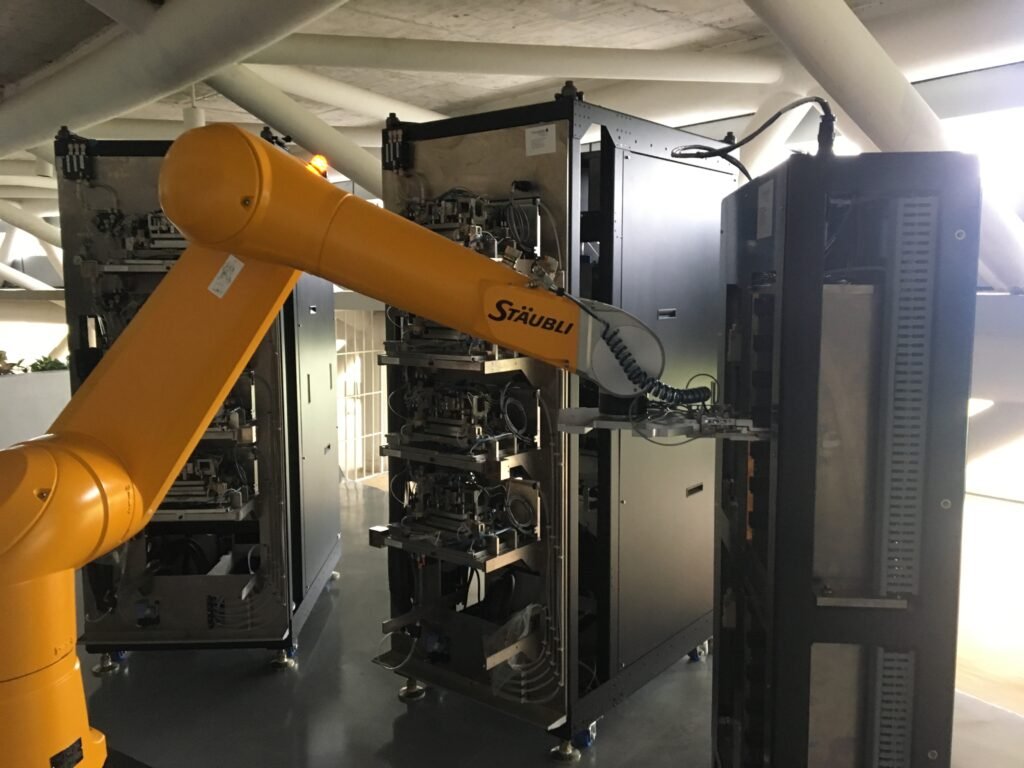
Gene sequencing is the process of determining the order of the four chemical bases, abbreviated A, T, C and G, that make up a DNA molecule. That order spells out the genetic information in a gene, a chromosome or a whole genome. The term is often used loosely for DNA sequencing in general, whether the target is one gene or the roughly three billion base pairs of a human genome.
History of gene sequencing
The 1980 Nobel Prize in Chemistry, shared with Paul Berg, recognized the contributions of Walter Gilbert and Frederick Sanger to determining base sequences in nucleic acids. The prize committee noted that the two had developed different methods independently. It credited Sanger with the first complete determination of the sequence of a DNA molecule: the 5,375 building blocks in the DNA of phi-X174, a virus that infects bacteria.
Scaling up took the Human Genome Project, an international effort carried out from 1990 to 2003. A special committee of the U.S. National Academy of Sciences outlined its original goals in 1988, including sequencing the human genome and the genomes of several carefully chosen organisms. The list eventually included the bacterium E. coli, baker’s yeast, the fruit fly, the nematode and the mouse.
The project finished two years ahead of its 2005 target. Its 2003 sequence covered over 90 percent of the human genome, which the National Human Genome Research Institute (NHGRI) describes as close to complete as the technology of the time allowed. The U.S. share was projected to cost $3 billion but came in at about $2.7 billion over roughly 13 years.
How gene sequencing works
NHGRI explains that each base always bonds with the same partner: adenine with thymine, and cytosine with guanine. This pairing is how cells copy DNA when they divide, and it also underlies most sequencing methods. The structure behind it is described in the entry on the DNA double helix.
Current methods cannot read a genome from end to end in a single step. Instead, the DNA is broken into smaller pieces, and each piece goes through chemical reactions that reveal the identity and order of its bases. The resulting sequence reads, often numbering in the billions, are assembled back together by computer. A reference sequence of the human genome helps with this assembly.
Genome size shapes the work. NHGRI lists about 5 million bases for the gut bacterium E. coli, about 123 million for the fruit fly, about 3 billion for a human and about 23 billion for the loblolly pine. A person’s actual diploid genome, which holds a copy of each chromosome from each parent, is about 6 billion bases.
Types of gene sequencing
Methods are often grouped by generation. Sanger-style methods read one stretch of DNA at a time and remain useful for checking short segments. High-throughput methods, commonly called next-generation sequencing, read huge numbers of fragments in parallel, which is what made whole-genome sequencing affordable. NHGRI reports that after the Human Genome Project, automation and technology improvements made routine sequencing of individual genes possible, with some laboratories reading well over 100,000 billion bases per year.
NHGRI also describes newer approaches. One watches DNA polymerase, the enzyme that copies DNA, with a very fast camera and microscope while it adds bases tagged with bright dyes of different colors. Another threads single DNA strands through extremely tiny pores in a membrane and reads the bases one at a time.
Sequencing can also differ in scope. A laboratory may read a single gene, the protein-coding portion of the genome known as the exome, or the whole genome.
Read length is another dividing line. Long-read methods read much longer stretches of DNA at once and are better at spanning repetitive regions that short reads struggle to place, while short-read methods are usually cheaper per base. Many projects combine both.
Applications of gene sequencing
NHGRI notes that sequence data can show which stretches of DNA contain genes and which carry regulatory instructions that turn genes on or off. The data can also highlight changes in a gene that may cause disease, which makes sequencing a core tool in medical genetics and cancer research.
Public health agencies sequence the genomes of bacteria and viruses to track how outbreaks spread. Plant and animal breeders use sequence data to find useful variants, and researchers use it to compare species and study evolution. Decisions about genetic testing for a person’s own health belong to that person and their clinicians, and this entry offers general background only.
Sequencing also supports research on microbial communities and on organisms that cannot be grown in a laboratory, because the DNA in an environmental sample can be read directly.
Advantages and disadvantages of gene sequencing
The biggest change has been cost. NHGRI estimated that the first draft human genome cost about $300 million worldwide. Its data from funded sequencing centers show the cost of a high-quality draft human genome falling to about $14 million by 2006, to just above $4,000 in mid-2015 and below $1,500 by late 2015, with whole-exome sequencing generally below $1,000. NHGRI also cautions that precise cost figures are hard to compare, because researchers and companies account for costs in different ways.
The disadvantages lie elsewhere. Sequencing produces very large amounts of data that need storage, computing and expert interpretation. Many variants found in a genome have an unclear meaning, and a sequence alone does not amount to a diagnosis. Because relatives share DNA, genetic data also raise privacy questions that reach beyond the person tested.
Gene sequencing vs. gene editing
The two are often confused. Sequencing reads the order of bases and leaves the DNA unchanged. Gene editing, which includes CRISPR-based methods, changes the DNA at a chosen location. In practice the two work together: sequencing is used to find a target and, after an edit, to check what actually changed.
More in Genetics
Key facts
- The human genome contains about 3 billion base pairs.1
- Frederick Sanger established the sequence of the 5,375 building blocks in phi-X174 DNA.4
- The 1980 Nobel Prize in Chemistry recognized Walter Gilbert and Frederick Sanger for work on determining base sequences in nucleic acids.4
- The Human Genome Project ran from 1990 to 2003, and its 2003 sequence covered over 90 percent of the human genome.3
- The U.S. share of the Human Genome Project cost about $2.7 billion over roughly 13 years.2
- NHGRI data show a high-quality draft human genome cost about $14 million in 2006 and fell below $1,500 by late 2015.2
- Genome sizes are about 5 million bases for E. coli, 123 million for the fruit fly and 23 billion for loblolly pine.2
This entry explains a medical term. It is not medical advice. If you are concerned about your health, speak with a qualified health professional.
Related concepts
In the news
Quick checkWho sequenced the first complete DNA molecule?Show answer
Frederick Sanger established the sequence of the 5,375 building blocks in the DNA of the bacterial virus phi-X174.
Sources
- 1. National Human Genome Research Institute, DNA Sequencing Fact Sheet, https://www.genome.gov/about-genomics/fact-sheets/DNA-Sequencing-Fact-Sheet
- 2. National Human Genome Research Institute, The Cost of Sequencing a Human Genome, https://www.genome.gov/about-genomics/fact-sheets/Sequencing-Human-Genome-cost
- 3. National Human Genome Research Institute, Human Genome Project fact sheet, https://www.genome.gov/human-genome-project/Completion-FAQ
- 4. The Nobel Prize, The Nobel Prize in Chemistry 1980 press release, https://www.nobelprize.org/prizes/chemistry/1980/press-release/
Editorially reviewed by Specialty Digest Editorial TeamLast reviewed November 4, 2026Researched and drafted with AI assistanceReport an issue