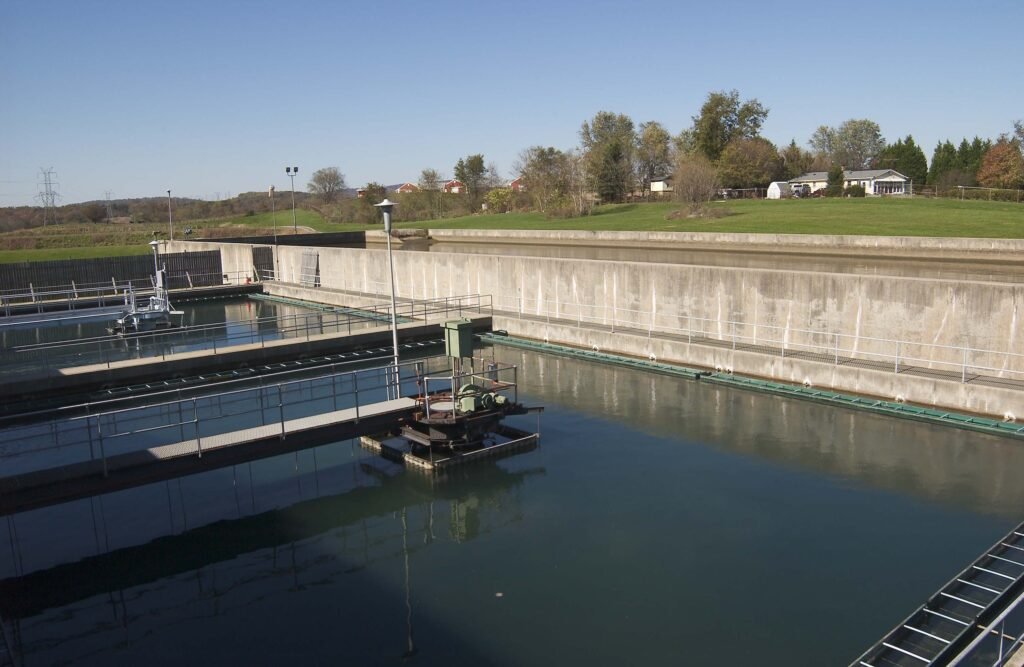
Water purification is the set of physical, chemical and biological processes that remove contaminants such as particles, germs and dissolved chemicals from water so that it is safe for a specific use, most often drinking. It ranges from a large municipal plant serving a city to a filter or chlorine tablet used in a single household. Safe water prevents disease, and the World Health Organization (WHO) ties contaminated drinking water to cholera, dysentery, typhoid and polio.
History of water purification
People have treated water for thousands of years, using sand, charcoal, boiling and settling to make it clearer and better tasting. The link between water and disease became clear in the nineteenth century, when physician John Snow traced a cholera outbreak in London in 1854 to a contaminated public water pump. Cities began building sand filters for public supplies in the same era.
Disinfection with chlorine spread through municipal systems in the early twentieth century and sharply reduced waterborne illness in cities that adopted it. Later work added activated carbon, membranes and ultraviolet light. Today, international guidance such as the WHO Guidelines for drinking-water quality sets the health-based targets that treatment is designed to meet.
How water purification works
Most systems use several barriers in sequence. The U.S. Centers for Disease Control and Prevention (CDC) describes a common series of steps in water utilities: coagulation, flocculation, sedimentation, filtration and disinfection.
Coagulation is usually the first step, in which a chemical is added so that tiny suspended particles clump together. Flocculation is the gentle mixing that builds these clumps into larger, heavier particles called flocs. In sedimentation, the flocs settle to the bottom and separate from the water.
The clearer water on top then passes through filters. The CDC says these filters have different pore sizes and are made of materials such as sand, gravel or charcoal, and that they remove germs including parasites, bacteria and viruses. Activated carbon filters remove bad smells, and ultrafiltration uses a membrane with very small pores that lets through only water and small molecules such as salts.
Disinfection is the final barrier. Chlorination can use liquefied chlorine gas, sodium hypochlorite solution or calcium hypochlorite granules. According to WHO guidance, chlorine dissolves in water to form hypochlorous acid and hypochlorite ion, and operators aim to leave a suitable residual of free chlorine so that the water stays protected on its way to the tap. The same guidance describes methods such as breakpoint chlorination, which uses a dose large enough to oxidize all the ammonia nitrogen present and still leave that residual.
Types of water purification
Physical methods remove or separate contaminants without changing their chemistry. They include settling, sand or cloth filtration, activated carbon, and membrane processes such as microfiltration, ultrafiltration and reverse osmosis. Boiling is a household physical method that kills most disease-causing organisms.
Chemical methods change contaminants or kill organisms. Chlorine and chloramine are the most common disinfectants. Ozone and chlorine dioxide are alternatives, and coagulants such as aluminum or iron salts help remove particles. Ion exchange can soften water or remove some dissolved metals.
Ultraviolet disinfection exposes water to UV light that damages the genetic material of microbes so they cannot reproduce. It leaves no residual, so it is often paired with a chemical disinfectant. Solar disinfection, in which clear bottles are left in sunlight, is a low-cost household option.
Point-of-use systems, such as ceramic filters, tablets and countertop units, treat water at home. They matter where public supplies are absent or unreliable.
Applications of water purification
The most important application is drinking water. WHO reports that in 2022, 73 percent of the global population, or 6 billion people, used a safely managed drinking-water service, meaning water located on premises, available when needed and free from contamination. The remaining 2.2 billion people included 1.5 billion with basic services and 115 million who collected untreated surface water from lakes, ponds, rivers and streams. WHO also reports that at least 1.7 billion people used a drinking-water source contaminated with feces in 2022, and estimates that contaminated water causes about 505,000 diarrheal deaths each year.
Purification is also used in hospitals, food and beverage production, laboratories, pharmaceutical manufacturing and electronics, where very pure water is needed. Wastewater treatment plants apply many of the same steps before water is returned to rivers or reused. Emergency responders use portable units after floods and earthquakes, when normal supplies fail.
Advantages and disadvantages of water purification
The advantage is public health. In 2010 the UN General Assembly recognized the human right to water and sanitation, and Sustainable Development Goal target 6.1 calls for universal and equitable access to safe and affordable drinking water. Purification is a main way of meeting that goal where sources are polluted.
The disadvantages are cost, energy and upkeep. Treatment plants and membranes need skilled operators, power and replacement parts, and filters that are not maintained can fail silently. Chlorine can react with organic matter to form disinfection by-products, so operators balance germ control against by-product limits. Purification also does not fix a polluted source, which is why protecting rivers and groundwater from water pollution remains important.
Water purification vs. water treatment
The terms overlap. Water purification usually means making water safe or very clean for a particular use, while water treatment is the broader term that also covers handling wastewater before it returns to the environment. Both rely on the same basic steps, including disinfection with chlorine in most public systems. The information here is general background and not guidance for treating any particular water supply.
More in Environmental Science
Key facts
- Utilities commonly treat water with coagulation, flocculation, sedimentation, filtration and disinfection.2
- Filters of sand, gravel or charcoal remove germs including parasites, bacteria and viruses; activated carbon removes bad smells.2
- In 2022, 73 percent of the world population (6 billion people) used a safely managed drinking-water service.1
- At least 1.7 billion people used a drinking-water source contaminated with feces in 2022.1
- Contaminated drinking water is estimated to cause about 505,000 diarrheal deaths each year.1
This entry explains a medical term. It is not medical advice. If you are concerned about your health, speak with a qualified health professional.
Related concepts
Quick checkWhat are the main steps in treating drinking water?Show answer
The CDC describes a common sequence of coagulation, flocculation, sedimentation, filtration and disinfection, often with activated carbon or membranes added for taste, odor or finer filtering.
Sources
- 1. World Health Organization, Drinking-water fact sheet (13 September 2023), https://www.who.int/news-room/fact-sheets/detail/drinking-water
- 2. Centers for Disease Control and Prevention, How Water Treatment Works, https://www.cdc.gov/drinking-water/about/how-water-treatment-works.html
- 3. World Health Organization, Guidelines for drinking-water quality, Annex 5 Treatment methods and performance (NCBI Bookshelf), https://www.ncbi.nlm.nih.gov/sites/books/NBK579455/
Editorially reviewed by Specialty Digest Editorial TeamLast reviewed November 4, 2026Researched and drafted with AI assistanceReport an issue