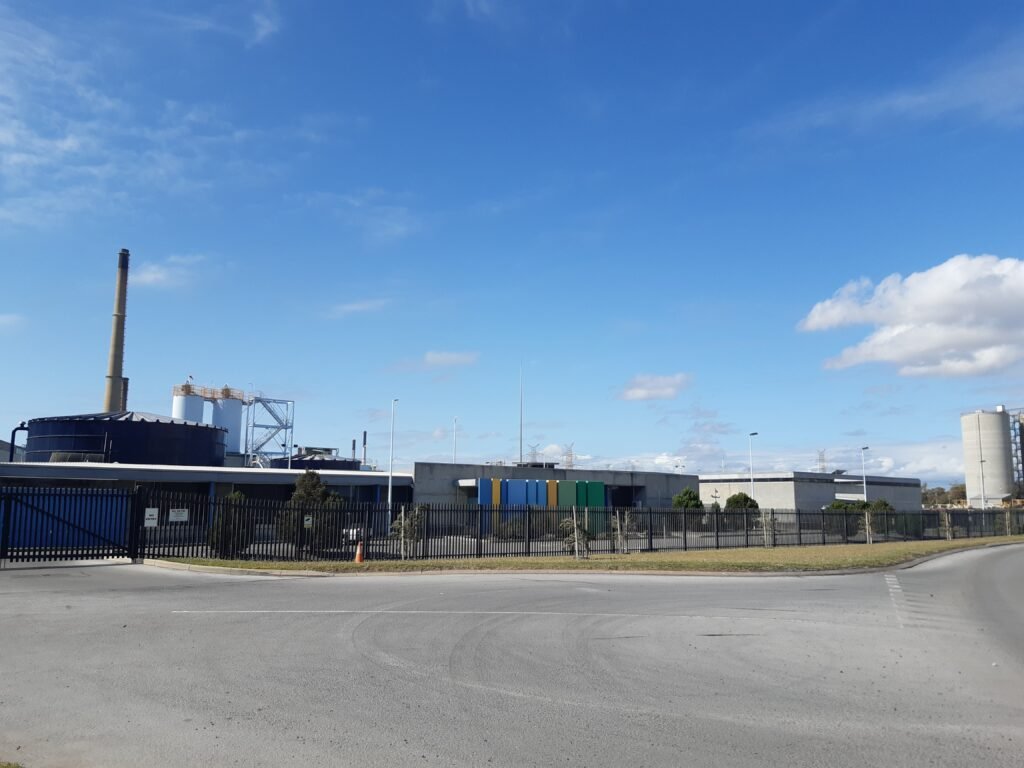
Desalination is the removal of salt and other dissolved minerals from seawater or brackish water to produce water fit for drinking, farming or industry. Only a small share of Earth’s water is fresh, so places with little rainfall or heavily used groundwater increasingly turn to the sea. Today the dominant method pushes salty water through fine membranes, a process called reverse osmosis.
History of desalination
Sailors and coastal communities have long boiled seawater and collected the steam, and distillation remained the basic desalination method for most of history. Large thermal plants became important in the twentieth century in arid regions with cheap fuel, particularly around the Persian Gulf.
Membrane technology changed the economics. The United Nations World Ocean Assessment reports that in 2000 thermal technologies and reverse osmosis together accounted for 93 percent of the water volume produced by desalination, and that since then both the number and capacity of reverse osmosis plants have risen sharply while thermal technologies have grown only marginally. The U.S. Bureau of Reclamation’s Yuma Desalting Plant in Arizona, which it describes as the world’s largest reverse osmosis desalting plant, was built to meet salinity requirements under Minute No. 242 with Mexico. It treats drainage water that would otherwise be too salty to deliver, saving up to 97 million cubic meters (78,000 acre-feet) of Colorado River water per year.
How desalination works
All desalination separates fresh water from a salty feed, and the process always needs energy to do it. In thermal desalination, water is heated, evaporated and condensed, which leaves salt behind. This is the same principle as distillation in a laboratory, scaled up and often arranged in stages to reuse heat.
In reverse osmosis, pumps apply high pressure to the salty feed so that water passes through a semipermeable membrane while most salt ions are blocked. Natural osmosis would move water the other way, toward the saltier side, so the applied pressure must exceed the osmotic pressure of the feed. The salty stream that does not pass the membrane leaves as concentrate, often called brine.
Plants usually clean the water before it reaches the membranes, removing sand, algae and fine particles that would clog them, and they add minerals or adjust the chemistry afterward so the water is stable in pipes. Intake design, pumping and heat or pressure recovery are the main levers for reducing energy use.
Types of desalination
The World Ocean Assessment lists the most commonly used commercial methods as reverse osmosis, multi-stage flash distillation, multi-effect distillation and electrodialysis. Membrane desalination makes up about 85 percent of plants worldwide and about 69 percent of global capacity. Multi-stage flash and multi-effect distillation provide about 18 percent and 7 percent of capacity, respectively.
Multi-stage flash passes heated water through a series of chambers at falling pressure, so part of it flashes into steam in each one. Multi-effect distillation uses the heat from steam in one stage to evaporate water in the next. Electrodialysis uses an electric field and special membranes to pull ions out of water, and it is mainly used for brackish water, which is less salty than seawater.
The source water matters as well. The same assessment reports that 61 percent of desalination production involves seawater and 21 percent brackish water, with smaller shares from rivers and wastewater.
Applications of desalination
The assessment reports that more than 150 countries use desalination to supply drinking water to more than 300 million people. In 2020 about 97.2 million cubic meters of fresh water per day were produced worldwide from 20,971 projects, supported by 16,896 installed plants. The municipal sector uses 62.3 percent of desalinated water and industry uses 30.2 percent.
The Middle East and North Africa is the largest regional market, with 45.32 percent of the desalination market in 2019, followed by East Asia and the Pacific at 17.52 percent. Reclamation notes that Saudi Arabia and Israel depend on desalting to treat much of their drinking water. Mobile reverse osmosis units supply drinking water to army troops in the field, and the U.S. Navy base at Guantanamo Bay, Cuba, uses reverse osmosis for its water needs.
Desalinated supply is valued because it does not depend on rainfall. It can supplement rivers, aquifers and reservoirs that are stressed by drought, growth or groundwater depletion.
Advantages and disadvantages of desalination
The main advantage is a reliable source of fresh water close to the coast, where about 2.4 billion people live within 100 kilometers of the shore according to the assessment. The assessment states that only 2.5 percent of Earth’s water is fresh and 0.3 percent is readily accessible to humans, which is why unconventional sources such as desalination are expected to help meet the water-management targets of Sustainable Development Goal 6.
The disadvantages are cost, energy and environmental effects. Desalination is energy-intensive, so its price and carbon footprint depend heavily on the electricity or fuel used. Disposing of brine is a further concern, since a salty, dense discharge can affect the sea life near an outfall unless it is diluted and spread out carefully. Intakes can draw in small marine organisms, and plants have large up-front costs.
Alternatives include conservation, leak reduction and reuse of treated wastewater, which often cost less per unit of water than seawater desalination. Costs vary widely with plant size, water source and local energy prices, and many regions combine several of these options rather than rely on one.
Desalination vs. water treatment
Standard water treatment cleans fresh water by removing particles and germs, and it does not remove dissolved salt. Desalination is a specialized step added when the source water is too salty. The information here is general background and not engineering advice.
More in Environmental Science
Key facts
- More than 150 countries use desalination to supply drinking water to more than 300 million people.1
- In 2020 about 97.2 million cubic meters of fresh water per day were produced from 20,971 desalination projects.1
- Membrane (reverse osmosis) technology accounts for about 85 percent of plants and about 69 percent of global capacity.1
- Multi-stage flash and multi-effect distillation supply about 18 percent and 7 percent of capacity.1
- The Yuma Desalting Plant, described by Reclamation as the world's largest reverse osmosis desalting plant, can save up to 97 million cubic meters of Colorado River water per year.2
Related concepts
Quick checkHow does reverse osmosis desalination work?Show answer
Pumps push salty water at high pressure through a semipermeable membrane. Water passes through, most salt is blocked, and the salty concentrate is discharged as brine.
Sources
- 1. United Nations, Third World Ocean Assessment, Chapter 8: Desalination and salt production, https://woa.un.org/third-world-ocean-assessment/socioecological-systems/sustainable-and-inclusive-ocean-economy/chapter-8-desalination
- 2. U.S. Bureau of Reclamation, Yuma Desalting Plant Operations, https://www.usbr.gov/lc/yuma/facilities/ydp/yao_ydp_operations.html
Editorially reviewed by Specialty Digest Editorial TeamLast reviewed November 4, 2026Researched and drafted with AI assistanceReport an issue