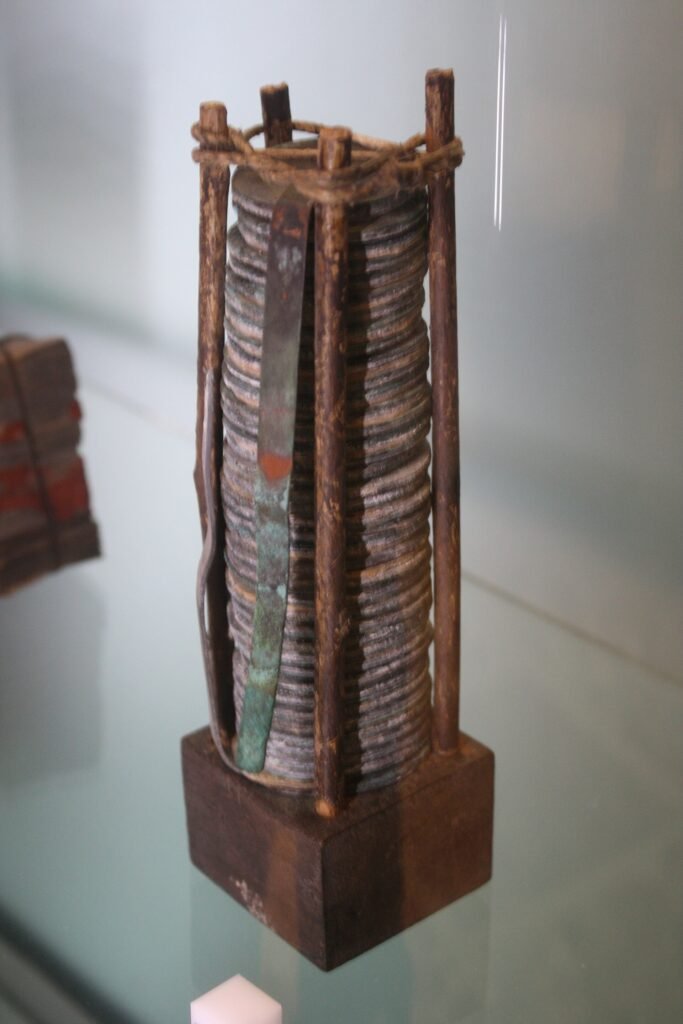
An electric battery is a device that stores chemical energy and releases it as electricity through one or more electrochemical cells. The first was the voltaic pile, which Alessandro Volta described in a letter dated March 20, 1800, and it was the first device to give a steady supply of electric current.
History of the electric battery
Before 1800, scientists could produce electricity only in brief bursts. Lightning and static electricity produced sparks that did not last, and the Leyden jar, invented in the mid-1700s, could store charge but had to be recharged after each use. The American Physical Society notes that Benjamin Franklin drew electricity from lightning in 1752 and that doctors treated patients with electric shocks. Further research needed a continuous source of current.
The spark came from a quarrel. In the 1780s and early 1790s, the Italian physician Luigi Galvani observed that the muscles of dissected frogs twitched when touched with metal. He believed that the frogs’ tissue produced a force he called animal electricity. Alessandro Volta, a physics professor at the University of Pavia, tried to reproduce the experiments and decided that the crucial factor was the contact of two different metals with a moist conductor, not the animal.
To prove it, Volta built a stack of alternating metal discs separated by cloth or pasteboard soaked in brine or vinegar. Sources differ on the metals. The National High Magnetic Field Laboratory names zinc and copper, the American Physical Society describes zinc and silver, and the Linda Hall Library mentions both silver and copper paired with zinc. All agree that a wire connected to the ends of the stack carried a steady current, and that more discs gave more electricity. The APS says Volta’s pile consisted of as many as 30 discs and imitated the electric organ of the torpedo fish.
Volta reported the pile to the Royal Society of London in a letter to its president, Joseph Banks, dated March 20, 1800. The paper was read to the Society in the spring of 1800 and published in its Philosophical Transactions, with an engraving that the Linda Hall Library calls the first printed illustration of a battery. Volta first called the device an artificial electric organ.
The effect was immediate. In 1800 William Nicholson and Anthony Carlisle used a battery to split water into hydrogen and oxygen. Humphry Davy used batteries to break down chemical solutions and soon discovered potassium, sodium, calcium, chlorine and other elements. Michael Faraday used a battery in the 1830s in his studies of electromagnetism, and batteries came to power telegraphs and doorbells.
Inventor and origins of the electric battery
Volta is credited with the invention, but the sources are careful about context. A chemist at the University of Rome, writing for the Electrochemical Society, says the pile was not an isolated breakthrough. It followed decades of research on electricity that went back to Franklin and before, including work on the Leyden jar.
The invention also grew out of a disagreement. Volta held that the metals produced the current, which he called metallic electricity, while Galvani held that the animal did. The APS says that the pile swung the scientific community to Volta’s side and was immediately recognized as useful.
How an electric battery works
A battery cell has two different conducting materials, called electrodes, in contact with a moist or liquid conductor. A chemical reaction at the electrodes pushes electric charge through an outside wire. In Volta’s pile, each pair of metal discs with a damp spacer formed one such cell, and a stack of cells added their effects together.
The National High Magnetic Field Laboratory notes that Volta could therefore raise or lower the electricity produced by changing the number of units. Volta also built a less practical form from brine-filled wine goblets, each holding two electrodes of unlike metals, with the goblets linked in a series. The unit of electric potential, the volt, is named after him.
Types and variants of the electric battery
The voltaic pile and the cup arrangement are the oldest forms. Many chemistries have followed. One of the best known today is the lithium-ion battery, which has its own entry. Related devices include the fuel cell, which also turns chemical energy into electricity but is supplied with fuel from outside, and the capacitor, which stores charge in an electric field and not through a chemical reaction.
Impact of the electric battery
The Linda Hall Library describes the battery as the invention that launched the age of electricity in 19th-century science and technology. Before Volta the main source was the static electrical generator, which produced mainly sparks, while a battery could produce a continuous current quickly and cheaply, and anyone who could read Volta’s paper or look at his engraving could build one.
Volta’s fame grew. Napoleon was impressed by a demonstration and recommended honors for him, including the title of count in 1810, and his portrait later appeared on currency and stamps. A different route to electric power, using motion instead of chemistry, is covered in the entry on the electric generator.
Uses today
Batteries now power portable devices and vehicles and store energy for later use. Their role in storing energy is discussed in the entries on energy storage and electric vehicles. A few original piles survive: one at the Royal Institution in London, given by Volta to Faraday, one at the Musee des arts et metiers in Paris, and several at the Tempio Voltiano, a museum for Volta in Como, Italy. The Science Museum Group in London holds another, made in Italy between 1800 and 1820, which was shown at the Volta Centenary Exhibition in Como in 1899 and survived a fire on July 8 of that year that destroyed many of the objects on display.
More in Energy
Key facts
- Alessandro Volta first reported the electric pile in a letter to Joseph Banks dated March 20, 1800.2
- Volta built the pile during a dispute with Luigi Galvani over animal electricity.12
- Sources differ on whether the early pile used zinc with copper or zinc with silver.12
- In 1800, Nicholson and Carlisle used a battery to split water into hydrogen and oxygen.2
- Volta's paper in the Philosophical Transactions carried the first printed illustration of a battery.3
Related concepts
In the news
- BusinessVanadium in 2025: USGS Shows China Makes 75 Percent as U.S. Relies on Recycling
- BusinessLead in 2025: USGS Shows China Mines 42 Percent as U.S. Import Reliance Rises
- BusinessPlatinum-Group Metals in 2025: USGS Shows South Africa Mines 71 Percent of Platinum
- BusinessSilver in 2025: USGS Reports a $38 Average Price and a Continued Supply Deficit
- BusinessCobalt in 2025: USGS Shows Congo Supplies Nearly Three Quarters After an Export Ban and Quotas
Quick checkWho invented the electric battery?Show answer
Alessandro Volta invented the voltaic pile, the first battery, and announced it in March 1800, although it grew out of earlier research on electricity and a dispute with Luigi Galvani.
Sources
- National High Magnetic Field Laboratory, Voltaic Pile, 1800, Magnet Academy, https://nationalmaglab.org/magnet-academy/history-of-electricity-magnetism/museum/voltaic-pile-1800/
- American Physical Society, This Month in Physics History, March 20, 1800: Volta describes the Electric Battery, APS News (March 2006), https://www.aps.org/apsnews/2006/03/this-month-in-physics-history
- Ashworth WB Jr, Scientist of the Day: Alessandro Volta, Linda Hall Library, https://lindahall.org/alessandro-volta
- Decker F, Volta and the Pile, Electrochemical Society Encyclopedia (2005), https://knowledge.electrochem.org/encycl/art-v01-volta.htm
Editorially reviewed by Specialty Digest Editorial TeamLast reviewed November 4, 2026Researched and drafted with AI assistanceReport an issue