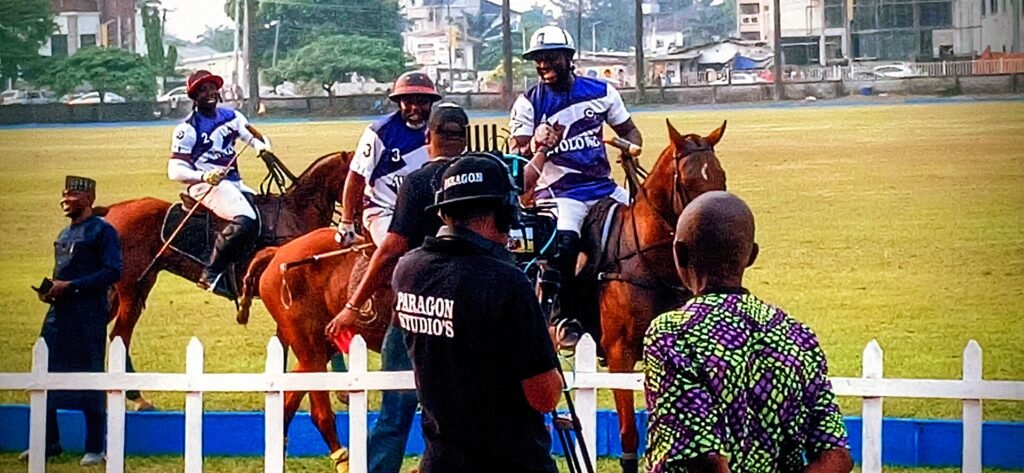
Polo is a team sport played on horseback in which two teams of four riders use long-handled mallets to drive a small ball through the opposing goal. It began as a cavalry training game in Central Asia more than two thousand years ago and was later taken up by Persian nobles. The Federation of International Polo reports 86 national members, and Argentina dominates international competition.
History of polo
Polo was first played in Central Asia between the sixth century BCE and the first century CE, where elite cavalry used it for training. Persian nobles later adopted it, and both royal men and women played. The game spread to Arabia, Tibet, China and Japan, and it reached India in the thirteenth century.
Modern polo took shape under British influence in the nineteenth century. Tea planters formed a polo club in northeastern India in 1859, and British cavalry officers there soon formed teams of their own. The Hurlingham Polo Committee drew up the first English rules in 1875, many of which remain in force, and polo drew large crowds in England the same year.
In 1898 the County Polo Association was formed to look after country clubs and to run the County Cup tournaments. The Hurlingham committee later widened to include representatives of the services, the County Polo Association, the three London clubs of Hurlingham, Ranelagh and Roehampton, and polo associations from across the Empire. It was re-designated the Hurlingham Polo Association in 1925.
The game reached the United States in 1876, and the Westchester Polo Club, the first in the country, was founded in 1877. England won the Westchester Cup, the first international competition, against the United States in 1886. Polo also took root in Argentina. Argentina has a long equestrian tradition, and the country now claims polo as a national game.
Rules and how polo is played
A match is divided into periods called chukkers. In grass polo each chukker lasts 7.5 minutes, and a game usually has four, six or eight chukkers depending on the country. Snow chukkers can be shorter, from about 5.3 to 7 minutes.
Each team has four players, and teams score by hitting the ball between the goalposts at the opposite end. An umpire starts play by rolling the ball between the lines of players. Play runs continuously through each chukker, and the umpire stops it for a foul or for an injury to a player or a horse.
Most fouls are judged against the line of the ball, an imaginary line that the ball creates as it travels down the field. The last player to strike the ball has right of way along that line. Players may hook an opponent’s mallet or ride off a rival, which means using the horse’s shoulder to push the other rider away from the ball. When a penalty is called, the fouled team gets a penalty shot.
Every player is given a handicap that rates skill, with 10 as the highest level. Handicaps are set by national bodies such as the Hurlingham Polo Association.
Equipment and venues
A grass polo field is large: about 300 yards long and 160 yards wide, or 274 by 146 meters. The goalposts stand 8 yards, or 7.3 meters, apart. Arena polo is played on a smaller field of about 100 by 50 yards with three players per team and wooden barriers around the edge.
Snow polo is another variant, played on frozen ground or snow with two or three players per team. Snow polo fields run from about 251 to 300 yards long and 164 to 196 yards wide. In every form, riders carry long mallets and hit a small ball.
Governing bodies and major competitions
The Federation of International Polo, created in 1982, works to standardize the rules and was admitted to the Global Association of International Sports Federations in October 1992. The federation reports 86 member national associations. It sets international rules in cooperation with the Argentine Polo Association, the Hurlingham Polo Association and the United States Polo Association.
The Hurlingham Polo Association, designated under that name in 1925, enforces the rules in the United Kingdom, disciplines players and sets handicaps for roughly 2,500 players, and it is affiliated with the federation. Its role is typical of national bodies discussed under sports governance.
The federation runs the FIP World Polo Championship, the FIP European Polo Championship, the FIP Super Nations Cup and a snow polo event. The first World Polo Championship was held in 1987 in Argentina, which won the title.
Records and notable moments
Polo appeared at five Olympic Games: 1900, 1908, 1920, 1924 and 1936. Great Britain won three gold, four silver and one bronze medals across those Games, and Argentina won two gold medals. The United States won one silver and one bronze medal, Spain one silver, and France, Mexico and a mixed team one bronze each. Five teams competed in 1936, and the sport has not returned to the Olympic program since.
Argentina played the United States in 1928 at the Cup of the Americas, and the country has dominated modern international competition. Argentina has won the World Polo Championship five times, while the United States, Brazil, Chile and Spain have also won it.
Global reach of polo
The Federation of International Polo runs championships in several regions, and national bodies in the United Kingdom, Argentina and the United States work with it on the rules. The game’s early spread through northeastern India is a reminder that modern polo grew out of colonial-era cavalry clubs. Snow polo tournaments have also taken the game to mountain resorts, giving the sport a presence in winter as well as summer.
Key facts
- Polo was first played in Central Asia between the 6th century BCE and the 1st century CE as cavalry training.1
- Grass polo teams have four players, and a game usually has four, six or eight chukkers of 7.5 minutes each.1
- A grass polo field is about 300 by 160 yards, with goalposts 8 yards apart.1
- The Hurlingham Polo Committee drew up the first English polo rules in 1875.2
- Polo was an Olympic sport at five Games between 1900 and 1936.3
Related concepts
Quick checkHow many players are on a polo team?Show answer
A grass polo team has four players. Arena polo uses three players per side, and snow polo uses two or three.
Sources
- EBSCO Research Starters, Polo (sport) (origins, field sizes, chukkers, handicaps, governing federation), https://ebsco.com/research-starters/social-sciences-and-humanities/polo-sport
- Hurlingham Polo Association, history and role (1875 rules, 1925 designation, handicapping), as summarized at https://en.wikipedia.org/wiki/Hurlingham_Polo_Association
- Olympedia, Polo at the Olympics (Games and medal table), https://www.olympedia.org/sports/POL
- United States Polo Association, Rules (line of the ball, right of way, penalties), https://uspolo.org/sport/rules
- Wikipedia, Federation of International Polo (founding year 1982 and World Polo Championship history), https://en.wikipedia.org/wiki/Federation_of_International_Polo
Editorially reviewed by Specialty Digest Editorial TeamLast reviewed November 4, 2026Researched and drafted with AI assistanceReport an issue