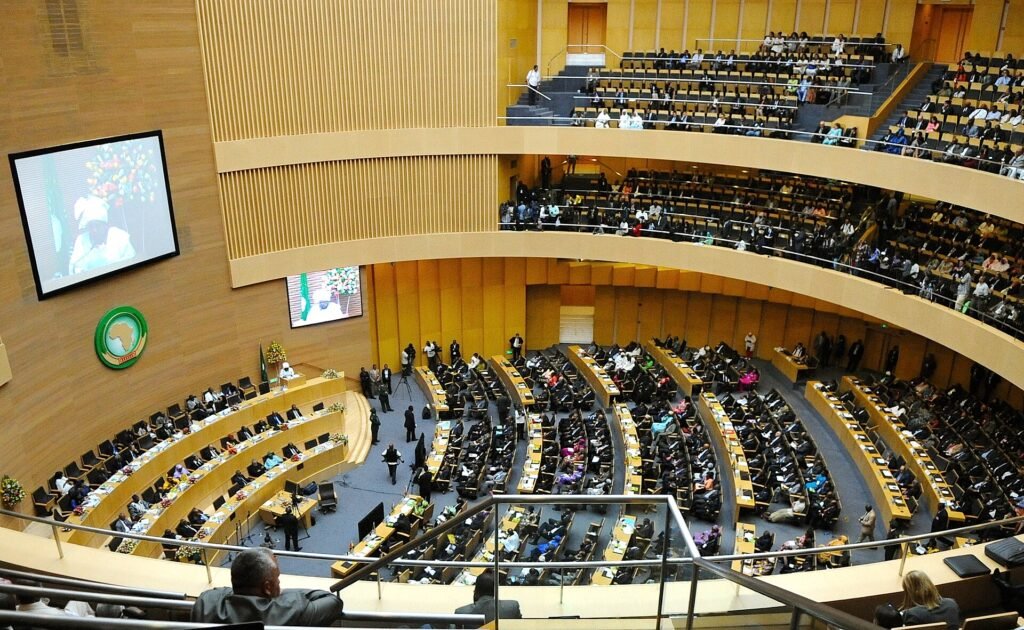
The African Union, or AU, is a continental organization of 55 member states that works for political and economic integration, peace and development across Africa. It was officially launched in July 2002 in Durban, South Africa, as the successor to the Organisation of African Unity. Its secretariat, the AU Commission, is based in Addis Ababa, Ethiopia.
History of the African Union
In May 1963, the leaders of 32 independent African states met in Addis Ababa and signed the charter that created the Organisation of African Unity, the first continental institution of the post-independence era. It was built on the idea of Pan-Africanism and recognized freedom, equality, justice and dignity as essential goals. Its stated aims included closer cooperation for a better life for Africans, defense of sovereignty and territorial integrity, and the eradication of all forms of colonialism from the continent.
Through its Coordinating Committee for the Liberation of Africa, the OAU worked to build an international consensus behind liberation struggles and the fight against apartheid. It also gave member states a forum for adopting shared positions at the United Nations and in other international bodies.
By the end of the 1990s African leaders wanted to shift attention from decolonization toward integration and economic growth. On 9 September 1999 the OAU heads of state issued the Sirte Declaration, calling for an African Union. The AU was launched in Durban in July 2002, and the AU says its focus moved from supporting liberation movements to leading Africa’s development and integration.
Structure and membership
The AU has 55 member states, which together make up the countries of the African continent. Its work is carried out through several principal organs, set out below.
The Assembly of Heads of State and Government is the supreme policy and decision-making organ. It determines the Union’s policies and priorities, adopts its annual program and budget, admits new members and elects the Chairperson and Deputy Chairperson of the AU Commission. It can also amend and interpret the Constitutive Act, the Union’s founding treaty. It also approves the structure, functions and regulations of the AU Commission and decides the makeup of the Executive Council. Beneath it sit the Executive Council, the Permanent Representatives Committee and Specialised Technical Committees.
The AU Commission is the secretariat and runs the Union’s day-to-day business. It represents the AU, proposes measures to other organs, carries out their decisions, drafts common positions and helps coordinate member states in international negotiations. It also manages the AU budget and resources.
The Peace and Security Council is the standing organ for preventing, managing and resolving conflicts, and it forms part of the African Peace and Security Architecture. Its protocol was adopted on 9 July 2002 in Durban, entered into force in December 2003 and became fully operational in early 2004. The Pan-African Parliament sits in Midrand, South Africa. Its members are designated by national legislatures rather than elected directly, and for now it has consultative, advisory and budgetary oversight powers, with full legislative powers as the stated long-term goal.
Aims and activities
The AU’s vision is an integrated, prosperous and peaceful Africa, driven by its own citizens and representing a dynamic force in the global arena. The Constitutive Act sets out aims that include unity and solidarity among African countries, defense of members’ sovereignty, faster political and economic integration, and the promotion of peace, security and stability.
Other aims cover democratic principles and good governance, the protection of human and peoples’ rights under the African Charter, sustainable development, research in science and technology, cooperation against preventable disease, and the effective participation of women in decision-making. The AU also coordinates policy among the continent’s regional economic communities, develops common positions on trade, defense and foreign relations, and invites the African diaspora to take part in building the Union.
Agenda 2063
Agenda 2063 is the continent’s development blueprint for inclusive and sustainable socio-economic development over 50 years. Its flagship projects are the programs identified as key to speeding up growth and strengthening a shared identity. They include an integrated high-speed train network connecting African capitals and commercial centers, a continental commodities strategy to help countries add value to raw materials, a single African air transport market, and a push to ease restrictions on Africans’ ability to travel, work and live within the continent.
Another flagship is a project to end wars, civil conflicts and gender-based violence and to prevent genocide, which carried a target date of 2020. Others aim to speed intra-African trade, to generate an estimated 43,200 megawatts of power, to build an e-society through broadband and cybersecurity policies, and to strengthen Africa’s use of outer space in sectors such as agriculture.
The AU in global affairs
The Commission coordinates African positions in international negotiations, and in 2023 the Union itself took a seat at the table. At the New Delhi summit in 2023, the African Union was invited to join the G20 as a full member. This gave the continental body a direct voice beside the world’s largest economies.
Limits and challenges
The AU presents its own vision as a long-term endeavor that will be realized only through “relentless struggle on several fronts.” Several of its institutions still reflect that early stage. The Peace and Security Council, for example, became fully operational only in early 2004, nearly two years after the Union’s launch. The Pan-African Parliament lacks legislative powers, and many Agenda 2063 projects are long-range ambitions rather than completed works. The Union depends on its member governments for decisions and for the resources to carry them out, which means the pace of integration is set by the consent of 55 states.
More in International Relations
Key facts
- The AU has 55 member states and was officially launched in July 2002 in Durban, South Africa.1
- Its predecessor, the Organisation of African Unity, was created in May 1963 by 32 independent African states meeting in Addis Ababa.1
- The AU Commission, the secretariat, is based in Addis Ababa, Ethiopia.3
- The Peace and Security Council protocol was adopted on 9 July 2002 and entered into force in December 2003.4
- The AU was invited to join the G20 as a full member at the 2023 New Delhi summit.8
Related concepts
In the news
Quick checkWhat did the African Union replace?Show answer
It replaced the Organisation of African Unity, which existed from 1963 to 1999 and focused largely on decolonization and the fight against apartheid.
Sources
- African Union, About the African Union, https://au.int/en/overview
- African Union, The Assembly, https://au.int/en/assembly
- African Union, The AU Commission, https://au.int/en/commission
- African Union, The Peace and Security Council, https://au.int/en/psc
- African Union, The Pan-African Parliament, https://au.int/en/pap
- African Union, Vision and Mission, https://au.int/en/about/vision
- African Union, Flagship Projects of Agenda 2063, https://au.int/en/agenda2063/flagship-projects
- G20 Research Group, University of Toronto, What is the G20?, https://g20.utoronto.ca/g20whatisit.html
Editorially reviewed by Specialty Digest Editorial TeamLast reviewed November 4, 2026Researched and drafted with AI assistanceReport an issue