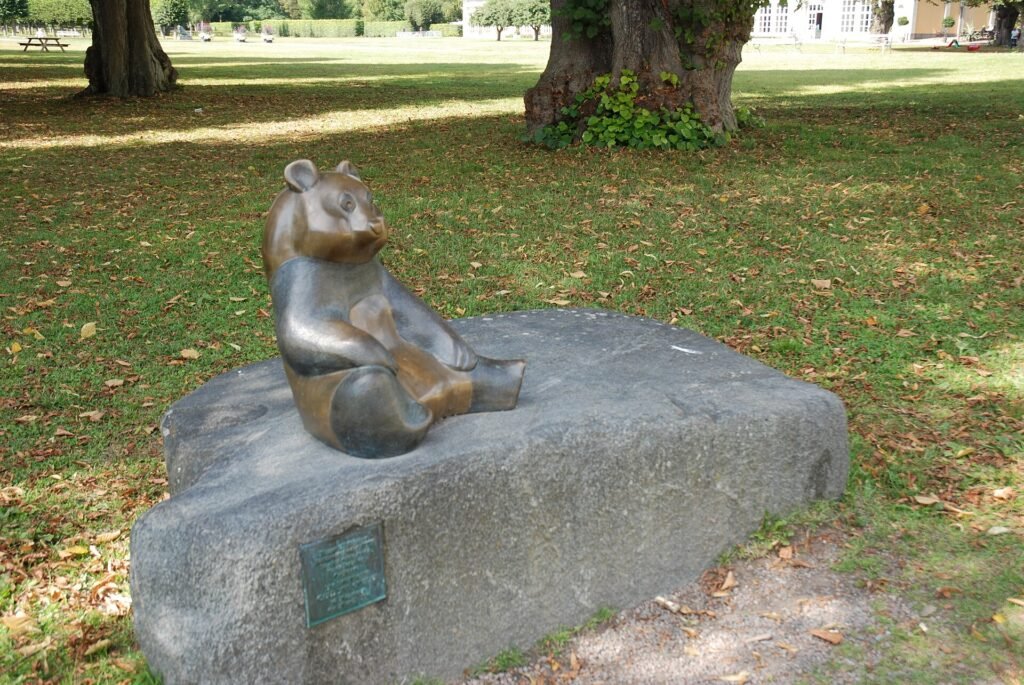
The World Wide Fund for Nature (WWF) is an independent conservation organization, founded in 1961 and active in nearly 100 countries, that works to protect wildlife and natural habitats. It is best known by its panda logo and is called the World Wildlife Fund in the United States and Canada.
History of the World Wide Fund for Nature
WWF was established in 1961 by a group who wanted to secure money to protect places and species threatened by human development. The spark was a series of articles in a British newspaper by Sir Julian Huxley about the destruction of habitat and wildlife in East Africa. The businessman Victor Stolan pointed out the need for an international organization to raise funds for conservation.
The idea reached Max Nicholson, Director General of the British government agency Nature Conservancy. He was motivated partly by the financial difficulties of the International Union for Conservation of Nature (IUCN) and felt a new fundraising body might help it and other groups. He drafted a plan in April 1961, which the executive board of IUCN endorsed in a document known as the Morges Manifesto.
Nicholson and about two dozen others, including Sir Peter Scott, who signed the Morges Manifesto and became WWF’s first vice president, worked out the details over the following months. They chose the name World Wildlife Fund and adopted the panda logo. WWF set up shop in September 1961 at IUCN’s headquarters in Morges, Switzerland, with Prince Bernhard of the Netherlands as its first president. The first three national appeals, now called national organizations, were set up that year in the United Kingdom, Switzerland and the United States.
Over the decades the focus broadened. WWF-UK describes a shift from localized efforts to protect individual habitats and single species, such as the giant panda, to a strategy to restore nature worldwide.
Structure and membership
WWF International says WWF is an independent foundation registered under Swiss law, governed by a Board of Trustees under an International President. Its secretariat, WWF International, leads and coordinates the network of offices through policies and priorities, global partnerships and international campaigns. Its primary hub, and the seat of the Director General, is in Gland, Switzerland, and it operates from four regional hubs. A specialist office in Brussels works on European policy.
The offices around the world fall into two categories. National Organizations can raise funds and carry out work autonomously. Programme Offices work under the direction of one of the independent offices. All of them carry out practical field projects, scientific research, advice to local and national governments on environmental policy, environmental education and awareness raising.
Some national organizations have their own history. WWF-Canada, called World Wildlife Fund Canada, dates its work to 1967 and describes itself as the country’s largest international conservation organization. In the United States, the Conservation Foundation, a policy institute, affiliated with WWF in 1985, and the merger was completed in 1990.
What WWF does
WWF describes its aim as sustaining the natural world for the benefit of people and wildlife. It works with individuals, communities, governments and businesses to protect and restore natural habitats and to stop the mass extinction of wildlife.
WWF-UK sets out three outcomes it wants by 2028:
Making the world work for nature, including changing food and finance systems that drive nature loss.
Bringing nature back from the brink by protecting and restoring threatened species and wild places with Indigenous peoples and local communities.
Growing love and support for nature through schools, partners and campaigns.
It cites the scale of the problem: a 73 percent drop in the average size of wildlife populations in 50 years, about 1 million animal and plant species threatened with extinction, and global food systems responsible for about 27 percent of greenhouse gas emissions.
WWF-Canada credits its work with achievements such as the Species at Risk Act and the Last Ice Area, and with protecting wildlife and habitats such as southern resident killer whales and caribou calving grounds in Nunavut.
Notable moments
WWF-US lists dated successes alongside its history. In 1986 the Mexican government protected as an ecological reserve the area where 100 million monarch butterflies gather each winter, a result WWF credits to a local organization it supported. The same year researchers sponsored by WWF rediscovered the greater bamboo lemur in Madagascar, a species thought extinct since 1972. WWF also marked its 25th anniversary in 1986 with a gathering of leaders from different faith traditions in Assisi, Italy.
The organization also records a tragedy. In 2006 a helicopter carrying WWF staff and other conservation leaders crashed in Nepal, killing all 23 people on board.
Funding
WWF was created to raise money for conservation, and the national organizations that can raise funds are a core part of its structure. WWF-US reports more than 1 million supporters, and WWF-UK says millions of people support the network. Each national organization raises money under its own governance, while WWF International coordinates the network and its international campaigns.
Name and branding
The founders chose the name World Wildlife Fund in 1961. The United States and Canada still use that name, while the international organization is titled the World Wide Fund for Nature. The panda logo was adopted at the start, and WWF-UK still points to the giant panda as an example of the single-species work the organization began with.
Legacy and impact
The idea of an international fundraising body for conservation began at IUCN’s Morges headquarters in 1961. WWF-UK describes itself today as one of the world’s largest and most respected independent conservation organizations.
More in Conservation
Key facts
- WWF was conceived in April 1961 and set up in September 1961 at the IUCN headquarters in Morges, Switzerland.1
- The first national appeals were established in 1961 in the United Kingdom, Switzerland and the United States.1
- WWF is an independent foundation registered under Swiss law with its Director General based in Gland, Switzerland.2
- WWF works in nearly 100 countries.3
- Its national organizations can raise funds and act autonomously, while Programme Offices work under their direction.2
Related concepts
Quick checkIs World Wildlife Fund the same as World Wide Fund for Nature?Show answer
Yes. It was founded as the World Wildlife Fund in 1961. The United States and Canada still use that name, while the international organization is titled the World Wide Fund for Nature.
Sources
- World Wildlife Fund (WWF-US), History, https://www.worldwildlife.org/about/history
- WWF International, How we are run, https://wwf.panda.org/discover/about_wwf/how_were_run/
- WWF-UK, About WWF-UK, https://www.wwf.org.uk/who-we-are
- WWF-Canada, About us, https://wwf.ca/about-us/
Editorially reviewed by Specialty Digest Editorial TeamLast reviewed November 4, 2026Researched and drafted with AI assistanceReport an issue