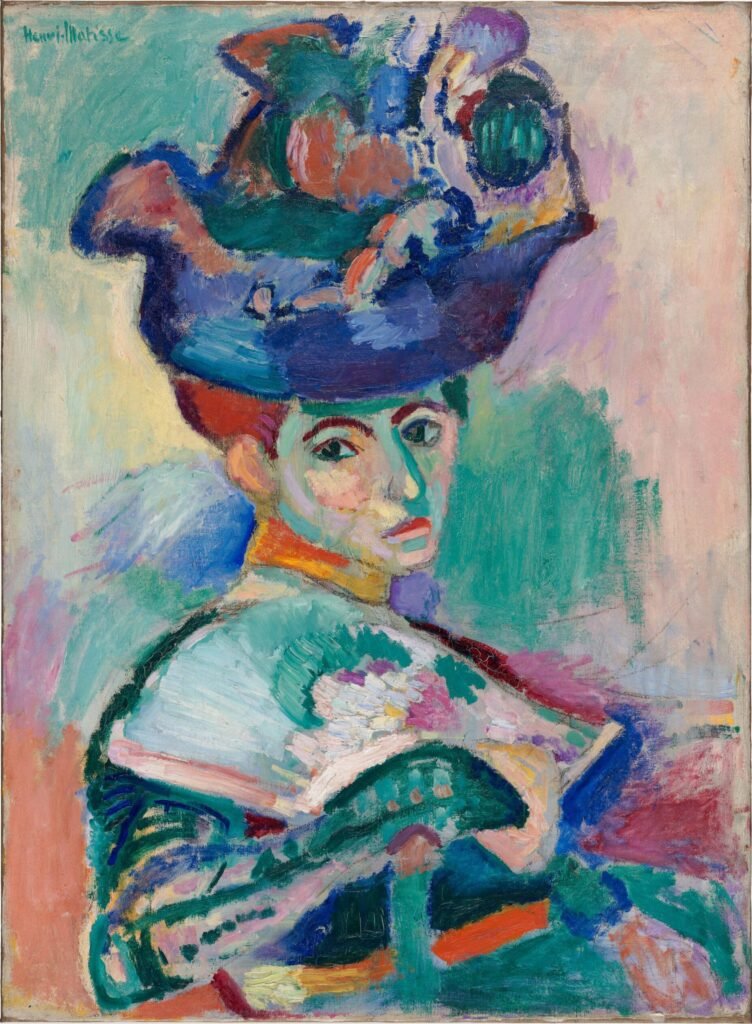
Fauvism was a short-lived but influential early twentieth century art movement centered on the use of intense, non-naturalistic color applied in bold, loose brushstrokes. Active for only a few years around 1905 to 1908, it is widely regarded as the first major avant-garde movement of the twentieth century and a crucial step toward later developments in modern painting.
Origins and the 1905 Salon dAutomne
The movement takes its name from an incident at the 1905 Salon dAutomne in Paris, where a group of paintings characterized by violently clashing, unmixed colors was displayed alongside a comparatively traditional Renaissance-style sculpture. A critic reportedly described the room as resembling a cage of wild beasts, using the French word fauves, and the label stuck as a description of the painters themselves. The core group had studied together and shared a dissatisfaction with the subdued palette and optical color theory associated with earlier Impressionist and Post-Impressionist painting.
Stylistic Characteristics
Fauvist painters abandoned the idea that color should correspond to the actual appearance of a subject, instead using color expressively and structurally to organize a composition and convey emotional intensity. Brushwork was rapid, visible, and often applied directly from the tube without extensive blending, while subjects were simplified and flattened rather than rendered with naturalistic depth. Skies could appear orange, faces could be streaked with green, and water could be rendered in pure red, choices made for their visual and emotional impact rather than descriptive accuracy.
Key Figures
Henri Matisse is generally considered the leading figure of the movement, and his painting Woman with a Hat became one of its defining and most controversial works. Andre Derain worked closely alongside Matisse, particularly during a shared painting trip to the French coastal town of Collioure in 1905 that produced some of the movements most celebrated canvases. Maurice de Vlaminck, Raoul Dufy, and Georges Braque also worked in a Fauvist manner before each moved toward other stylistic directions.
Relationship to Later Movements
Fauvism proved to be a transitional phase for nearly all its practitioners rather than a sustained lifelong style. Georges Braque moved from Fauvist color experiments toward the analytical structure of Cubism within just a few years, while Matisse continued refining his use of flattened color and pattern throughout a much longer career that eventually extended into paper cutouts late in his life. The movements emphasis on color as an independent expressive tool, detached from descriptive accuracy, directly anticipated Expressionist painting developing in Germany during the same period.
Legacy
Despite its brief active period, Fauvism permanently expanded the vocabulary available to painters by demonstrating that color could carry emotional and structural weight on its own terms. Its influence can be traced through German Expressionism, through aspects of later color field painting, and through the broader twentieth century tendency to treat color as an autonomous formal element rather than strictly a tool for depicting appearances.
Materials and Working Methods
Fauvist painters typically worked with commercially produced oil paints straight from the tube, a relatively new manufacturing innovation that made portable, vividly saturated pigments far more accessible than earlier hand-ground paints had been. This technical shift mattered artistically because it allowed painters to apply strong color directly and quickly, without the laborious mixing that had constrained earlier generations, supporting the rapid, confident brushwork associated with the style. Canvases were often smaller than later Abstract Expressionist works, reflecting both practical studio constraints and the movements roots in plein air painting traditions inherited from Impressionism.
Exhibitions of Fauvist work provoked strong public and critical reactions when first shown, with many viewers and reviewers finding the deliberately unnatural colors jarring or even incompetent rather than intentional. This initial hostility gradually gave way to recognition as collectors and later art historians came to understand the paintings as a deliberate, theoretically grounded break from illusionistic color rather than a failure of technical skill.
Geographic Centers
Paris remained the primary center of Fauvist activity, though the movements painters frequently traveled to coastal and rural locations in southern France to paint outdoors, seeking the intense natural light that suited their heightened color palette. The port town of Collioure near the Spanish border became particularly associated with the style after Matisse and Derain spent a productive summer there in 1905, and the strong Mediterranean light of the region is often credited with reinforcing the painters confidence in using unnaturally vivid color.
Connection to Primitivism
Several Fauvist painters, including Vlaminck and Derain, collected and drew inspiration from African and Oceanic sculpture, finding in these works a formal boldness and emotional directness that paralleled their own rejection of naturalistic European painting conventions. This interest in non-European art objects, while reflecting the colonial context of the period, fed directly into the broader early twentieth century avant-garde fascination with forms outside the academic Western tradition, a fascination that also shaped early Cubism.
A handful of secondary painters, including Charles Camoin and Louis Valtat, worked at the margins of the core Fauvist circle, adopting elements of its bold color handling without achieving the same lasting recognition as its central figures, illustrating how a tightly defined avant-garde label can obscure a wider and more loosely connected network of practitioners.
FAQ
Why did Fauvism last for such a short time?
Most of its key painters treated the style as one phase in an ongoing stylistic development rather than a fixed program, and each moved toward other approaches within a few years.
Is Fauvism related to Expressionism?
The two movements developed independently in France and Germany around the same period but shared an emphasis on color as a vehicle for emotional expression rather than realistic description.
Who gave the movement its name?
An art critic coined the term after viewing the groups work at the 1905 Salon dAutomne, intending the comparison to wild beasts as a criticism rather than a compliment.
More in Visual Arts
Editorially reviewed by Specialty Digest Editorial TeamLast reviewed November 4, 2026Researched and drafted with AI assistanceReport an issue