Alabama state animals are the creatures the legislature has named as official emblems of the state. The list includes a mammal (the American black bear), a horse (the racking horse), a reptile (the Alabama red-bellied turtle), an amphibian (the Red Hills salamander), insects (the monarch butterfly and the queen honeybee), a crustacean (the brown shrimp), a game bird (the wild turkey) and separate fish for fresh and salt water [1][2]. This entry brings those designations together, explains what each animal is and notes which ones are tied closely to Alabama’s landscape. The state bird is covered separately in Yellowhammer (Alabama State Bird).
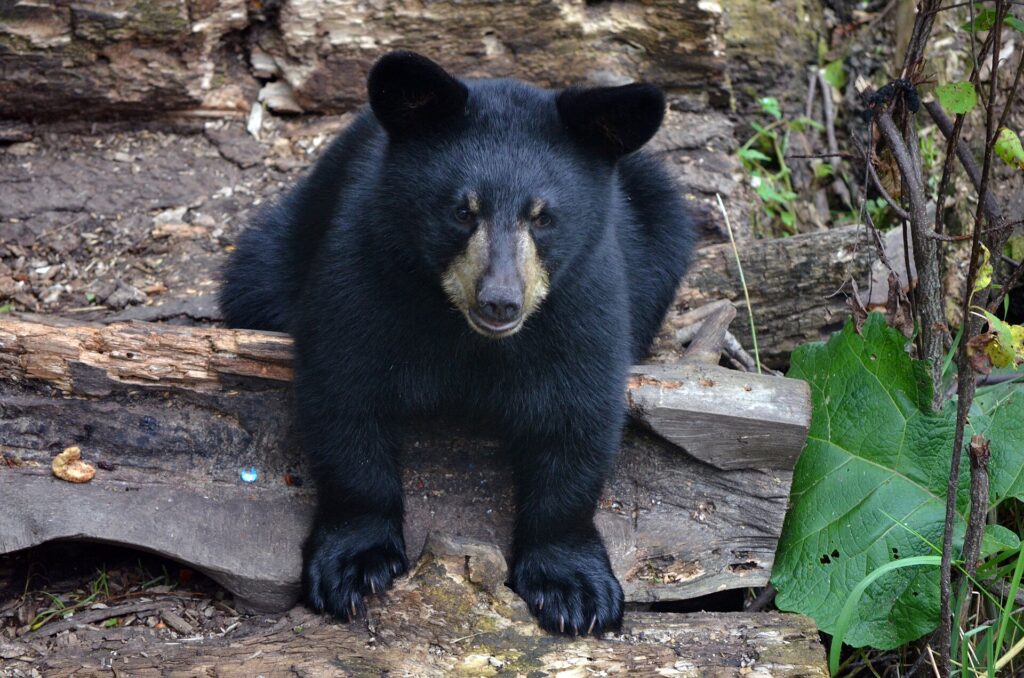
| Mammal | American black bear (2006) |
|---|---|
| Horse | Racking horse (1975) |
| Reptile | Alabama red-bellied turtle |
| Amphibian | Red Hills salamander (2000) |
| Insect | Monarch butterfly (1989) |
| Agricultural insect | Queen honeybee (2015) |
| Butterfly mascot | Eastern tiger swallowtail (1989) |
| Crustacean | Brown shrimp (2015) |
| Game bird | Wild turkey, eastern (1980) |
| Freshwater fish | Largemouth bass (1975) |
| Saltwater fish | Tarpon |
Why a state names animals
A state animal is chosen for several reasons. Some, such as the wild turkey and the largemouth bass, are tied to hunting and fishing, which are major outdoor pastimes. Others, such as the monarch butterfly, were suggested by schoolchildren who lobbied the legislature. Still others highlight rare species that live in very few places, which turns the designation into a small act of conservation education [1][2].
Mammals and horses
The American black bear (Ursus americanus) was named the state mammal in 2006. Supporters said it stands for the biodiversity and ecology of Alabama’s forests, where small populations live in the south and in the northern hills. The bear is an omnivore that eats nuts, berries, insects and small animals, and it is a forest animal that needs large areas of connected habitat [1][2].
The racking horse became the state horse in 1975. It is a gaited breed, meaning that it moves with a smooth four-beat gait called the rack, which makes the ride comfortable over long distances. The breed is closely associated with Alabama, and the federal agriculture department recognized it as a breed in 1971. It is shown at horse shows across the state, and an annual championship show is itself a state designation [1][2].
Reptile and amphibian
The Alabama red-bellied turtle (Pseudemys alabamensis) lives in only a few places, mainly in the tidal waters of Mobile and Baldwin counties, and it is protected under federal law as an endangered species. State transportation workers have installed fencing in places where roads cross nesting areas to protect females crossing to lay eggs. The Red Hills salamander (Phaeognathus hubrichti), named the state amphibian in 2000, is a large, burrowing salamander found only in a small area of south-central Alabama known as the Red Hills region [1][2]. Because both animals have such small ranges, they illustrate why the state is considered unusual for its biological diversity, a topic covered in the entry on biodiversity.
Insects and crustaceans
The monarch butterfly, named the state insect in 1989, is famous for a migration of roughly two thousand miles between North America and wintering sites in Mexico. Alabama schoolchildren lobbied for its designation. The same year, the eastern tiger swallowtail was named the state butterfly mascot. In 2015, the legislature named the queen honeybee the state agricultural insect and the brown shrimp the state crustacean. Brown shrimp make up the largest share of the commercial shrimp harvest on the Gulf coast of the state, and honeybees support crop pollination and honey production [1][2].
Birds and fish
The eastern wild turkey became the state game bird in 1980. It is a large ground-dwelling bird that is widely hunted in the spring and fall seasons and that has recovered strongly after population declines in the twentieth century. For fish, the largemouth bass is the state freshwater fish, named in 1975, and the tarpon is the saltwater fish. Both are prized by sport anglers, and their selection recognizes the importance of fishing to the state’s economy and culture [1][2].
Using the list
Teachers often use the state animals as a starting point for lessons on habitats, food chains and conservation. Because the designations come from laws passed in different decades, the list also shows changing public interests: sport animals in the mid-twentieth century, wildlife and rare species in recent decades. For the wider set of emblems, see Alabama State Symbols. The plants and trees are covered in Camellia (Alabama State Flower) and Southern Longleaf Pine (Alabama State Tree) [1].
Conservation and management
Wildlife in Alabama is managed mainly by the state’s Department of Conservation and Natural Resources, which sets hunting and fishing seasons, licenses and protected-species rules. Federal agencies, including the U.S. Fish and Wildlife Service, add protections for species listed under the Endangered Species Act. Several of the official animals fall into these systems. The Alabama red-bellied turtle is federally listed, while game species such as the wild turkey and the largemouth bass are managed through seasons and limits so that populations stay healthy [1][2].
Habitat is the central issue for almost every animal on the list. Bears need large forest tracts and safe corridors between them. Salamanders and turtles depend on specific soils, streams and shorelines that can be changed by development, erosion and rising water. Monarch butterflies depend on milkweed plants along their migration route, and honeybees depend on diverse flowering plants. Protecting these resources generally means protecting habitat as a whole, instead of single species [2].
How to learn more
Readers who want to see these animals can visit state parks, wildlife refuges and the Gulf coast, where guided programs often explain local species. Schools and nature centers offer lessons that use the official list as a starting point. Because designations occasionally change, the most current list is always the one published by the state archives. A comparison of the official list with the plants and geology emblems can also show how the state’s symbols reflect different parts of its natural history [1].
FAQs
What is the Alabama state mammal? The American black bear, named in 2006.
What is the Alabama state horse? The racking horse, named in 1975.
What is the Alabama state reptile? The Alabama red-bellied turtle.
What is the Alabama state insect? The monarch butterfly, named in 1989.
What is the Alabama state freshwater fish? The largemouth bass.
What is the Alabama state game bird? The eastern wild turkey, named in 1980.
Sources
More in Biology
Key facts
Quick checkWhat is the Alabama state mammal?Show answer
The American black bear.
Sources
- Encyclopedia of Alabama. Quick Facts. n.d. (accessed 2026-11-10)
- Alabama Living. Alabama: A State of Symbols. n.d. (accessed 2026-11-10)
Editorially reviewed by Specialty Digest Editorial TeamLast reviewed November 10, 2026Researched and drafted with AI assistanceReport an issue