The camellia (Camellia japonica) is the state flower of Alabama. It is an evergreen shrub with glossy dark leaves and large, showy blooms that appear in the cool months. The legislature adopted the camellia as the state flower in 1959, replacing the goldenrod, which had held the title since 1927 [1][2]. This article explains where the camellia comes from, how it grows in the Southeast, why Alabama chose it and how gardeners care for it.
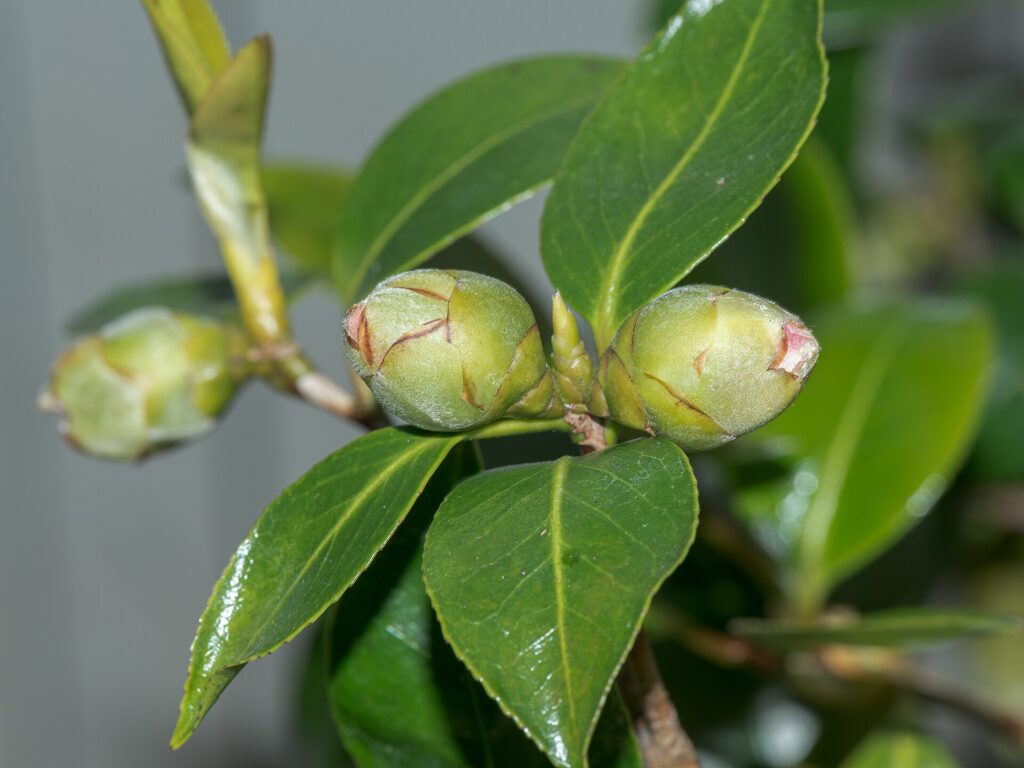
| Scientific name | Camellia japonica |
|---|---|
| Family | Theaceae (tea family) |
| Native range | East Asia |
| Bloom season | Late autumn to early spring |
| Official status | State flower of Alabama, adopted 1959 |
| Predecessor | Goldenrod (state flower from 1927) |
What is a camellia?
Camellias are flowering shrubs and small trees in the genus Camellia, which belongs to the tea family. The genus includes the tea plant, Camellia sinensis, as well as hundreds of ornamental forms. The species most often grown in American gardens is Camellia japonica, native to eastern Asia. Its flowers can be single, semi-double or fully double, with colors ranging from white to pink to deep red [2].
Camellias in the Southeast
Camellias arrived in the United States in the late eighteenth and early nineteenth centuries, and they spread rapidly through the warm, humid South. The soil and climate along the Gulf coast and across central Alabama suit the plant well, and many historic gardens in the state include old specimens. In Alabama the blooming season runs from autumn through early spring, so the plant provides color when most gardens are dormant [1].
Why Alabama chose the camellia
The goldenrod, a wildflower common in fields, served as the state flower from 1927. In 1959 the legislature named the camellia as the official flower, honoring the plant’s long place in Southern gardens. Supporters pointed out that the camellia was widely grown across the state and associated with Alabama’s gardening tradition. The camellia remains the state flower, while the oak-leaf hydrangea was later named the state wildflower [2].
Growing and caring for camellias
Camellias prefer acidic, well-drained soil and partial shade. They do best when protected from harsh afternoon sun and from strong winter winds. Gardeners usually plant them in fall or early winter, mulch around the roots and water deeply during dry spells. Pruning, if needed, is done right after flowering so as not to remove next year’s buds. Common problems include scale insects, petal blight and bud drop caused by uneven watering [2].
Camellias and tea
The tea plant and the ornamental camellia are close relatives, which explains the similarity in leaf shape. Tea is made from the young leaves of Camellia sinensis, not from Camellia japonica. Some small farms in the Southeast now grow tea, showing how the genus connects gardens and agriculture. The plant’s habitat needs also relate to wider issues of habitat and soil [2].
The camellia among Alabama emblems
The camellia is one of the living symbols described in Alabama State Symbols. It joins the state bird, described in Yellowhammer (Alabama State Bird), and the state tree, the longleaf pine. Together they show the variety of life in the state, from garden shrubs to forest trees [1][2].
FAQs
What is the Alabama state flower? The camellia.
When did the camellia become the state flower? In 1959.
What was the previous state flower? Goldenrod, from 1927.
Is the camellia native to Alabama? No. It is native to East Asia but widely grown in the state.
When does the camellia bloom? From late autumn to early spring.
Sources
- Encyclopedia of Alabama: State of Alabama
- Alabama Department of Archives and History: Alabama Emblems, Symbols and Honors
More in Biology
Key facts
Quick checkWhen did the camellia become the Alabama state flower?Show answer
In 1959.
Sources
- Encyclopedia of Alabama. State of Alabama. n.d. (accessed 2026-11-10)
- Alabama Department of Archives and History. Alabama Emblems, Symbols and Honors. n.d. (accessed 2026-11-10)
Editorially reviewed by Specialty Digest Editorial TeamLast reviewed November 10, 2026Researched and drafted with AI assistanceReport an issue