The climate of Alaska is diverse, ranging from the mild and rainy maritime conditions of the Southeast to the extreme continental temperatures of the Interior and the polar conditions of the Arctic coast. The state’s record high is 100 °F (38 °C) at Fort Yukon on June 27, 1915, and its record low is −80 °F (−62 °C) at Prospect Creek on January 23, 1971, both set in the Interior about 150 miles apart. Precipitation varies from nearly 275 inches a year in parts of the Southeast to under 10 inches on the North Slope [1].
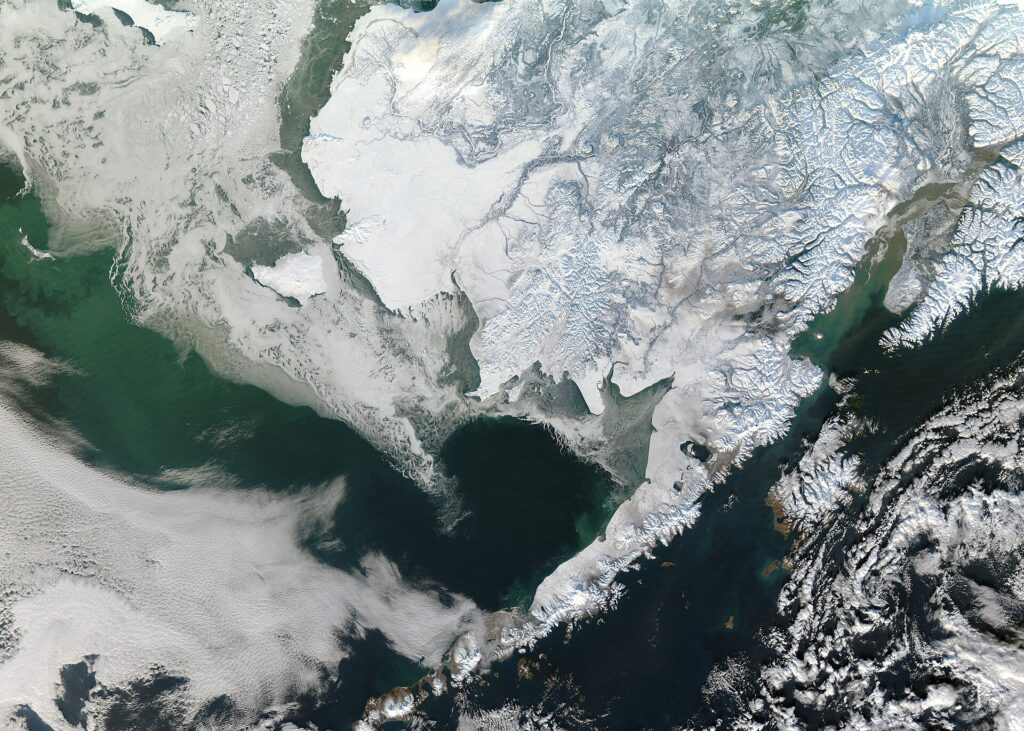
| Record high | 100 °F, Fort Yukon, June 27, 1915 |
|---|---|
| Record low | −80 °F, Prospect Creek, January 23, 1971 |
| Wettest areas | Up to 275 inches of precipitation per year in parts of the Southeast |
| Driest areas | Under 10 inches per year on the North Slope and northern Seward Peninsula |
| Main zones | Maritime, subarctic, continental, arctic |
| Climate drivers | La Niña, El Niño, Pacific Decadal Oscillation |
Maritime Climate
The Southeast panhandle, including Juneau, has an oceanic climate. The southern part is temperate rainforest, and the region is the wettest and warmest in Alaska on an annual basis [1]. Some Southeast areas receive up to 275 inches of precipitation a year, while Juneau averages more than 50 inches [1].
Subarctic Climate
Southcentral Alaska, with Anchorage as a typical city, has a subarctic climate with short, cool summers, though it is moderated by proximity to the sea. The Interior has a classic true subarctic climate [1].
Continental Climate
The Interior and eastern Alaska near Fairbanks have a continental climate with extreme temperatures and sparse precipitation. Both the state’s highest and lowest recorded temperatures occurred in the Interior, about 150 miles apart [1].
Arctic Climate
In the far north, beyond the Arctic Circle, winters are long and very cold and summers are short and cool. At Utqiaġvik the sun does not rise for some weeks in winter and remains up 24 hours a day during some summer weeks. The average July low is 36 °F (2.2 °C), and snow can fall in any month [1].
Temperature Records
The highest temperature on record is 100 °F at Fort Yukon on June 27, 1915. The lowest is −80 °F at Prospect Creek on January 23, 1971 [1].
Precipitation
The northern Gulf of Alaska coast receives up to 150 inches a year, and some areas between Dillingham and Bethel average about 100 inches. At the other extreme, the northern Seward Peninsula is a desert with under 10 inches, and inland areas and the North Slope also receive under 10 inches [1]. Valdez receives up to 300 inches of snow in some years [1].
Climate Patterns
Large-scale patterns influence Alaskan weather. La Niña typically brings drier, cooler conditions, while El Niño brings warmer temperatures without a clear wet or dry signal. Precipitation rises 10 to 40 percent when the Pacific Decadal Oscillation is in its positive phase [1].
Daylight
Alaska’s high latitude produces long summer days and short winter ones. North of the Arctic Circle the midnight sun lasts for weeks in summer, and the polar night lasts for weeks in winter [1].
Change and Adaptation
Alaska is among the fastest-warming parts of the United States, and the effects of warming on permafrost, sea ice and glaciers are covered in the separate entry on climate change in Alaska. Communities, scientists and agencies monitor conditions to plan for coastal erosion, wildfire and changes in subsistence resources.
Regional Contrasts
The contrast between regions is one of the most striking features of Alaska’s climate. Juneau is wet and mild, while Fairbanks in the Interior can be hot in summer and extremely cold in winter. Anchorage lies between these extremes, with a moderated subarctic climate, while Utqiaġvik on the Arctic coast has cool summers and long, dark winters [1].
Seasonal Rhythm
Alaska’s seasons shape daily life. Long summer days support fishing, farming and tourism, while winter brings snow, ice travel and limited daylight. In the Interior, rivers freeze and become travel routes, and in the north, sea ice shapes hunting and transport [1].
Understanding the Records
The state’s records illustrate its extremes. The hottest and coldest temperatures were both recorded in the Interior, only about 150 miles apart, showing how continental climates produce wide seasonal swings. The Southeast and Gulf coasts, on the other hand, receive some of the highest precipitation in the country [1].
Why Climate Matters
Climate determines where people live, what they eat and how they travel. It affects construction, with permafrost and snow loads shaping building design, and it shapes ecosystems from rainforest to tundra [1]. Understanding Alaska’s climate zones is therefore essential to understanding the rest of its geography and economy.
FAQs
What is the coldest temperature ever recorded in Alaska? −80 °F at Prospect Creek on January 23, 1971.
What is the hottest temperature ever recorded in Alaska? 100 °F at Fort Yukon on June 27, 1915.
Which part of Alaska is wettest? Parts of the Southeast, which can receive up to 275 inches of precipitation a year.
Is Alaska a desert anywhere? Yes. The northern Seward Peninsula and North Slope receive under 10 inches a year.
What climate does Anchorage have? A subarctic climate with maritime influence.
Sources
More in Climate & Weather
Key facts
Quick checkWhat is Alaska’s record low temperature?Show answer
−80 °F
Sources
- Wikipedia. Climate of Alaska. 2026 (accessed 2026-11-12)
Editorially reviewed by Specialty Digest Editorial TeamLast reviewed November 12, 2026Researched and drafted with AI assistanceReport an issue