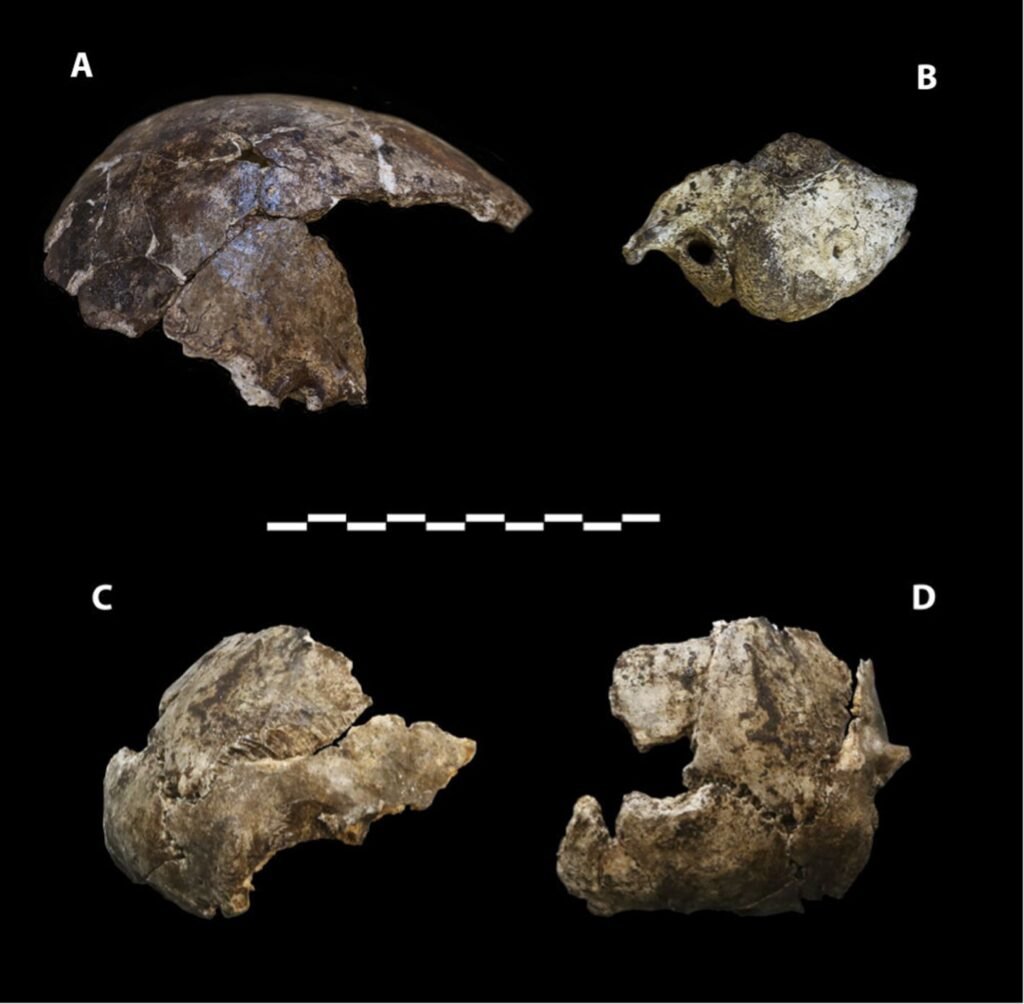
The discovery of Homo naledi was the finding of a previously unknown human relative in the Dinaledi Chamber of the Rising Star cave system in South Africa, first recognized in October 2013. It was announced to the world on 10 September 2015 in the journal eLife by a team led by Lee Berger.
The Dinaledi fossils include more than 1,550 specimens from at least 15 individuals, the largest assemblage of a single hominin species ever found in Africa. Hominins are the group that includes modern humans and our close extinct relatives.
Background to the discovery of Homo naledi
The Rising Star cave system lies in the Cradle of Humankind, a World Heritage area about 50 kilometers northwest of Johannesburg. Berger and his colleagues launched the Rising Star Expedition there, and by September 2015 the University of the Witwatersrand described the result as the single largest fossil hominin find yet made in Africa.
The Dinaledi Chamber lies about 30 meters underground and about 90 meters from the cave entrance. It can be reached only through a narrow chute, so a special team of very slender individuals was needed to retrieve the fossils.
The chamber’s name is Sotho for Chamber of Stars. The species name naledi means star in Sotho, one of the languages spoken in South Africa.
The discovery
Fossil hominins were first recognized in the chamber in October 2013. During two short expeditions, in November 2013 and March 2014, the team recovered about 1,550 specimens representing nearly every part of the skeleton, many of them more than once.
A separate find soon followed. According to the Smithsonian Institution, Rick Hunter and Steven Tucker found 133 more specimens in the nearby Lesedi Chamber in 2013, representing at least three individuals, two adults and a juvenile.
The team described the fossils in eLife on 10 September 2015 and presented them at the Maropeng visitor center in the Cradle of Humankind. They named the species Homo naledi and placed it in the genus Homo, the same genus as modern humans.
How the discovery was confirmed
Confirmation relied on the sheer volume of material. With almost every bone represented several times, researchers could describe the species in unusual detail, and Berger called it practically the best-known fossil member of the human lineage.
The fossils include infants, children, adults and elderly individuals. The eLife paper describes body mass and stature similar to small-bodied human populations and a small braincase like those of australopiths, while the skull shape is unique but most like early Homo species such as Homo erectus, Homo habilis and Homo rudolfensis.
The anatomy is a mixture. Homo naledi was about the size of a small modern human, standing roughly 1.44 meters tall, and its hands and feet resemble ours. Its braincase, however, is small and most similar in size to those of other early hominins that lived between four million and two million years ago.
Its ribcage, shoulders and pelvis are closer to those of earlier hominins than to modern humans. The Smithsonian notes that the species combines Australopithecus-like traits in the pelvis and shoulder with Homo-like traits in the hands, feet and the size of the brain.
The remains were also unusual in context. Out of more than 1,550 elements, only about a dozen were not hominin, and those few were isolated mouse and bird bones, so the chamber appears to have had few accidental visitors.
The bones bore no signs of scavengers, carnivores or moving water. The team explored mass death, an unknown carnivore, water transport and an accidental death trap before concluding that the bodies may have been placed in the chamber on purpose.
Dating came later. At the time of the announcement the fossils had not been dated, and in 2017 researchers dated them to between 335,000 and 236,000 years ago.
Impact and legacy of the discovery
The find showed that the human family was more varied than many people assumed. The eLife summary notes that modern humans are now the only living species in our genus, but as recently as 100,000 years ago there were several others.
The fossils are far younger than the famous skeleton described in the entry on the discovery of Lucy, yet they still show a small braincase and several primitive features.
The proposed behavior drew attention. The discovery team suggested that this primitive-looking hominin may have disposed of its dead in a way once thought to be unique to humans, an interpretation that came from the team and remains a hypothesis.
The placement of Homo naledi on the evolutionary tree is still unresolved. The Smithsonian says further comparative research is needed to determine how it relates to Homo erectus and other members of the genus.
For the general process by which species change over time, see the entry on evolution.
Later developments and open questions
Very little is known about the daily life of the species. The Smithsonian notes that the lack of other animal fossils and tools in the chamber makes its ecology hard to judge, though its teeth differ from those of other Homo species of the same period, which may mean it lived in a distinct environment.
New fossils from other chambers have added to the picture. The Lesedi finds show the species was not confined to a single room.
Compare the story with the earlier recognition of Neanderthals, who were first recognized in the nineteenth century from a small set of bones found in 1856. Homo naledi is notable because so many skeletons were found together, and careful excavation allowed that many bones to be recorded in place.
Debate about the species’ age, its behavior and its place in the human family is likely to continue as more data are published.
More in Anthropology
Key facts
- Fossil hominins were first recognized in the Dinaledi Chamber of the Rising Star cave system in October 2013.2
- The team recovered over 1,550 specimens from at least 15 individuals in November 2013 and March 2014.2
- Homo naledi was announced on 10 September 2015 in the journal eLife, and the fossils were dated in 2017 to 335,000 to 236,000 years ago.1
- The word naledi means star in Sotho, and the chamber is named Dinaledi, or Chamber of Stars.1
- The species combines a small brain and Australopithecus-like shoulders and pelvis with human-like hands and feet.2
Related concepts
Quick checkWhen was Homo naledi discovered?Show answer
The first fossils were recognized in October 2013 in the Dinaledi Chamber of the Rising Star cave in South Africa, and the species was announced on 10 September 2015.
Sources
- Berger LR and colleagues, Homo naledi, a new species of the genus Homo from the Dinaledi Chamber, South Africa, eLife, 10 September 2015, https://elifesciences.org/articles/09560
- Smithsonian Institution Human Origins Program, Homo naledi, https://humanorigins.si.edu/evidence/human-fossils/species/homo-naledi
- University of the Witwatersrand, Meet Homo naledi, a new species of human relative, https://www.wits.ac.za/homonaledi/whats-new/news/meet-homo-naledi-a-new-species-of-human-relative.html
Editorially reviewed by Specialty Digest Editorial TeamLast reviewed November 5, 2026Researched and drafted with AI assistanceReport an issue