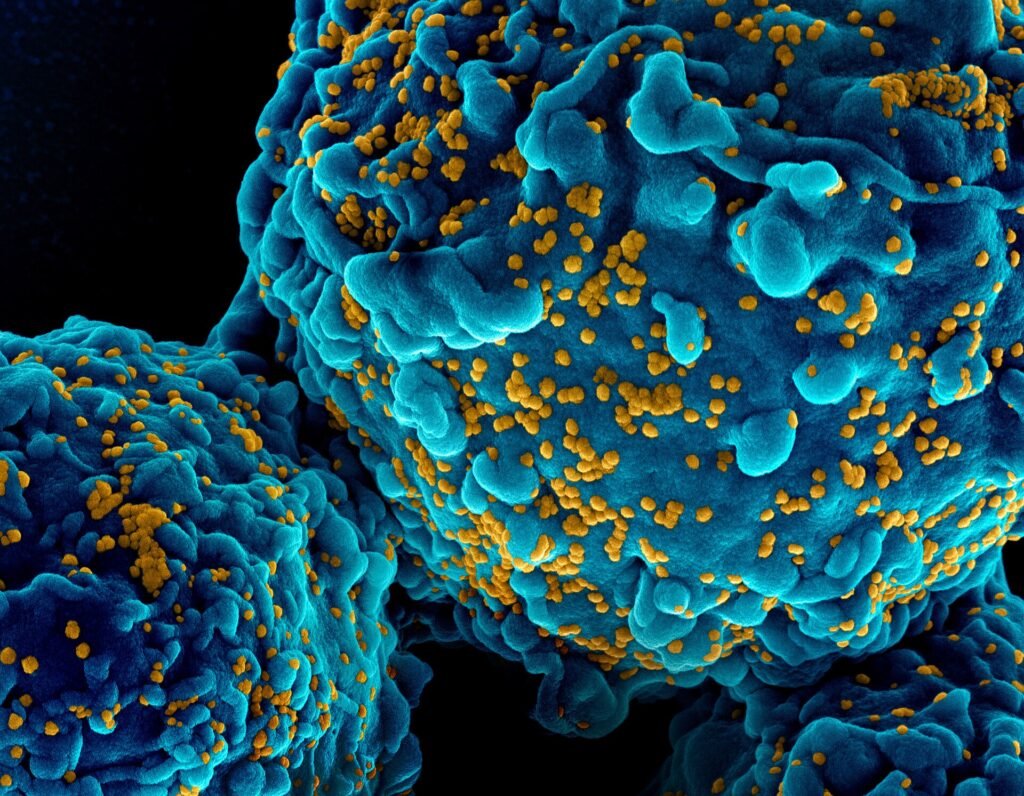
The discovery of HIV was the 1983 identification of the human immunodeficiency virus, the retrovirus that causes AIDS, by Françoise Barré-Sinoussi, Luc Montagnier and colleagues at the Pasteur Institute in Paris. It followed the first reports of the new immune deficiency syndrome in 1981 and was recognized with the 2008 Nobel Prize in Physiology or Medicine.
Background
On 5 June 1981 the US Centers for Disease Control published a report in its Morbidity and Mortality Weekly Report. It described Pneumocystis pneumonia, a rare lung infection, in five young and previously healthy men in Los Angeles. All of the men had other unusual infections as well, which showed that their immune systems were not working, and two had already died by the time of the report. The authors included the Los Angeles immunologist Michael Gottlieb and the CDC investigator Wayne Shandera.
More cases followed, and the condition came to be called acquired immunodeficiency syndrome, or AIDS. At that point the cause was unknown, and researchers in several countries began to search for it.
The discovery
In January 1983 a colleague from the Bichat-Claude Bernard Hospital in Paris asked virologists at the Pasteur Institute who had been working on retroviruses whether the new disease could be caused by one. The team, led by Montagnier and including Barré-Sinoussi and Jean-Claude Chermann, then received a lymph node biopsy from a patient with swollen lymph nodes, an early sign of the condition.
They found virus production in cultured lymphocytes from patients with enlarged lymph nodes and in blood from patients with late-stage disease. On 20 May 1983 Barré-Sinoussi and her colleagues reported the discovery of a retrovirus that could be the cause of AIDS. The Nobel Foundation says the researchers characterized it as the first known human lentivirus based on its morphological, biochemical and immunological properties.
The isolated virus was first thought to be a type of human T-lymphotropic virus, but it was later shown to be a new retrovirus. It was first named lymphadenopathy-associated virus, or LAV, and in 1986 it was renamed HIV-1.
How it was confirmed
The next major announcement came from the United States. On 23 April 1984 the US Secretary of Health and Human Services announced that Robert Gallo and colleagues at the National Cancer Institute had found the cause of AIDS, a retrovirus they labeled HTLV-III, along with a blood test to identify it. The French and American viruses were later recognized as the same agent.
In January 1985 the CDC revised its AIDS case definition to state that AIDS is caused by a newly identified virus. On 2 March 1985 the US Food and Drug Administration licensed the first commercial blood test, an ELISA, to detect HIV, and blood banks began screening the blood supply.
The Nobel Foundation explains how the virus causes disease. HIV impairs the immune system through massive virus replication and cell damage to lymphocytes, a type of white blood cell.
Disputes over credit
The identification of HIV involved a well-known priority dispute. Gallo and his group in the United States also claimed to have isolated the virus. The disagreement lasted until an American epidemiologist examining archived specimens concluded that the US sample had originated from the French laboratory through specimen contamination. Montagnier and Gallo later agreed to acknowledge each other’s roles in the discovery.
The 2008 Nobel Prize in Physiology or Medicine was shared. Half went to Harald zur Hausen for discovering human papilloma viruses that cause cervical cancer, and half jointly to Barré-Sinoussi and Montagnier for the discovery of human immunodeficiency virus. Chermann, who was the second author of the first publication and the team’s manager, was not among the recipients.
Impact and legacy
The discovery was one prerequisite for today’s understanding of the biology of the disease and for antiretroviral treatment. Identifying the virus made it possible to develop blood tests and to screen donated blood. It also moved HIV into the family of agents described in the discovery of viruses.
The medical picture has changed greatly since 1996, when the International AIDS Conference in Vancouver highlighted the effectiveness of highly active antiretroviral therapy. The World Health Organization reports that HIV has claimed an estimated 44.2 million lives to date, and that there were an estimated 41.0 million people living with HIV at the end of 2025.
WHO states that there is no cure for HIV infection. With access to prevention, diagnosis, treatment and care, however, HIV has become a manageable chronic health condition. In 2025, about 88 percent of people living with HIV knew their status, 89 percent of those who knew were receiving antiretroviral therapy, and 95 percent of those on treatment had suppressed viral loads.
WHO explains that HIV attacks the body’s immune system, targeting white blood cells, and that this makes it easier to get sick with diseases such as tuberculosis. HIV is spread through body fluids, including blood, breast milk, semen and vaginal fluids, and it is not spread by kisses, hugs or sharing food. Untreated HIV can progress to AIDS, often after many years. This entry describes the history of the discovery and is not medical advice.
FAQs
Who discovered HIV? Françoise Barré-Sinoussi, Luc Montagnier and colleagues at the Pasteur Institute reported the virus in 1983. They shared the 2008 Nobel Prize for it.
What did HIV used to be called? It was first called lymphadenopathy-associated virus, or LAV, and was renamed HIV-1 in 1986.
Why was there a dispute with Robert Gallo? Gallo’s group also claimed to have isolated the virus. The dispute ended when an analysis suggested that the US sample came from the French laboratory, and the two sides later acknowledged each other’s roles.
When did the first reports of AIDS appear? The CDC reported the first cases on 5 June 1981.
Key facts
- The CDC reported Pneumocystis pneumonia in five previously healthy men in Los Angeles on 5 June 1981.1
- Barré-Sinoussi and colleagues at the Pasteur Institute reported a retrovirus that could cause AIDS on 20 May 1983.13
- The virus was first called LAV and was renamed HIV-1 in 1986.3
- Barré-Sinoussi and Montagnier shared half of the 2008 Nobel Prize in Physiology or Medicine.2
- The US announced Gallo's HTLV-III finding on 23 April 1984, and the French and American viruses were the same agent.13
- An estimated 41.0 million people were living with HIV at the end of 2025.4
This entry explains a medical term. It is not medical advice. If you are concerned about your health, speak with a qualified health professional.
Related concepts
Quick checkWho discovered HIV?Show answer
Françoise Barré-Sinoussi, Luc Montagnier and colleagues at the Pasteur Institute in Paris reported the virus in 1983, and the two shared the 2008 Nobel Prize in Physiology or Medicine for it.
Sources
- HIV.gov, HIV and AIDS Timeline, https://www.hiv.gov/hiv-basics/overview/history/hiv-and-aids-timeline
- Nobel Prize, The Nobel Prize in Physiology or Medicine 2008, Press release, https://www.nobelprize.org/prizes/medicine/2008/press-release/
- PubMed Central (2025), The Three Pioneers in the Discovery of the Human Immunodeficiency Virus, https://pmc.ncbi.nlm.nih.gov/articles/PMC12805482/
- World Health Organization, HIV and AIDS fact sheet (27 July 2026), https://www.who.int/news-room/fact-sheets/detail/hiv-aids
Editorially reviewed by Specialty Digest Editorial TeamLast reviewed November 5, 2026Researched and drafted with AI assistanceReport an issue