The discovery of prions was the 1982 finding by Stanley Prusiner and his colleagues that a protein, with no detectable genetic material of its own, can act as an infectious agent that causes fatal brain diseases in animals and humans. He named the protein a prion, short for proteinaceous infectious particle, and received the 1997 Nobel Prize in Physiology or Medicine for the discovery.
Background
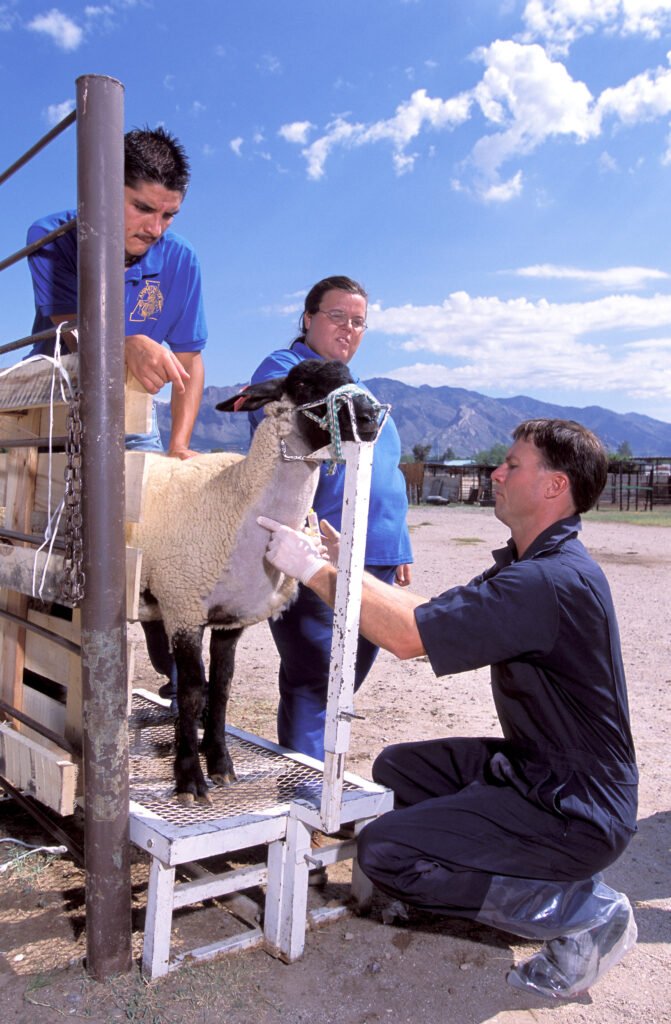
Scrapie is a transmissible disease of sheep and goats that was recognized long before anyone understood it. Brain tissue from affected animals shows a porous, spongy appearance, which is why the family of diseases is called spongiform encephalopathy.
Another disease added a clue. Kuru, a fatal brain disorder, appeared among the Fore people of Papua New Guinea. Affected people developed headache and joint pain, then loss of coordination within 6 to 12 weeks, and they died within 12 months.
Hadlow noted that kuru and scrapie looked alike under the microscope and proposed that kuru was infectious. Carleton Gajdusek and colleagues injected kuru brain tissue into the brains of non-human primates, and in the 1960s the animals developed a similar disease after a long delay. Gajdusek concluded that kuru spread through the ritual eating of deceased relatives. He shared the 1976 Nobel Prize in Physiology or Medicine for discoveries about new mechanisms for the origin and spread of infectious diseases.
The discovery
It had been shown that Creutzfeldt-Jakob disease (CJD), kuru and scrapie could all be transmitted through extracts of diseased brains. There were many theories about the infectious agent. Because every known infectious agent contained DNA or RNA, it seemed logical to search for a nucleic acid core.
Tikvah Alper and her colleagues found otherwise. The scrapie agent was extremely resistant to ultraviolet light and ionizing radiation, and they estimated that the infectious particle was about 90 percent smaller than the smallest known virus. They proposed that the agent lacked a functional nucleic acid. The idea was widely rejected at the time.
In 1972 Prusiner began his own work after one of his patients died of dementia from CJD. He set out to identify the infectious agent exactly. Ten years later, in 1982, he and his colleagues produced a preparation from the brains of diseased hamsters that contained a single infectious agent. All experimental evidence indicated that it was a single protein.
How it was confirmed
The scientific community greeted the prion hypothesis with great skepticism. A protein that could pass on a disease, without any DNA or RNA, contradicted what was known about infection.
The evidence built up in steps. In 1984 Prusiner and colleagues isolated a gene probe and showed that the prion gene is present in all animals tested, including humans. This implied that the protein is a normal part of the body. The explanation was that the prion protein, called PrP, can fold into two shapes: a normal form, PrPC, and a disease-causing form, PrPSc.
The disease form is stable and resists digestion by enzymes, organic solvents and temperatures above 100 degrees Celsius. It can start a chain reaction in which normal protein is converted to the abnormal shape. The infection can then spread, because misfolded protein builds up until it damages brain tissue, often after an incubation period of months or years.
Later work found that mutations in the prion gene cause hereditary forms of disease. Prion diseases may therefore be inherited, acquired by infection or occur spontaneously.
Disputes over credit
Credit for the central idea is shared. Alper and her colleagues proposed that the scrapie agent lacked a functional nucleic acid years before Prusiner’s work, and their proposal was later shown to be correct. Prusiner identified the protein, named it, and worked out its genetics and structure.
The 1997 Nobel Prize went to Prusiner alone. The Nobel Foundation noted that the scientific community had greeted his discovery with great skepticism, and that he continued to define the nature of the new agent.
Impact and legacy
The discovery added prions to the list of known infectious agents, which already included bacteria, viruses, fungi and parasites, as the discovery of germ theory and the discovery of viruses had defined them earlier. It also showed that a change in the folded shape of a protein could cause disease.
The best-known prion outbreak was bovine spongiform encephalopathy, or mad cow disease, which was epidemic in the United Kingdom in the 1980s and 1990s. Bovine prions can infect humans, though at low efficiency, and cause a variant form of CJD.
Prion research has also influenced other diseases. A 2021 review by Prusiner and a colleague argues that principles first learned from prions apply to other neurodegenerative disorders. It notes evidence that the amyloid-beta pathology typical of Alzheimer’s disease was transmitted to patients by human growth hormone contaminated with amyloid, an example of the prion-like spread of misfolded protein.
The normal prion protein is made from the PRNP gene. More than 60 mutations in this gene have been reported as pathogenic, although the 2021 review notes that a large population study found many of them very unlikely to cause prion disease. This entry describes the history of the discovery and is not medical advice.
FAQs
Who discovered prions? Stanley Prusiner and his colleagues identified the prion protein in 1982 and received the 1997 Nobel Prize in Physiology or Medicine. Tikvah Alper had earlier shown that the scrapie agent probably lacked nucleic acid.
What does prion stand for? It is short for proteinaceous infectious particle.
What is a prion disease? It is a fatal brain disease caused by the misfolding of the prion protein. Examples include Creutzfeldt-Jakob disease in humans, scrapie in sheep and bovine spongiform encephalopathy in cattle.
Are prions viruses? No. A prion is a misfolded protein with no nucleic acid core, while viruses contain DNA or RNA.
Key facts
- Gajdusek concluded that kuru spread through ritual funeral cannibalism and transmitted it to chimpanzees in the 1960s; he shared the 1976 Nobel Prize.2
- Alper and colleagues showed the scrapie agent was extremely resistant to radiation and about 90 percent smaller than the smallest known virus.3
- Prusiner began his work in 1972 and in 1982 produced a preparation containing a single infectious agent, which he named a prion.1
- The prion gene was shown in 1984 to occur in all animals tested, including humans.1
- Prusiner received the 1997 Nobel Prize in Physiology or Medicine.1
- Bovine spongiform encephalopathy was epidemic in the United Kingdom in the 1980s and 1990s.3
This entry explains a medical term. It is not medical advice. If you are concerned about your health, speak with a qualified health professional.
Related concepts
Quick checkWho discovered prions?Show answer
Stanley Prusiner and colleagues identified the prion protein in 1982, building on earlier work on scrapie and kuru, and he received the 1997 Nobel Prize in Physiology or Medicine.
Sources
- Nobel Prize, The Nobel Prize in Physiology or Medicine 1997, Press release, https://www.nobelprize.org/prizes/medicine/1997/press-release/
- Nobel Prize, D. Carleton Gajdusek, Facts, https://www.nobelprize.org/prizes/medicine/1976/gajdusek/facts/
- International Journal of Molecular Sciences (2021), How an Infection of Sheep Revealed Prion Mechanisms in Alzheimer's Disease and Other Neurodegenerative Disorders, https://pmc.ncbi.nlm.nih.gov/articles/PMC8125442/
Editorially reviewed by Specialty Digest Editorial TeamLast reviewed November 5, 2026Researched and drafted with AI assistanceReport an issue