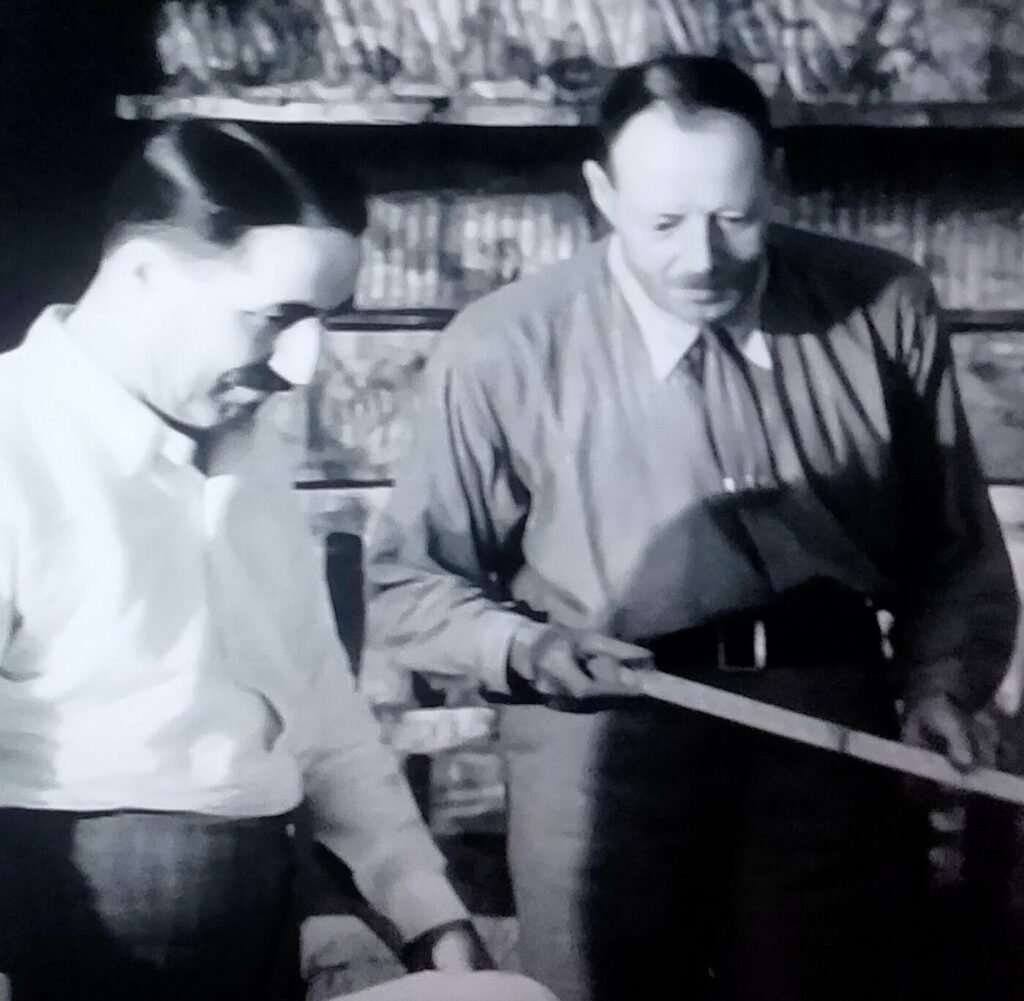
The discovery of Tutankhamun’s tomb was the finding of the nearly intact burial of the pharaoh Tutankhamun in the Valley of the Kings, near Luxor in Egypt, by the British archaeologist Howard Carter. Workers uncovered the first step of the tomb’s staircase on November 4, 1922. The tomb, known to Egyptologists as KV62, held more than 5,000 objects, and it remains the best preserved royal tomb found in the valley.
Background to the discovery
Howard Carter first went to Egypt in 1891 at the age of 17 to help copy ancient wall paintings. He later held senior posts in the Egyptian antiquities service, then settled in Luxor. In 1907, diggers in the valley found a pit tomb now called KV54, which held objects bearing Tutankhamun’s name. By 1915 Carter had concluded that it was a cache of leftovers from the king’s funeral rather than his tomb, and he argued that the real burial lay nearby.
In 1914 the American excavator Theodore Davis gave up his permit for the valley, saying it was exhausted. Carter, working with his sponsor George Herbert, the Earl of Carnarvon, took over the search. The First World War halted fieldwork, and digging did not resume until November 1917. Five seasons of hard work produced little, and by the summer of 1922 Carnarvon was ready to stop paying.
Carter persuaded him to fund one more season. He pointed to an untouched patch of ground below the tomb of Ramses VI, and he cited new evidence from Herbert Winlock of the Metropolitan Museum of Art, who had shown that debris from another pit, KV55, consisted of embalming materials linked to Tutankhamun. That strengthened the case that the king’s burial was still waiting to be found. The patch was covered by the ruins of workmen’s huts from the 19th Dynasty.
What happened in 1922
Carter’s team began clearing the huts on November 1. Three days later, on November 4, workers found a cut step about 12 feet below the entrance of Ramses VI’s tomb. More steps followed, leading down to a sealed, plastered doorway. The seals on it came from the royal necropolis, which suggested that the tomb had been closed by officials and not simply abandoned.
Carter refilled the stairway and cabled Carnarvon on November 6 to say that he had found a magnificent tomb with seals intact. Carnarvon and his daughter, Lady Evelyn Herbert, reached Luxor on November 22. Two days later the workers cleared the full staircase and exposed the doorway, where seal impressions carried Tutankhamun’s name inside a cartouche. A cartouche is the oval ring that surrounds a royal name in hieroglyphic writing, a convention that scholars could read only because the script had been deciphered a century earlier, as explained in the entry on the Rosetta Stone.
Behind the door lay a passage about 30 feet long. It was packed with rubble, and robbers had tunneled through it in antiquity before the officials resealed it. At its end stood a second sealed door. On November 26, Carter made a small hole in that door and held up a candle to test the air. When Carnarvon asked whether he could see anything, Carter replied, “Yes, wonderful things.” His journal records a plainer remark, “Yes, it is wonderful.”
The room beyond, now called the antechamber, was crowded with gilded couches, black shrines, chests, chairs, a golden throne and parts of chariots. Carter compared it to the property room of an opera house. A formal opening of the antechamber took place on November 29, with Egyptian and foreign officials and a reporter from The Times of London in attendance.
Aftermath and significance
The tomb’s four chambers are known as the antechamber, the burial chamber, the treasury and the annex. The tomb had been robbed at least twice in antiquity, but the thieves took relatively little, and the king’s burial itself was undisturbed. Because the seals on the doors were intact, the priests who closed the tomb were the last people known to have entered it, apart from the ancient robbers. That is what made the contents so valuable as evidence.
Over about eight years Carter and his colleagues emptied the densely packed chambers. They recorded more than 5,000 objects on over 3,500 notecards. Conservation was slow: it took three weeks to empty one chest of the king’s clothing, and a single robe carried thousands of gold sequins and blue beads.
The Metropolitan Museum of Art in New York lent staff to the project, including the photographer Harry Burton. Over about ten years he made roughly 1,400 glass-plate negatives of objects in the tomb and in a nearby studio, creating a visual record that archaeologists still consult. He also took color photographs and filmed objects as they were removed. The annex was cleared in 1927, and the work was finished in 1932. Objects were moved to the Egyptian Museum in Cairo.
On February 12, 1924, Carter lifted the roughly 2,500-pound lid of the stone sarcophagus. Inside lay three nested coffins, and the innermost was made of solid gold. Lord Carnarvon had died in 1923 of blood poisoning after a mosquito bite, and the timing fed a popular legend of a pharaoh’s curse. Scholars generally treat the curse as a legend and not as a historical fact.
The find changed archaeology and public life. It showed how much a single undisturbed burial could reveal about royal ritual, craftsmanship and belief, and it set a standard for recording an excavation in detail. The sealed doors and the scale of the record kept by Carter’s team gave scholars a rare chance to see a royal burial as its original mourners had arranged it. Visitors flocked to Luxor in the thousands, and three new telegraph lines were laid to Cairo to handle the news. Debates about who should hold and display such objects continue today.
FAQs
When was Tutankhamun’s tomb discovered? Workers found the first step on November 4, 1922, and Carter first looked into the tomb on November 26, 1922.
Who discovered Tutankhamun’s tomb? Howard Carter led the excavation, funded by Lord Carnarvon, and Egyptian workers did much of the digging.
What was found in the tomb? More than 5,000 objects, including furniture, chariot parts, shrines, a golden throne and the king’s nested coffins.
Was there a curse on the tomb? Scholars treat the curse as a legend. It grew after Lord Carnarvon died in 1923.
More in Archaeology
Key facts
- Workers found the first step of the tomb on November 4, 1922.1
- Howard Carter looked through the second sealed door on November 26, 1922, with the Earl of Carnarvon, his sponsor, nearby.1
- The tomb held more than 5,000 objects.2
- Carter opened the sarcophagus on February 12, 1924, and clearance of the tomb was finished in 1932.13
- Harry Burton photographed the tomb's contents on roughly 1,400 glass-plate negatives.4
Related concepts
Quick checkWhy was Tutankhamun's tomb so important?Show answer
Its doors were still sealed and the burial was undisturbed, so it preserved more than 5,000 objects and showed how a royal burial was arranged, which almost no other pharaoh tomb has done.
Sources
- Smithsonian Magazine, How Howard Carter Discovered King Tut's Golden Tomb, https://www.smithsonianmag.com/history/how-howard-carter-discovered-king-tuts-golden-tomb-180981052/
- Smithsonian Magazine, Why Tutankhamun's Tomb Still Mesmerizes, https://www.smithsonianmag.com/history/why-tutankhamuns-tomb-still-mesmerizes-180981052/
- The Past, Milestones in Egyptology: the discovery and clearance of KV62, https://the-past.com/shorts/the-picture-desk/milestones-in-egyptology-the-discovery-and-clearance-of-kv62-the-tomb-of-tutankhamun/
- The Metropolitan Museum of Art, Discovering Tutankhamun, https://www.metmuseum.org/exhibitions/listings/2006/discovering-tutankhamun
Editorially reviewed by Specialty Digest Editorial TeamLast reviewed November 4, 2026Researched and drafted with AI assistanceReport an issue