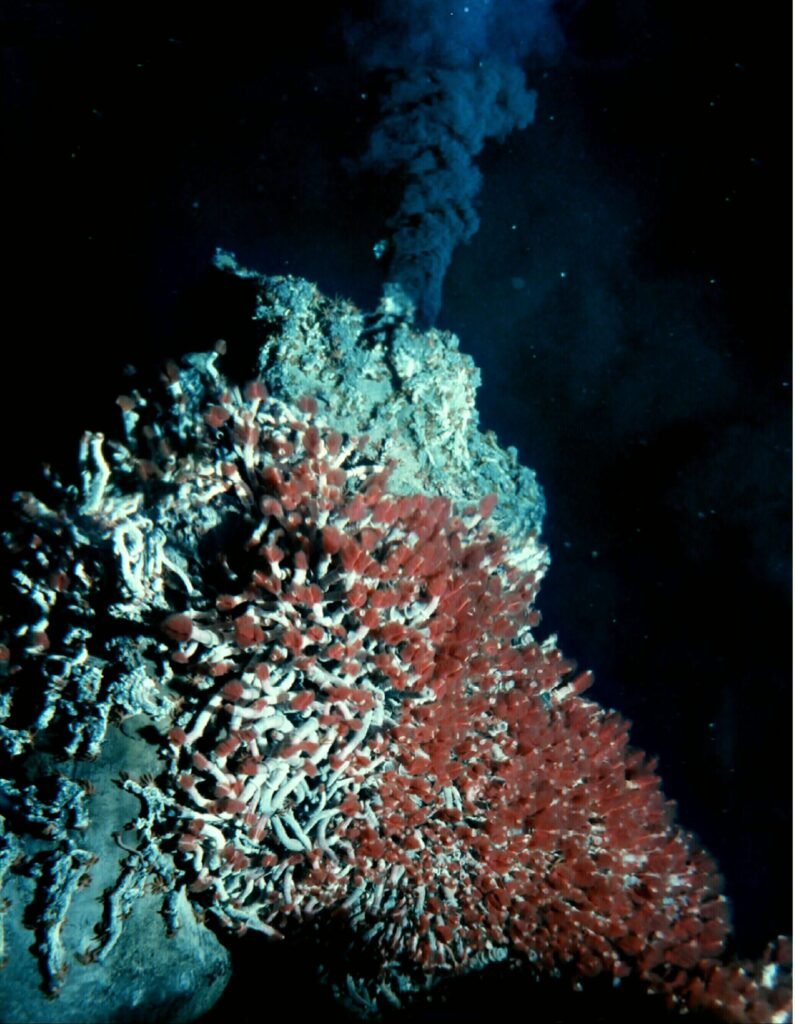
A hydrothermal vent is a fissure in the seafloor from which geothermally heated, mineral-rich water escapes into the surrounding ocean, typically found along mid-ocean ridges and other areas of volcanic or tectonic activity. Seawater seeps into cracks in the oceanic crust, is heated by magma below, and reemerges laden with dissolved minerals and chemicals that would be toxic to most surface organisms.
The discovery of hydrothermal vents in the late 1970s revealed thriving ecosystems in complete darkness thousands of meters below the surface, overturning the assumption that all life on earth ultimately depends on sunlight and prompting a fundamental rethinking of where and how life can exist, both on earth and potentially elsewhere in the solar system.
Formation and Geological Setting
Most hydrothermal vents form along mid-ocean ridges, the underwater mountain chains where tectonic plates are spreading apart and new oceanic crust is continuously formed from rising magma. As this fresh crust cracks and cools, seawater infiltrates deep into the rock, circulates near magma chambers, and rises back toward the surface dramatically transformed by chemical reactions with the surrounding rock.
Vents also occur in other tectonically active settings, including volcanic island arcs and back-arc basins, where similar heat sources drive comparable circulation patterns, meaning that vent systems are found scattered across ocean basins worldwide rather than confined to a single geological feature.
Black Smokers and Chemical Composition
The most dramatic vents, known as black smokers, emit water that can exceed three hundred degrees Celsius, appearing black due to the immediate precipitation of dissolved metal sulfides as the superheated fluid meets cold surrounding seawater. These mineral particles can build towering chimney-like structures over time, some reaching many meters in height before collapsing and reforming.
Cooler vents, sometimes called white smokers, emit fluid at lower temperatures and precipitate lighter-colored minerals such as barium, calcium, and silicon compounds, representing a somewhat different chemical and thermal regime shaped by variations in the depth and intensity of subsurface heating.
Chemosynthesis and the Vent Food Web
Because sunlight cannot reach the deep seafloor, vent ecosystems rely on chemosynthesis rather than photosynthesis as their primary energy source, with specialized bacteria and archaea oxidizing hydrogen sulfide and other chemicals dissolved in vent fluid to produce organic compounds that support the entire food web.
Many vent animals, including the iconic giant tube worms found at Pacific vents, host these chemosynthetic microbes directly within their tissues in a symbiotic relationship, lacking a digestive system of their own and instead relying entirely on their internal bacterial partners for nutrition.
Unique Vent-Associated Species
Hydrothermal vent communities host a remarkable array of specialized organisms rarely or never found elsewhere, including giant tube worms, eyeless shrimp that navigate using heat-sensing organs, vent crabs, and scaly-foot snails whose shells incorporate iron sulfide, an adaptation unique among known mollusks.
Each vent field tends to develop a somewhat distinct community composition, and the extreme isolation of individual vent systems, combined with their patchy and temporary nature, has made vent biogeography and species dispersal an active area of ongoing scientific research.
Vent Lifespan and Ecological Succession
Individual hydrothermal vents are geologically temporary features, often remaining active for only years to decades before underlying magma chambers shift or volcanic activity alters the plumbing that sustains fluid flow, after which the vent cools and its associated community gradually dies off or disperses.
This impermanence means vent ecosystems undergo a form of ecological succession, with newly formed vents colonized rapidly by certain pioneer species before more complex communities, including larger grazers and predators, establish themselves over subsequent years.
Scientific and Astrobiological Significance
Hydrothermal vents have become central to scientific theories about the origin of life on earth, since the chemical-rich, warm conditions found at vents resemble environments proposed as plausible settings for early biochemical reactions that eventually gave rise to living organisms billions of years ago.
The existence of thriving vent ecosystems independent of sunlight has also informed astrobiology, since similar hydrothermal systems are thought to exist beneath the icy crusts of moons such as Europa and Enceladus, raising the possibility that comparable chemosynthetic life could exist elsewhere in the solar system.
Mineral Resources and Deep-Sea Mining Concerns
The mineral deposits built up around hydrothermal vents, rich in copper, zinc, gold, and other valuable metals, have attracted commercial interest in deep-sea mining, raising concerns among scientists about the potential destruction of rare and poorly understood vent ecosystems before they can even be fully studied.
International regulatory bodies continue to debate how to balance potential mineral resource extraction against the ecological and scientific value of these unique habitats, with some researchers calling for strict protections or outright moratoriums on mining near active vent fields.
Expeditions continue to discover previously unknown vent fields in remote and poorly explored stretches of the seafloor, suggesting that a substantial share of global vent ecosystems and the organisms living within them remain entirely undocumented by science.
FAQ
How do organisms survive at hydrothermal vents without sunlight?
Vent organisms rely on chemosynthesis, a process in which specialized bacteria and archaea convert chemicals such as hydrogen sulfide into usable energy, forming the base of a food web entirely independent of sunlight.
What is a black smoker?
A black smoker is a type of hydrothermal vent that emits extremely hot, mineral-laden fluid that appears black as dissolved metal sulfides precipitate instantly upon contact with cold surrounding seawater.
Why are hydrothermal vents important to the study of the origin of life?
Their warm, chemically rich conditions resemble environments proposed as settings for early biochemical reactions, making vents a key reference point for theories about how life first arose on earth.
In the news
Editorially reviewed by Specialty Digest Editorial TeamLast reviewed November 4, 2026Researched and drafted with AI assistanceReport an issue