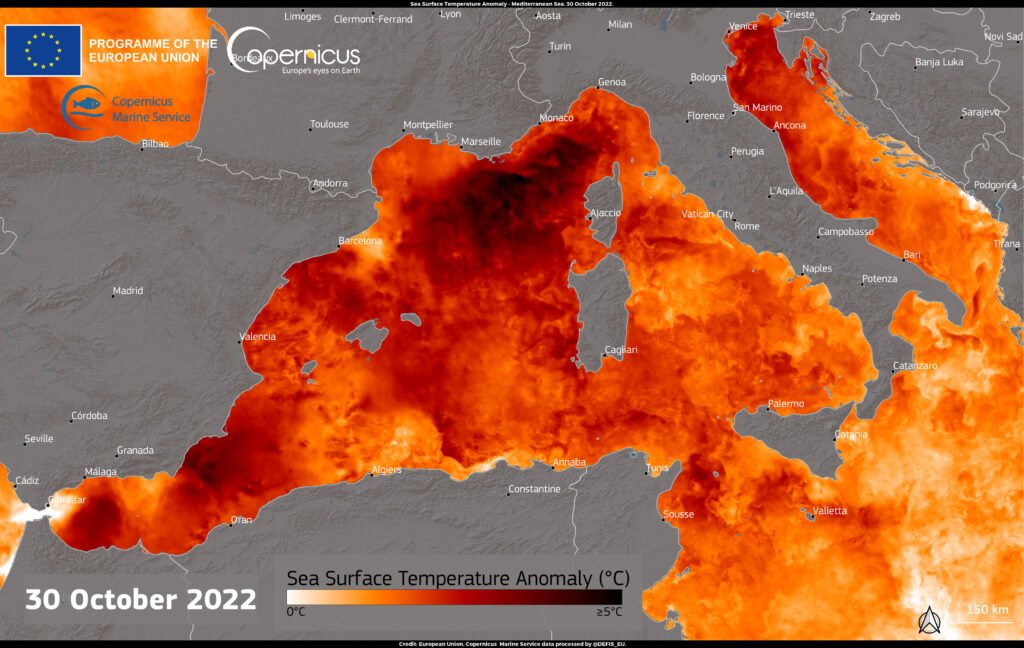
A marine heatwave is a prolonged period during which sea surface or subsurface temperatures in a given region rise well above the historical average for that location and time of year, typically defined using a statistical threshold based on decades of baseline temperature records. Events can last anywhere from several days to many months, and in extreme cases have persisted for more than a year across large stretches of ocean.
Marine heatwaves have become increasingly frequent, intense, and long-lasting in recent decades as background ocean temperatures rise due to climate change, and they have emerged as one of the most consequential forms of marine climate extreme, capable of triggering ecological disruption on a scale comparable to major oil spills or large-scale pollution events.
Defining and Measuring Marine Heatwaves
Scientists typically define a marine heatwave using a percentile-based threshold, commonly the ninetieth percentile of historical temperatures for a given location and calendar date, with an event classified as a heatwave once temperatures exceed this threshold for five or more consecutive days. Events are further categorized by intensity, ranging from moderate to severe, strong, or extreme.
This standardized definition, developed by marine climate scientists over the past decade, has allowed researchers to compare heatwave events consistently across different ocean regions and to track long-term trends in frequency and intensity using satellite sea surface temperature records extending back several decades.
Causes and Oceanic-Atmospheric Drivers
Marine heatwaves arise from a combination of factors, including persistent high-pressure atmospheric systems that reduce cloud cover and wind-driven mixing, unusually weak ocean currents or upwelling that would normally bring cooler water to the surface, and broader climate patterns such as El Nino that shift heat distribution across ocean basins.
Rising background ocean temperatures driven by accumulated greenhouse gas warming act as an amplifying factor, making it progressively easier for a given atmospheric or oceanic anomaly to push temperatures past the heatwave threshold, even when the underlying weather pattern itself is not unusually extreme by historical standards.
The Pacific Blob and Other Major Events
One of the most extensively studied marine heatwaves, informally dubbed the Blob, developed in the northeastern Pacific Ocean beginning in 2014 and persisted for roughly two years, raising sea surface temperatures several degrees above normal across a vast area stretching from Alaska to California.
Other major documented events include a severe heatwave in the Mediterranean Sea that triggered widespread coral and sponge die-offs, and repeated marine heatwaves along the coast of Western Australia that caused significant damage to seagrass meadows, kelp forests, and coral communities in successive years.
Impacts on Marine Ecosystems
Marine heatwaves can trigger mass coral bleaching, kelp forest collapse, harmful algal blooms, and shifts in the geographic distribution of fish and other mobile species seeking cooler water, sometimes disrupting fisheries as target species move beyond their traditional fishing grounds or historic management boundaries.
Sessile or slow-moving organisms, including corals, shellfish, and seagrass, are particularly vulnerable since they cannot relocate to escape elevated temperatures, often suffering mass mortality events when heatwave conditions exceed their physiological tolerance for an extended period.
Economic Consequences for Fisheries and Aquaculture
Severe marine heatwaves have caused substantial economic losses in affected fishing and aquaculture industries, including closures of commercial fisheries when target species decline or shift location, and direct mortality in farmed shellfish and finfish operations unable to escape elevated water temperatures.
The 2014 to 2016 northeastern Pacific heatwave, for example, was linked to closures of valuable crab fisheries due to associated toxic algal blooms, along with broader disruptions to salmon returns and other commercially important species throughout the affected region.
Harmful Algal Blooms and Toxin Risks
Elevated ocean temperatures during marine heatwaves can favor the growth of certain harmful algae that produce potent toxins, which accumulate in shellfish and other filter feeders and can pose serious health risks to humans and wildlife that consume contaminated seafood.
Such toxin-related closures have repeatedly forced fisheries managers to suspend harvesting of affected shellfish species for extended periods during and after major heatwave events, compounding the direct economic damage caused by the temperature anomaly itself.
Monitoring, Forecasting, and Future Projections
Researchers now maintain near-real-time marine heatwave tracking systems using satellite sea surface temperature data, providing early warning to fisheries managers, aquaculture operators, and conservation groups attempting to respond to or mitigate emerging events before their full ecological impact unfolds.
Climate projections consistently indicate that marine heatwaves will become more frequent, intense, and longer-lasting as global ocean temperatures continue to rise, prompting growing research investment in forecasting tools and management strategies designed to help marine ecosystems and dependent industries adapt.
Some researchers have proposed classifying particularly severe or prolonged marine heatwaves using a naming convention similar to that used for hurricanes, arguing that greater public recognition of major events could help build support for the fisheries and conservation responses needed to manage their consequences.
FAQ
How is a marine heatwave officially defined?
A marine heatwave is typically defined as a period when sea surface temperatures exceed the ninetieth percentile of historical values for that location and date for five or more consecutive days, with intensity categorized from moderate to extreme.
What was the Blob marine heatwave?
The Blob was a major marine heatwave in the northeastern Pacific Ocean beginning in 2014 that persisted for roughly two years, causing widespread ecological disruption including fishery closures and harmful algal blooms.
Are marine heatwaves becoming more common?
Yes, scientific records show marine heatwaves have become more frequent, intense, and longer-lasting in recent decades, a trend closely linked to rising background ocean temperatures driven by climate change.
In the news
Editorially reviewed by Specialty Digest Editorial TeamLast reviewed November 4, 2026Researched and drafted with AI assistanceReport an issue