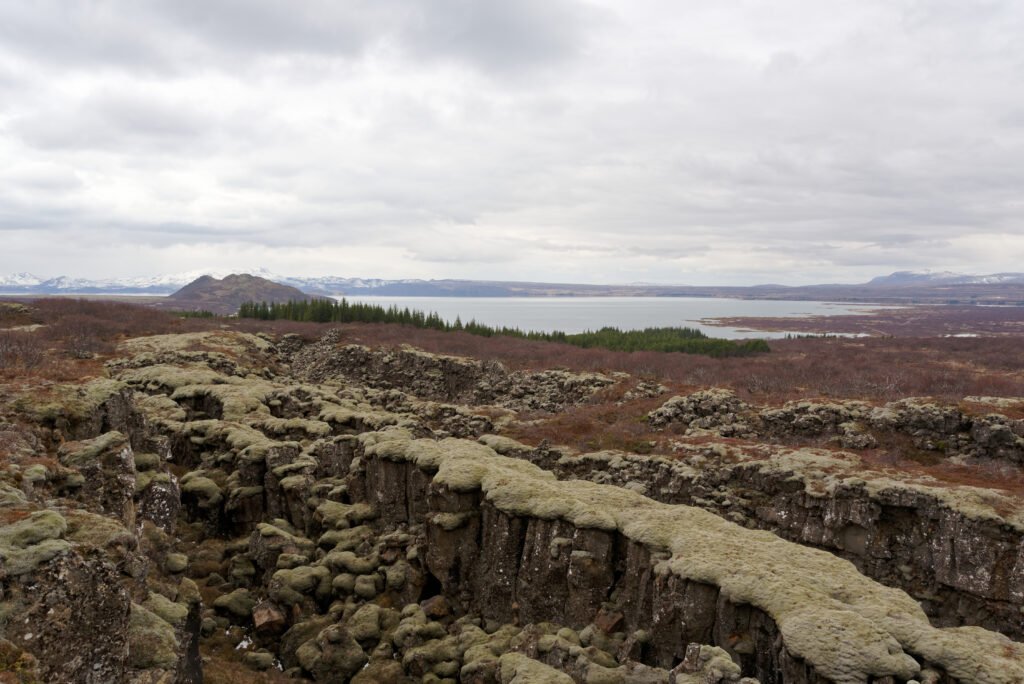
Iceland is an island country in the North Atlantic Ocean, located just south of the Arctic Circle between Greenland and mainland Europe. It is a sovereign parliamentary republic with a population of roughly 392,000 people, one of the most sparsely populated countries in Europe, and it sits directly on the seam where the North American and Eurasian tectonic plates are pulling apart, giving it one of the most volcanically and geologically active terrains on the planet.
Key Takeaways
- Iceland is a North Atlantic island nation just south of the Arctic Circle, with a population of about 392,000 (World Bank, 2025).
- It sits on the Mid-Atlantic Ridge, where the North American and Eurasian plates diverge, producing active volcanoes, geysers, and hot springs.
- The Althing, Iceland’s national parliament, traces its founding to 930 CE at Thingvellir, a UNESCO World Heritage Site inscribed in 2004.
- Iceland became a fully independent republic on June 17, 1944, after centuries under Norwegian and then Danish rule.
- Nearly all of Iceland’s electricity comes from renewable hydropower and geothermal sources.
- The country is a founding NATO member and maintains no standing army of its own.
- Iceland is a high-income economy built on fisheries, aluminum smelting, tourism, and financial and technology services.
Where Is Iceland? Geography and Natural Terrain
Iceland covers about 103,000 square kilometers, according to World Bank data, a landmass comparable in size to Portugal or the U.S. state of Kentucky, though much of that area is uninhabited interior highland. The country lies in the North Atlantic, roughly 300 kilometers southeast of Greenland and about 1,000 kilometers from mainland Europe, straddling the Mid-Atlantic Ridge, the underwater mountain chain along which the North American and Eurasian tectonic plates spread apart. This position makes Iceland one of the few places on Earth where a mid-ocean ridge rises above sea level.
That geology gives Iceland dozens of active volcanic systems, along with geysers, hot springs, and extensive geothermal fields. Vatnajokull, in the southeast, is often cited as Europe’s largest ice cap by volume, and glaciers, lava fields, black-sand beaches, and highland deserts together define much of the interior. The 2010 eruption of Eyjafjallajokull, which grounded air traffic across much of Europe for days, showed how directly Iceland’s volcanic activity can reach far beyond its own shores.
A Brief History: From Norse Settlement to Modern Republic
According to Icelandic historical tradition, Norse settlers began arriving in Iceland in the late 9th century, with Ingolfur Arnarson traditionally credited as the first permanent settler around 874 CE. Within a few generations, the island’s free farmers had organized the Althing, an outdoor general assembly that first convened at Thingvellir in 930 CE to set laws and settle disputes, according to the UNESCO World Heritage Centre. The Althing is widely regarded as one of the world’s oldest surviving parliamentary institutions. Iceland formally adopted Christianity around the year 1000.
Iceland lost its independence in stages: it came under Norwegian rule in 1262 and passed to Danish control in the late 14th century, remaining a Danish dependency for more than five centuries. A 19th-century nationalist movement won home rule in 1904 and status as a sovereign state in union with Denmark in 1918. Full independence followed on June 17, 1944, when Icelanders voted to establish a republic while Denmark itself was under German occupation. Iceland had earlier been occupied by British and then American forces during the Second World War because of its strategic North Atlantic position, a role that later made it a founding NATO member in 1949. In the mid-20th century, Iceland also fought a series of diplomatic and naval standoffs with the United Kingdom, known as the Cod Wars, over fishing rights in its surrounding waters, and it ultimately secured an internationally recognized 200-nautical-mile exclusive economic zone.
Government and Economy
Iceland is a parliamentary republic. The Althing is a unicameral legislature, the head of state is a president elected by popular vote to a largely ceremonial role, and executive power rests with a prime minister and cabinet drawn from parliament. Iceland became a member of the World Bank in 1945 and is represented on its Board of Executive Directors through a constituency shared with the other Nordic and Baltic countries, according to the World Bank. The economy is classified as high-income, with a gross national income per capita of roughly $89,220 in 2025 under the World Bank’s Atlas method, among the highest in the world. Fishing and fish processing remain economically important, and inexpensive renewable electricity from hydropower and geothermal plants has drawn energy-intensive industries such as aluminum smelting. Tourism grew rapidly in the 2010s into one of the country’s largest sources of foreign exchange, and financial and technology services have expanded as well. Iceland’s banking sector collapsed in 2008 in one of the most severe banking failures relative to the size of a national economy in modern history, prompting years of capital controls and debt restructuring before recovery in the following decade.
Culture and People
Icelandic, a North Germanic language closely related to Old Norse, remains the primary language, and Iceland has kept a strong tradition of vernacular literature since the medieval Icelandic sagas, prose narratives composed from the 13th century about early settlers and Norse history. The country is highly literate and largely secular, and it has ranked at or near the top of international gender-equality indices for years. With a population of under 400,000 concentrated mainly in and around Reykjavik, the capital and the world’s northernmost capital of a sovereign state, Iceland remains one of Europe’s least densely populated countries and one of its most closely knit societies.
What Is Iceland Best Known For?
Globally, Iceland is best known for its volcanic and glacial geography: geysers, waterfalls such as Gullfoss, active volcanoes, glaciers, and the aurora borealis, or northern lights, visible on clear nights for much of the year. Thingvellir National Park draws particular attention because it combines this natural setting with deep historical significance. It is both the visible surface trace of the Mid-Atlantic Ridge and the founding site of the Althing, a combination that earned it UNESCO World Heritage status in 2004. Iceland is also known for its near-total reliance on renewable geothermal and hydroelectric power, and for a resilient, close-knit society that weathered a severe financial collapse and a rapidly growing tourism sector within the same generation.
Why Iceland Matters
Iceland matters to the rest of the world for reasons beyond scenery. Its position on the Mid-Atlantic Ridge makes it a natural laboratory for volcanology, seismology, and glaciology, and researchers around the world study its eruptions, ice sheets, and geothermal systems to understand processes otherwise hidden beneath the ocean floor. Its almost complete shift to renewable electricity is frequently cited as a working example of a national energy system built on hydropower and geothermal energy rather than fossil fuels. Strategically, Iceland’s location between North America and continental Europe gave it an outsized role in the North Atlantic during and after the Second World War, and it remains a NATO member without a standing military of its own, relying instead on allied defense arrangements. Its 2008 banking collapse and recovery are also widely studied as a case of how a small, open economy can fail and rebuild within a single decade.
Key facts
- Capital: Reykjavik, the world's northernmost capital of a sovereign state
- Population: approximately 392,000 (World Bank, 2025)
- Area: approximately 103,000 square kilometers (World Bank, 2023)
- Government: parliamentary republic; the Althing traces its founding to 930 CE
- Independence: full republic since June 17, 1944
- Currency: Icelandic krona
- Economy: high-income; GNI per capita about $89,220, World Bank Atlas method, 2025
Quick checkWhat is Thingvellir National Park best known for?Show answer
It is the site where Iceland's parliament, the Althing, was founded in 930 CE, and it sits on a visible rift of the Mid-Atlantic Ridge. It became a UNESCO World Heritage Site in 2004.
Sources
- World Bank: Iceland and the World Bank Group (Overview), https://www.worldbank.org/en/country/iceland/overview
- World Bank Open Data: Population, total, Iceland, https://api.worldbank.org/v2/country/ISL/indicator/SP.POP.TOTL?format=json&date=2020:2025
- World Bank Open Data: GNI per capita, Atlas method, Iceland, https://api.worldbank.org/v2/country/ISL/indicator/NY.GNP.PCAP.CD?format=json
- World Bank Open Data: Surface area, Iceland, https://api.worldbank.org/v2/country/ISL/indicator/AG.SRF.TOTL.K2?format=json
- UNESCO World Heritage Centre: Thingvellir National Park, https://whc.unesco.org/en/list/1152/
Editorially reviewed by Specialty Digest Editorial TeamLast reviewed September 27, 2026Researched and drafted with AI assistanceReport an issue