Iran is a large country in western Asia that occupies most of the Iranian Plateau, stretching from the Caspian Sea in the north to the Persian Gulf and the Gulf of Oman in the south. It borders Iraq and Turkey to the west, Armenia, Azerbaijan, and Turkmenistan to the north, and Afghanistan and Pakistan to the east. With a population of roughly 90.6 million people and a land area of about 1,745,150 square kilometers, it ranks among the largest and most populous countries in the Middle East. Its capital and largest city is Tehran.
Key Takeaways
- Iran is a large Middle Eastern country of about 90.6 million people (World Bank, 2023) on the Iranian Plateau, bordered by the Caspian Sea to the north and the Persian Gulf and Gulf of Oman to the south.
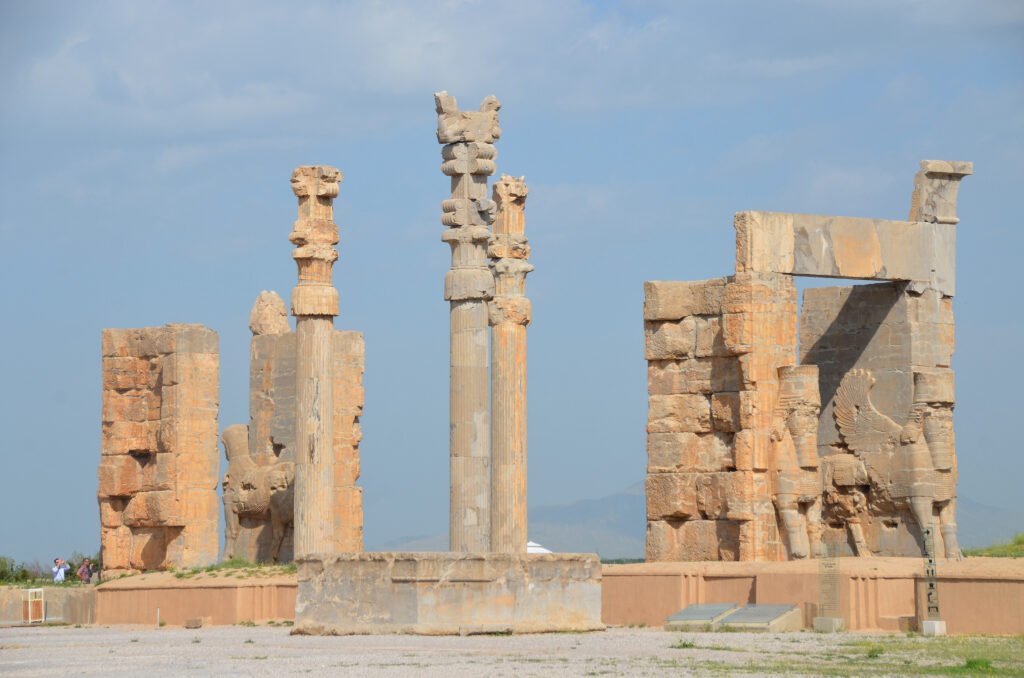
- It is the historical heart of ancient Persia, home to the Achaemenid Empire founded by Cyrus the Great and its ceremonial capital, Persepolis, a UNESCO World Heritage Site inscribed in 1979.
- Since 1979, Iran has been governed as an Islamic Republic, combining elected institutions with clerical oversight bodies, a structure often described as a theocratic republic.
- Persian (Farsi) is the official language, though Iran is ethnically and linguistically diverse, with sizable Azeri, Kurdish, Lur, Baloch, and Arab populations alongside a Persian majority.
- Iran holds some of the world’s largest proven oil and natural gas reserves, but international sanctions and regional conflict have placed sustained pressure on its economy in recent years.
- Persian poetry, art, and the Nowruz New Year, recognized by UNESCO as intangible cultural heritage, remain influential across the wider Persian speaking world.
Where Is Iran Located? Geography of the Iranian Plateau
Iran sits on a high interior plateau ringed by mountains. The Zagros range runs along the western and southwestern edge of the country, while the Alborz range stretches across the north along the Caspian coast and includes Mount Damavand, the highest peak in the Middle East. Between these ranges lies a vast, largely arid central plateau containing two major desert basins, the Dasht-e Kavir and the Dasht-e Lut. The Caspian coast in the north is a notable exception to this dry interior, with a humid, temperate climate that supports forest and agriculture. To the south, Iran’s coastline along the Persian Gulf and the Gulf of Oman includes the Strait of Hormuz, one of the world’s most important waterways for oil shipping. Most of the country experiences an arid or semi-arid climate, with hot summers and cold winters across the plateau and mountains.
A Brief History of Iran
Ancient Persia and the Achaemenid Empire
Iran is the historical heart of ancient Persia. Around 550 BCE, Cyrus the Great founded the Achaemenid Empire, which grew into the ancient world’s largest empire, stretching at its height from the Indus Valley to Egypt and the Balkans. The Achaemenids pioneered administrative techniques still studied by historians today, including a system of provincial governors called satraps and an extensive road network connecting the empire’s regions. In 518 BCE, Darius I began construction of Persepolis, a ceremonial capital built on a monumental terrace near modern Shiraz. The UNESCO World Heritage Centre, which inscribed Persepolis as a World Heritage Site in 1979, describes its palace complex and monumental ruins as a unique archaeological record of Achaemenid power and craftsmanship.
Successive Empires and the Arrival of Islam
The Achaemenid Empire fell to Alexander the Great in the fourth century BCE, and Persian imperial rule continued in later forms under the Seleucid, Parthian, and Sassanian dynasties. The Sassanian Empire, which lasted from the third to the seventh century CE, revived Persian institutions and made Zoroastrianism the state religion. Arab Muslim armies conquered Sassanian Persia in the seventh century, bringing Islam to the region. Persian language, literature, and administrative traditions endured through the Islamic era and went on to shape science, poetry, and governance across the broader Islamic world for centuries afterward.
From the Safavids to the 1979 Revolution
The Safavid dynasty, which ruled from the sixteenth to the eighteenth century, established Twelver Shia Islam as Iran’s state religion, a defining feature of Iranian identity that continues today. Iran was subsequently ruled by the Qajar dynasty through the nineteenth and early twentieth centuries and then by the Pahlavi dynasty from 1925, a period marked by rapid, state-driven modernization. In 1979, a popular uprising known as the Islamic Revolution overthrew the Pahlavi monarchy and established the Islamic Republic of Iran, the system of government that remains in place today.
Government and Economy in Brief
Since 1979, Iran has been governed as an Islamic Republic, a system that combines elected institutions, including a president and parliament chosen by popular vote, with clerical oversight bodies that hold significant authority over major state decisions. This dual structure is often described as a theocratic republic, distinct from both a secular democracy and an absolute monarchy.
Iran’s economy rests heavily on hydrocarbons: the country holds some of the world’s largest proven reserves of natural gas and crude oil, according to the World Bank. Agriculture and services also contribute substantially to output, and the state maintains a significant presence in manufacturing and financial services. Iran’s gross domestic product was approximately 457.5 billion dollars in 2023, according to World Bank data. The World Bank’s most recent country assessments describe an economy under sustained pressure from international sanctions, regional conflict, and structural constraints such as water and energy shortages, all of which have weighed on growth and trade in recent years.
Iran’s political system and foreign relations remain contested internationally. Iran states that its nuclear program serves peaceful energy and research purposes; the program has nonetheless been the subject of extended monitoring by the International Atomic Energy Agency and has drawn sanctions from the United States and other governments over proliferation concerns. Human rights organizations and a number of Western governments have also raised concerns about political freedoms and the treatment of protesters inside Iran, characterizations the Iranian government disputes. This entry focuses on Iran’s geography, history, and culture; readers seeking analysis of current political disputes should consult the primary sources and international organizations cited below.
Culture and People of Iran
Persian, known locally as Farsi, is Iran’s official language and the language of a rich literary tradition. Ethnically and linguistically, however, Iran is diverse: alongside a Persian majority, the country is home to sizable Azeri, Kurdish, Lur, Baloch, and Arab populations, among others, each with its own regional language or dialect.
The large majority of Iranians are Shia Muslims, making Iran the world’s largest Shia-majority country, though Sunni Muslims and religious minorities, including Christians, Jews, and Zoroastrians, also live within its borders. Zoroastrianism, Iran’s pre-Islamic faith, still has adherents today and continues to shape national holidays and symbolism.
Persian poetry occupies a central place in Iranian culture. Poets such as Ferdowsi, whose eleventh-century epic the Shahnameh recounts Persia’s mythic and historical past, along with Hafez, Rumi, and Omar Khayyam, remain widely read and quoted across the Persian speaking world. Nowruz, the Persian New Year marking the spring equinox, has roots in Zoroastrian tradition and is inscribed by UNESCO on its list of the intangible cultural heritage of humanity; it is celebrated as a major holiday by Iranians and by several neighboring nations.
What Is Iran Best Known For?
Globally, Iran is best known as the historical home of ancient Persia, and Persepolis stands as the single most recognizable symbol of that legacy: its ruined halls, monumental gateways, and carved reliefs of tribute bearing delegations remain a touchstone image of the ancient Persian Empire. Iran is equally known for its Persian carpets, miniature painting, and garden design, and for architectural landmarks such as Isfahan’s Naqsh-e Jahan Square, another UNESCO World Heritage Site built under the Safavids. As a major oil and natural gas producer, Iran is also a significant player in global energy markets.
Why Iran Matters Globally
Iran matters globally for reasons that span history, geography, and geopolitics. Its position along the Strait of Hormuz gives it a direct role in one of the world’s most heavily used oil shipping corridors, and its energy reserves make its production and export decisions relevant to global markets. Historically, Persian civilization left a lasting imprint on world history, from Achaemenid administrative practices that influenced later empires to Zoroastrian religious concepts that scholars have traced in later Abrahamic traditions. As a large, populous, and strategically located regional power, Iran’s internal politics and international relations continue to draw close attention from governments and international organizations around the world.
Sources
- UNESCO World Heritage Centre, Persepolis: https://whc.unesco.org/en/list/114/
- UNESCO Intangible Cultural Heritage, Nowruz: https://ich.unesco.org/en/RL/international-nowruz-day-01161
- World Bank Open Data, Islamic Republic of Iran (population, GDP, surface area): https://data.worldbank.org/country/iran-islamic-rep
- World Bank, Islamic Republic of Iran Overview: https://www.worldbank.org/en/country/iran/overview
Key facts
- Capital: Tehran
- Population: approximately 90.6 million (World Bank, 2023)
- Official language: Persian (Farsi)
- Land area: approximately 1,745,150 square kilometers (World Bank, 2022)
- Government: Islamic Republic
- Currency: Iranian rial
- Notable UNESCO World Heritage Site: Persepolis, inscribed 1979
Quick checkWhat ancient empire built Persepolis, and what is Persepolis today?Show answer
Persepolis was built as the ceremonial capital of the Achaemenid Persian Empire, begun by Darius I in 518 BCE. Today its monumental ruins in Iran form a UNESCO World Heritage Site, inscribed in 1979.
Sources
- UNESCO World Heritage Centre, Persepolis: https://whc.unesco.org/en/list/114/
- UNESCO Intangible Cultural Heritage, Nowruz: https://ich.unesco.org/en/RL/international-nowruz-day-01161
- World Bank Open Data, Islamic Republic of Iran: https://data.worldbank.org/country/iran-islamic-rep
- World Bank, Islamic Republic of Iran Overview: https://www.worldbank.org/en/country/iran/overview
Editorially reviewed by Specialty Digest Editorial TeamLast reviewed September 27, 2026Researched and drafted with AI assistanceReport an issue