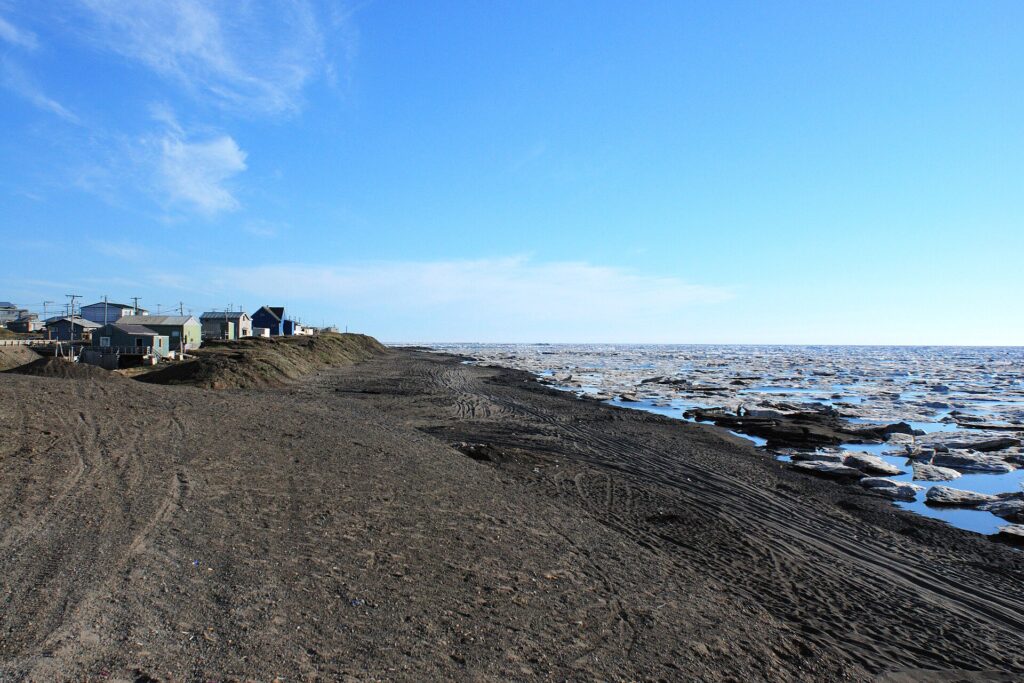
Iñupiaq (Iñupiatun) is an Inuit language spoken in northern and northwestern Alaska and a small adjacent part of Canada’s Northwest Territories. It has about 1,250 fully fluent speakers according to a 2023 estimate, and it is considered threatened, with most speakers aged 40 or older. In 2014 it became one of 20 Indigenous languages given official status in Alaska alongside English [1].
| Region | Northern and northwestern Alaska |
|---|---|
| Fluent speakers (2023) | About 1,250 |
| Ethnic Iñupiat (2015) | About 20,709 |
| Major varieties | North Slope; Seward Peninsula |
| Alphabet | Latin, developed 1946 |
| Official status | Alaska, since 2014 |
Speakers
The infobox lists about 1,250 fully fluent speakers in 2023, although the article’s other estimates differ, and about 20,709 ethnic Iñupiat in 2015. The language is considered threatened, with most speakers aged 40 or older, and decline began after contact with English in the late 19th century [1]. The Alaska Native Language Center table lists about 3,000 speakers among 13,500 Iñupiat in its earlier count [2].
Dialects
There are two major varieties, North Slope and Seward Peninsula, within four main divisions. Seward Peninsula Iñupiaq includes Bering Strait (with Diomede, Wales and King Island subdialects) and Qawiaraq. Northern Alaskan Iñupiaq includes Malimiutun (Kobuk and Coastal) and North Slope (including Point Hope, Point Barrow and Anaktuvuk Pass). Uummarmiutun is spoken in the Mackenzie Delta area of Canada [1].
Writing System
A Latin-based alphabet was developed in 1946 by Roy Ahmaogak, an Iñupiaq Presbyterian minister, working with the linguist Eugene Nida. The alphabet has changed over time, most notably replacing “ḳ” with “q” [1].
Revitalization
The University of Alaska Fairbanks offers bachelor’s degrees in Iñupiaq language and culture, and Nikaitchuat Iḷisagviat, an immersion school in Kotzebue, teaches prekindergarten through first grade. Linguist Edna Ahgeak MacLean published an Iñupiaq–English grammar and dictionary in 2014 with over 19,000 entries. Facebook added Iñupiaq as a language option in 2018 [1].
Official Status
In 2014 Iñupiaq became an official language of the State of Alaska, alongside English and nineteen other Indigenous languages [1]. See the entries on the Alaska Native Language Center and the culture of Alaska.
FAQs
Where is Iñupiaq spoken? In northern and northwestern Alaska and a small part of Canada’s Northwest Territories.
How many people speak Iñupiaq? About 1,250 fluent speakers in 2023, per one estimate.
Who developed the Iñupiaq alphabet? Roy Ahmaogak and Eugene Nida, in 1946.
Is Iñupiaq an official language of Alaska? Yes, since 2014.
Can you study Iñupiaq at university? Yes, at the University of Alaska Fairbanks.
Sources
More in Languages & Linguistics
Key facts
Quick checkIn what year did Iñupiaq become an official language of Alaska?Show answer
2014
Sources
- Wikipedia. Iñupiaq language. 2026 (accessed 2026-11-12)
- Wikipedia. Alaska Native Language Center. 2026 (accessed 2026-11-12)
Editorially reviewed by Specialty Digest Editorial TeamLast reviewed November 12, 2026Researched and drafted with AI assistanceReport an issue