Tlingit (Lingít) is an endangered language of Southeast Alaska and western Canada, and UNESCO classifies it as critically endangered. About 50 highly proficient first-language speakers and 10 highly proficient second-language speakers were counted in the United States in 2020. It forms an independent branch of the Na-Dene language family and was recognized as an official language of Alaska in April 2014 [1].
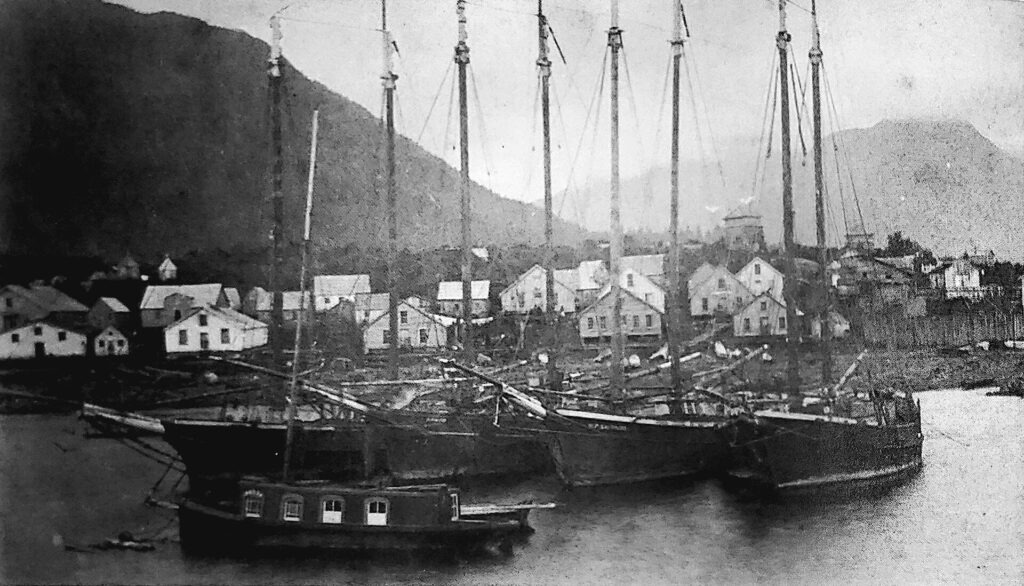
| Region | Southeast Alaska; northern British Columbia; Yukon |
|---|---|
| Speakers (US, 2020) | About 50 first-language, 10 second-language |
| Status | Critically endangered (UNESCO) |
| Family | Na-Dene (independent branch) |
| Official status | Alaska, April 2014 (HB 216) |
| Ethnic population | About 10,000 (1995) |
Region and Speakers
Tlingit was traditionally spoken from near the Copper River down the Gulf of Alaska coast and across most of the Alexander Archipelago. Almost all of its territory lies in Alaska. “Inland Tlingit” extends into northern British Columbia and the Yukon around Atlin, Teslin and Tagish Lakes. The 2016 Canadian census counted 120 speakers in Canada, and one 2019 estimate put native speakers at 100 to 200 across both countries, with the youngest over 60 [1].
Classification
Tlingit forms an independent branch of the Na-Dene family, alongside Eyak–Athabaskan. Its placement remains debated, and some scholars link Na-Dene to the Yeniseian languages of Siberia in a proposed Dene–Yeniseian superfamily [1].
Dialects
There are roughly four major, mutually intelligible dialects: Northern (with Inland as a subdialect), Transitional, Southern and Tongass. Tongass has died out, with its last speakers gone by the 1990s [1].
Writing
Tlingit is written in Latin script. Russian Orthodox missionaries first wrote it in Cyrillic. The most common modern orthography, based on the work of linguists Constance Naish and Gillian Story, uses underlines for uvular sounds, and a 1990s “email” version replaces underlines with an “h” [1].
Revitalization
The University of Alaska Southeast has offered Tlingit courses for free since 2022, and these have produced several fluent second-language speakers. In 2023 the Central Council of the Tlingit & Haida Indian Tribes released the first of nine planned Tlingit-language children’s books [1]. The Alaska Native Language Center table lists Tlingit with about 10,000 people and about 500 speakers in its earlier count [2].
Official Status
Alaska’s legislature recognized Tlingit as an official language in April 2014 by passing HB 216 [1]. See the entries on the Alaska Native Language Center and the culture of Alaska.
FAQs
Where is Tlingit spoken? In Southeast Alaska and parts of northern British Columbia and the Yukon.
How many people speak Tlingit? About 50 highly proficient first-language speakers in the U.S. in 2020, plus some second-language speakers.
Is Tlingit an official language of Alaska? Yes, since April 2014.
What language family is Tlingit? An independent branch of Na-Dene.
Can you study Tlingit? Yes; the University of Alaska Southeast has offered free courses since 2022.
Sources
More in Languages & Linguistics
Key facts
Quick checkIn what year did Alaska recognize Tlingit as an official language?Show answer
2014
Sources
- Wikipedia. Tlingit language. 2026 (accessed 2026-11-12)
- Wikipedia. Alaska Native Language Center. 2026 (accessed 2026-11-12)
Editorially reviewed by Specialty Digest Editorial TeamLast reviewed November 12, 2026Researched and drafted with AI assistanceReport an issue