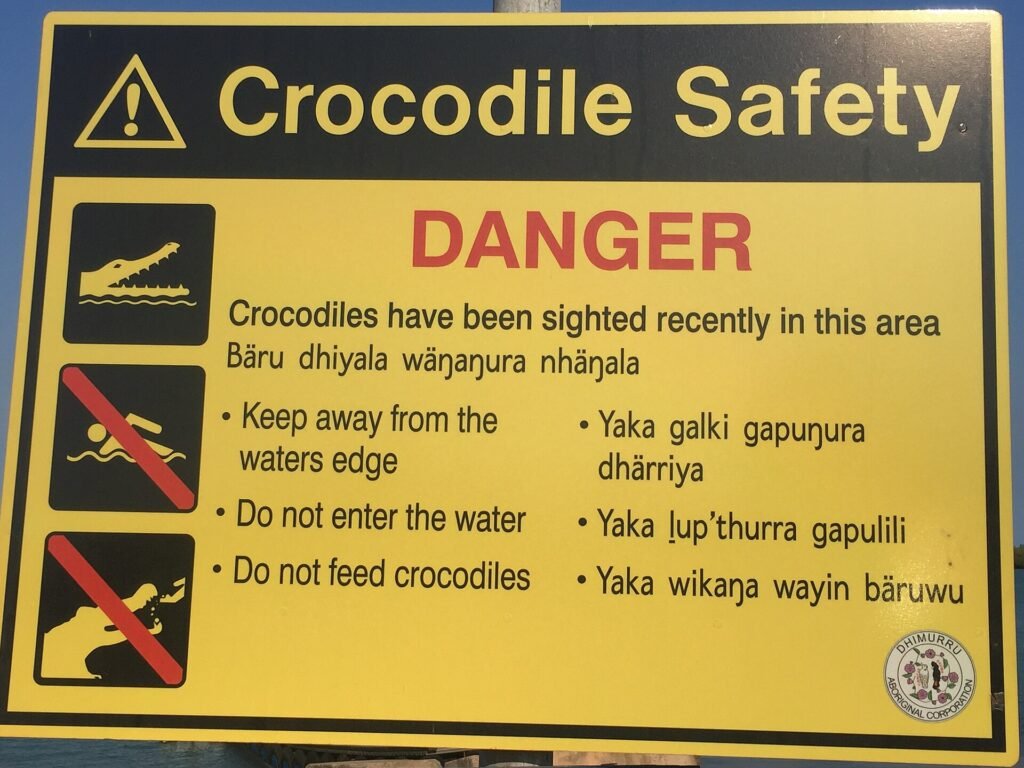
In simple terms A language is endangered when the community that speaks it has begun passing a more dominant language to its children. Speaker numbers are the symptom. The break in transmission is the condition itself. Ethnologue, published by SIL Global, counts 3,226 endangered languages in its 2026 edition, about 44 percent of the languages
Endangered language Read More »
An endangered language is one whose community has begun passing a more dominant language to its children instead.
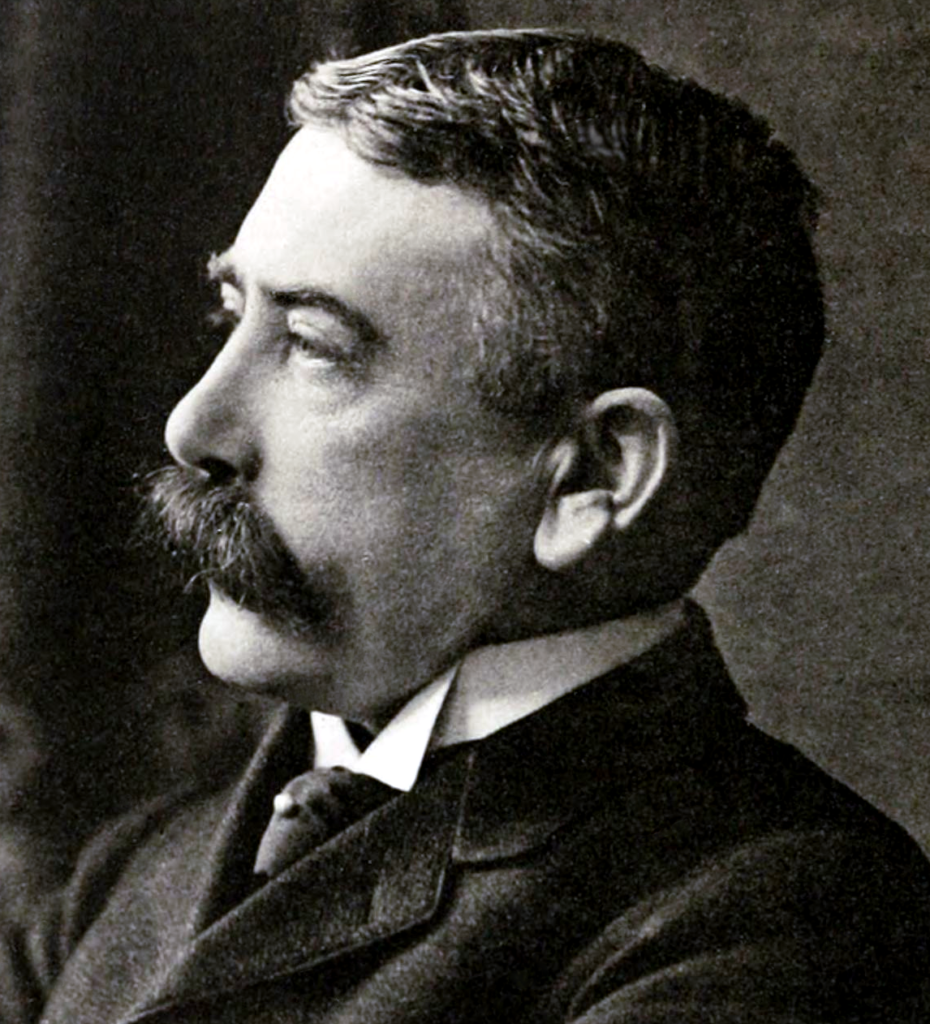
Ferdinand de Saussure (1857 to 1913) was a Swiss linguist whose ideas became the foundation of structural linguistics and, later, of structuralism across the humanities and social sciences. He argued that language should be studied as a system of signs, in which each element gets its value from its relations to the others. His ideas
Ferdinand de Saussure Read More »
Swiss linguist whose Course in General Linguistics founded structural linguistics and shaped structuralism.
In simple terms A first language is the language a person acquires in childhood as a member of a speech community. It is also called a mother tongue or native language, and linguists write it as L1, with languages learned later as L2. The label describes how a language was learned, not how well someone
First language Read More »
A first language is the language a person acquires in childhood as a member of a speech community.
Jean-François Champollion (1790 to 1832) was a French scholar who deciphered ancient Egyptian hieroglyphs and is regarded as the founder of scientific Egyptology. In 1822 he showed that hieroglyphic writing combined signs for sounds with signs for ideas, which let scholars read inscriptions that had been unreadable for centuries. His work turned the Rosetta Stone
Jean-François Champollion Read More »
French scholar who deciphered Egyptian hieroglyphs in 1822 and founded scientific Egyptology.
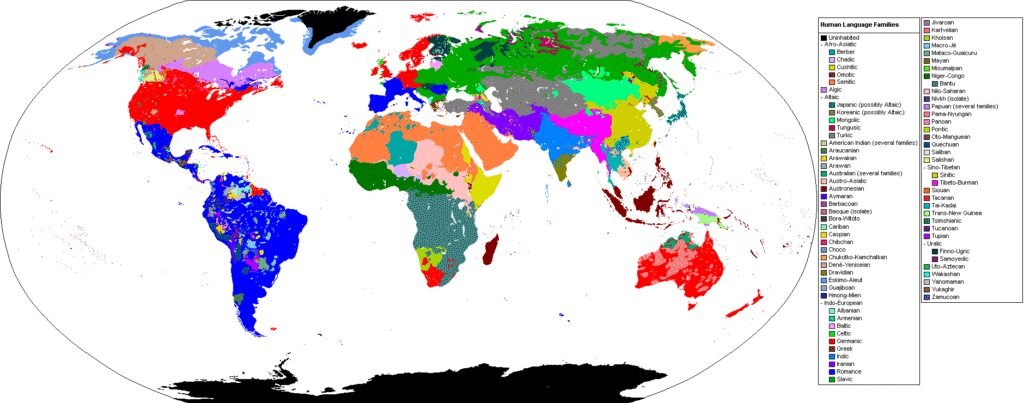
In simple terms A language family is a group of languages that all descend from one earlier language. Membership is a claim about history: these languages are relatives, not just neighbors that borrowed words from each other. Glottolog, an academic catalogue of the world’s languages, sorts the 7,674 spoken first languages it listed as of
Language family Read More »
A language family is a group of languages that all descend from a single earlier ancestor language.
In simple terms Linguistics is the scientific study of language: how it is structured, how it conveys meaning, how it is used in real communities, and how it changes over time. [1] It treats language as something to be described and analyzed, the way a biologist studies a living organism, rather than a set of
Linguistics Read More »
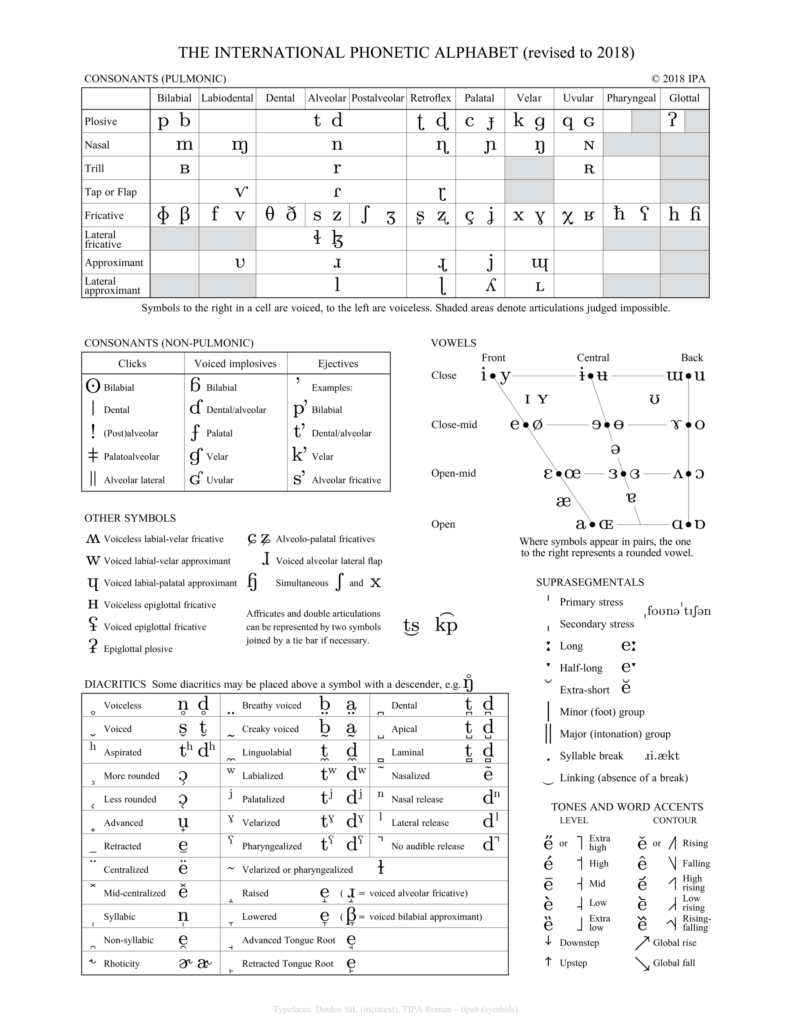
Linguistics is the scientific study of language — its sounds, structure, meaning, and how it is used and changes over time.
In simple terms A morpheme is the smallest meaningful unit in a language’s grammar. Cut a word into pieces smaller than its morphemes and the pieces stop meaning anything, which is what separates a morpheme from a syllable. Unladylike has four syllables but three morphemes: un- (not), lady (a female adult human) and -like (having
Morpheme Read More »
A morpheme is the smallest meaningful unit in a language, such as dog, the prefix un- or the plural ending -s.
In simple terms A phoneme is the smallest unit of sound that can change a word’s meaning in a particular language. SIL Global’s Glossary of Linguistic Terms calls it the smallest contrastive unit in a language’s sound system, and contrastive is the whole point: swap one phoneme and you have a different word. English rip
Phoneme Read More »
A phoneme is the smallest unit of sound that can change the meaning of a word in a particular language.
In simple terms Semantics is the study of meaning in language. Broadly it covers the meaning of any linguistic expression. More narrowly it covers what words and sentences mean in themselves, set apart from what a speaker is doing with them on a particular occasion. That narrow sense draws a useful line. Semantics asks what
Semantics Read More »
Semantics is the study of meaning in language: what words and sentences mean apart from how a speaker is using them.
Syntax is the branch of linguistics that studies the rules governing how words combine to form well-formed phrases and sentences within a language. Where other areas of linguistics examine the sounds of speech or the meaning of words, syntax is specifically concerned with structure and order: which arrangements of words a language’s speakers accept as
Syntax Read More »
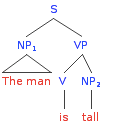
The branch of linguistics studying the rules governing how words combine into well-formed phrases and sentences.